
The Book of
Nehemiah 12
47 verses≈ 7 min4 peopleBSB
Images are artistic interpretations.
Tap any post to go deeper
In this chapter

The Book of
47 verses≈ 7 min4 peopleBSB
Images are artistic interpretations.
Tap any post to go deeper
In this chapter
Where we are
Priests
Now these are the priests and Levites who went up with Zerubbabel son of Shealtiel and with Jeshua:
Seraiah, Jeremiah, Ezra,
Amariah, Malluch, Hattush,
Shecaniah, Rehum, Meremoth,
Iddo, Ginnethon, Abijah,
Mijamin, Maadiah, Bilgah,
Shemaiah, Joiarib, Jedaiah,
Sallu, Amok, Hilkiah, and Jedaiah.
These were the leaders of the priests and their associates in the days of Jeshua.
Tap to go deeper: meaning, history and related Scripture
The Levites were Jeshua, Binnui, Kadmiel, Sherebiah, Judah, and Mattaniah, who, with his associates, led the songs of thanksgiving. Bakbukiah and Unni, their associates, stood across from them in the services.
Family line
High priests
Jeshua was the father of Joiakim,
Joiakim was the father of Eliashib,
Eliashib was the father of Joiada,
Joiada was the father of Jonathan,
and Jonathan was the father of Jaddua.
Priestly families
In the days of Joiakim, these were the heads of the priestly families:
of the family of Seraiah, Meraiah;
of Jeremiah, Hananiah;
of Ezra, Meshullam;
of Amariah, Jehohanan;
of Malluchi, Jonathan;
of Shebaniah, Joseph;
of Harim, Adna;
of Meraioth, Helkai;
of Iddo, Zechariah;
of Ginnethon, Meshullam;
of Abijah, Zichri;
of Miniamin and of Moadiah, Piltai;
of Bilgah, Shammua;
of Shemaiah, Jonathan;
of Joiarib, Mattenai;
of Jedaiah, Uzzi;
of Sallai, Kallai;
of Amok, Eber;
of Hilkiah, Hashabiah;
and of Jedaiah, Nethanel.
In the days of Eliashib, Joiada, Johanan, and Jaddua, during the reign of Darius the Persian, the heads of the families of the Levites and priests were recorded.
As for the descendants of Levi, the family heads up to the days of Johanan son of Eliashib were recorded in the Book of the Chronicles.
as one section alternated with the other
Nehemiah 12:24
Mattaniah, Bakbukiah, Obadiah, Meshullam, Talmon, and Akkub were gatekeepers who guarded the storerooms at the gates. They served in the days of Joiakim son of Jeshua, the son of Jozadak, and in the days of Nehemiah the governor and Ezra the priest and scribe.
Reflect
Four generations of names, and most of them we know nothing else about. They were written down because each one served. Who passed the faith on to you? Write their name, and thank God for them.
Whiteboard
Two lines leave one place, walk opposite ways around the city on top of the wall, and end in one house. The text never names the starting point, and the positions are approximate.
Then I brought the leaders of Judah up on the wall, and I appointed two great thanksgiving choirs. One was to proceed along the top of the wall to the right, toward the Dung Gate.
The first choir
Hoshaiah and half the leaders of Judah followed,
along with Azariah, Ezra, Meshullam,
Judah, Benjamin, Shemaiah, Jeremiah,
Of Asaph’s line
and some of the priests with trumpets, and also Zechariah son of Jonathan, the son of Shemaiah, the son of Mattaniah, the son of Micaiah, the son of Zaccur, the son of Asaph,
David’s instruments
and his associates—Shemaiah, Azarel, Milalai, Gilalai, Maai, Nethanel, Judah, and Hanani—with the musical instruments prescribed by David the man of God.
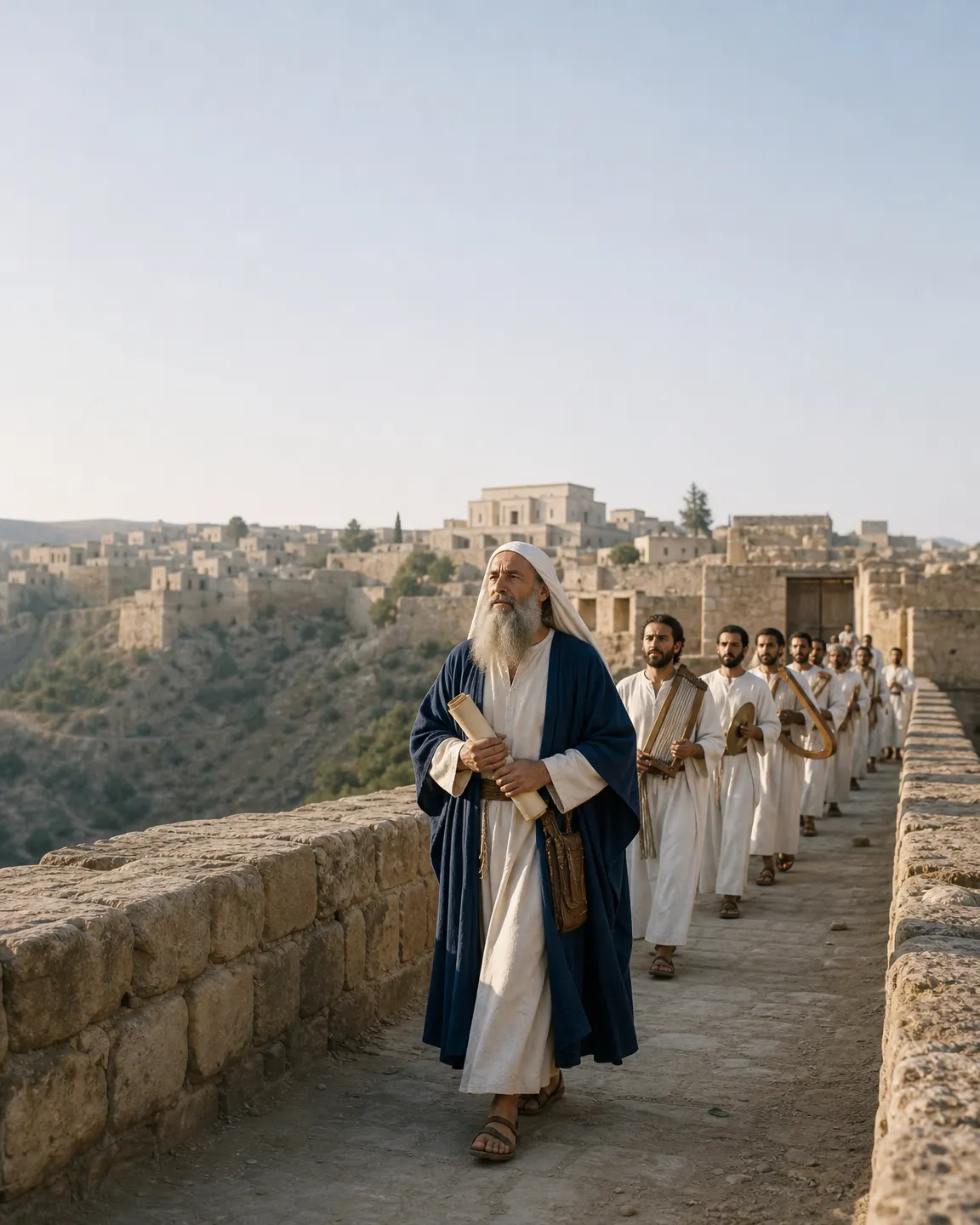
At the Fountain Gate they went directly up the steps of the City of David on the ascent to the wall and passed above the house of David to the Water Gate on the east.
The second thanksgiving choir proceeded to the left, and I followed it with half the people along the top of the wall, past the Tower of the Ovens to the Broad Wall, over the Gate of Ephraim, the Jeshanah Gate, the Fish Gate, the Tower of Hananel, and the Tower of the Hundred, as far as the Sheep Gate. And they stopped at the Gate of the Guard.
The two thanksgiving choirs then stood in the house of God, as did I, along with the half of the officials accompanying me,
as well as the priests with their trumpets—Eliakim, Maaseiah, Miniamin, Micaiah, Elioenai, Zechariah, and Hananiah— and also Maaseiah, Shemaiah, Eleazar, Uzzi, Jehohanan, Malchijah, Elam, and Ezer. Then the choirs sang out under the direction of Jezrahiah.
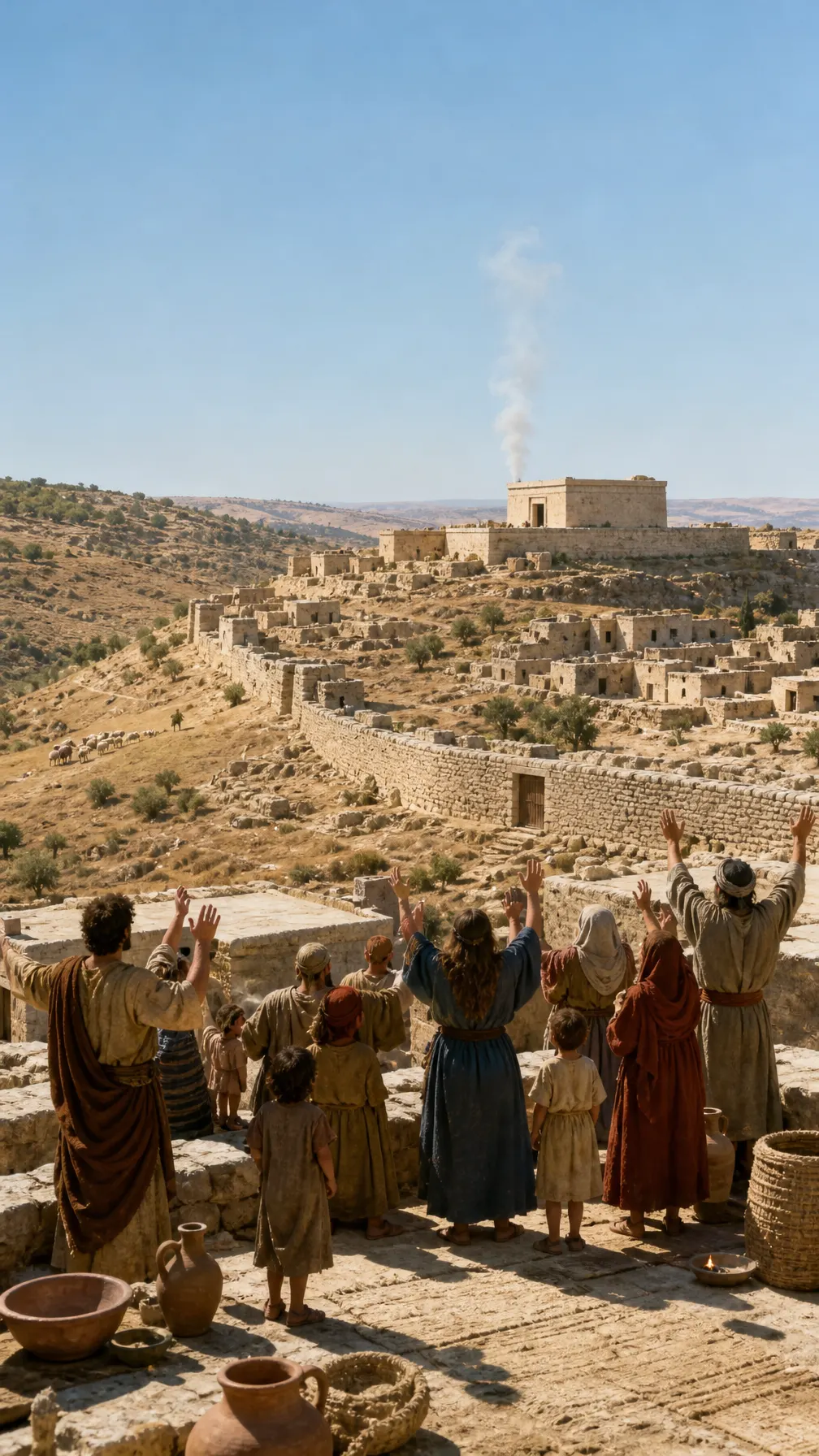
On that day they offered great sacrifices, rejoicing because God had given them great joy. The women and children also rejoiced, so that the joy of Jerusalem was heard from afar.
Narrated by Bob Souer · BSB audio, public domain
Pray
Thank God for the joy He gives; verse 43 says “God had given them great joy.” Pray that His people would be heard for it, and thank Him for those who lead you in praise.
And on that same day men were appointed over the rooms that housed the supplies, contributions, firstfruits, and tithes. The portions specified by the Law for the priests and Levites were gathered into these storerooms from the fields of the villages, because Judah rejoiced over the priests and Levites who were serving.
They performed the service of their God and the service of purification, along with the singers and gatekeepers, as David and his son Solomon had prescribed. For long ago, in the days of David and Asaph, there were directors for the singers and for the songs of praise and thanksgiving to God.
So in the days of Zerubbabel and Nehemiah, all Israel contributed the daily portions for the singers and gatekeepers. They also set aside daily portions for the Levites, and the Levites set aside daily portions for the descendants of Aaron.
Question
They set off in opposite directions along the top of the wall.
How did the two choirs end the day’s procession?
You’ve experienced
Nehemiah 12
0 of 13 chapters read
A verse to carry with you
On that day they offered great sacrifices, rejoicing because God had given them great joy. The women and children also rejoiced, so that the joy of Jerusalem was heard from afar.
Nehemiah 12:43
or swipe left