The Book of
Leviticus 6
30 verses≈ 6 min1 personBSB
Images are artistic interpretations.
Tap any post to go deeper
In this chapter

The Book of
30 verses≈ 6 min1 personBSB
Images are artistic interpretations.
Tap any post to go deeper
In this chapter
Where we are
The law
The wrong
And the LORD said to Moses, “If someone sins and acts unfaithfully against the LORD by deceiving his neighbor in regard to a deposit or security entrusted to him or stolen, or if he extorts his neighbor
or finds lost property and lies about it and swears falsely, or if he commits any such sin that a man might commit—
Making it right
once he has sinned and becomes guilty, he must return what he has stolen or taken by extortion, or the deposit entrusted to him, or the lost property he found, or anything else about which he has sworn falsely.
He must make restitution in full, add a fifth of the value, and pay it to the owner on the day he acknowledges his guilt.
Tap to go deeper: meaning, history and related Scripture
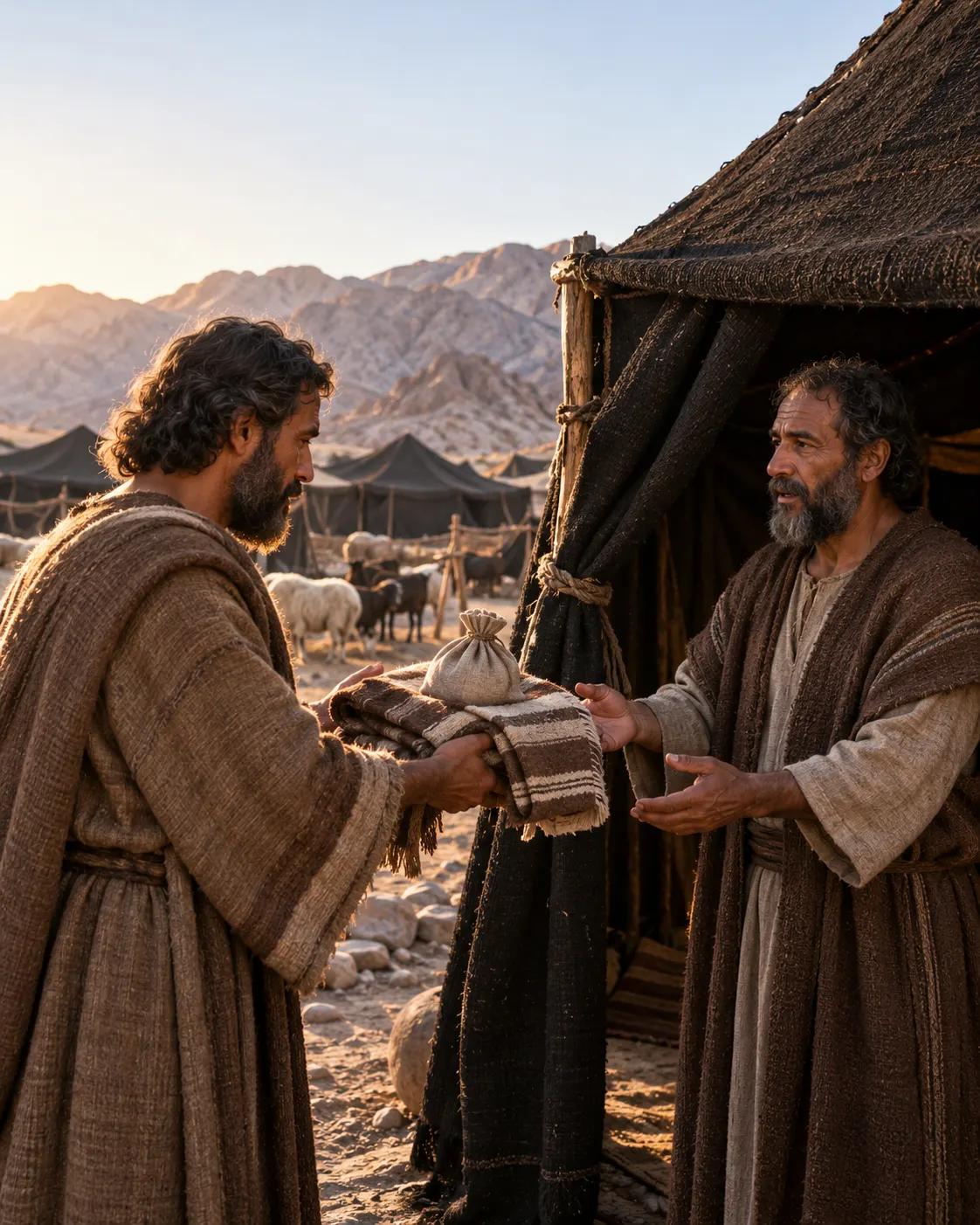
Then he must bring to the priest his guilt offering to the LORD: an unblemished ram of proper value from the flock. In this way the priest will make atonement for him before the LORD, and he will be forgiven for anything he may have done to incur guilt.”
Reflect
God would not take the ram while the stolen thing was still in the man’s tent. First he gave it back, in full, with a fifth added, “on the day he acknowledges his guilt.” Then he brought his offering. Is there someone you have wronged, in money, in property or in a promise, who has never been made whole? Write down what making it right would look like, and when you will do it.
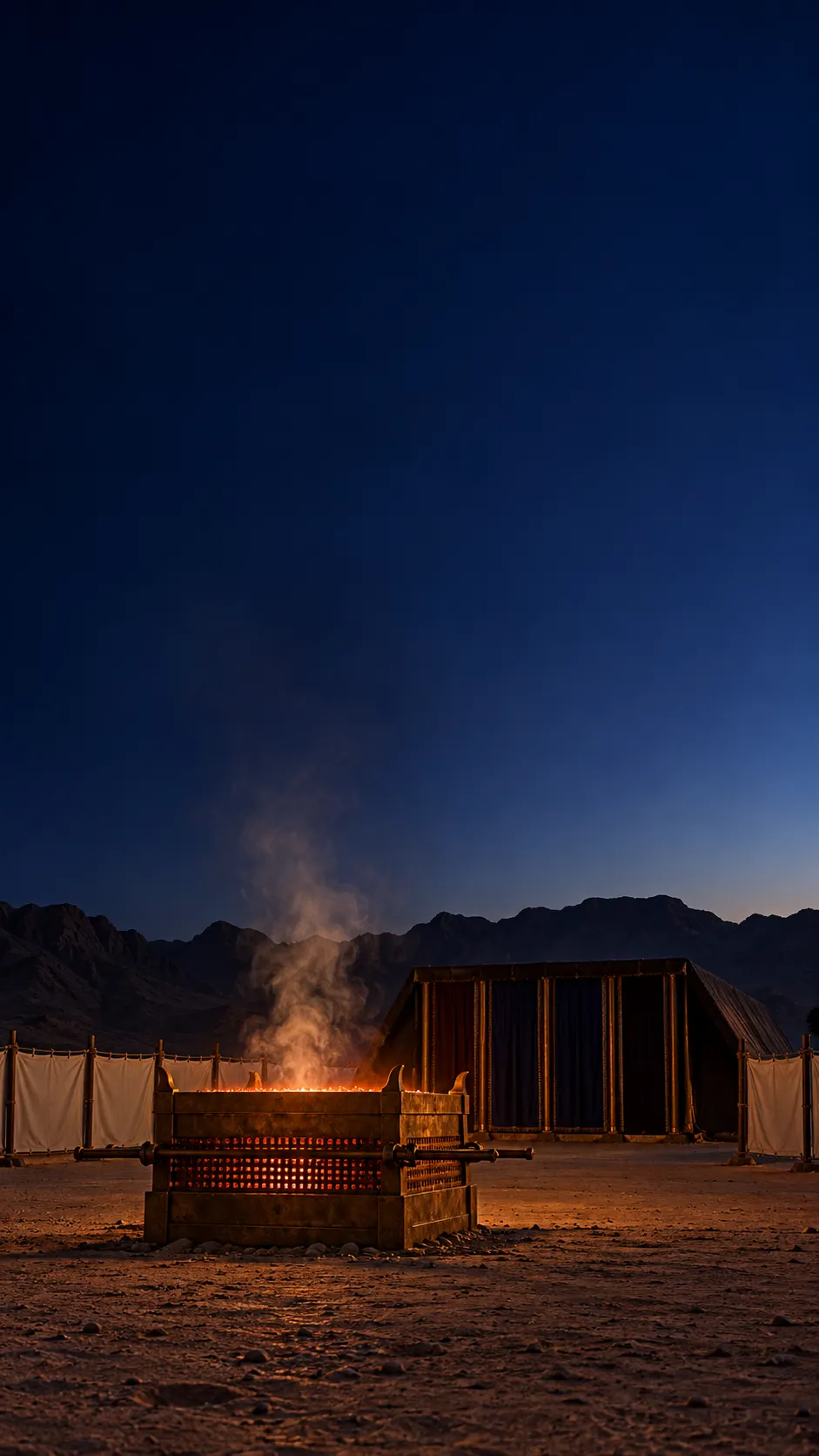
Then the LORD said to Moses, “Command Aaron and his sons that this is the law of the burnt offering: The burnt offering is to remain on the hearth of the altar all night, until morning, and the fire must be kept burning on the altar.
The fire shall be kept burning on the altar continually; it must not be extinguished.
Leviticus 6:13
Pray
Every morning a priest laid fresh wood on the altar, and the fire never went out. Ask God to keep your love for Him burning, not in one bright burst, but morning by morning. Thank Him that Jesus always lives to pray for you, so the way to God is never closed. Then offer Him today, from the first hour.
For the LORD
Now this is the law of the grain offering: Aaron’s sons shall present it before the LORD in front of the altar.
The priest is to remove a handful of fine flour and olive oil, together with all the frankincense from the grain offering, and burn the memorial portion on the altar as a pleasing aroma to the LORD.
The priests’ share
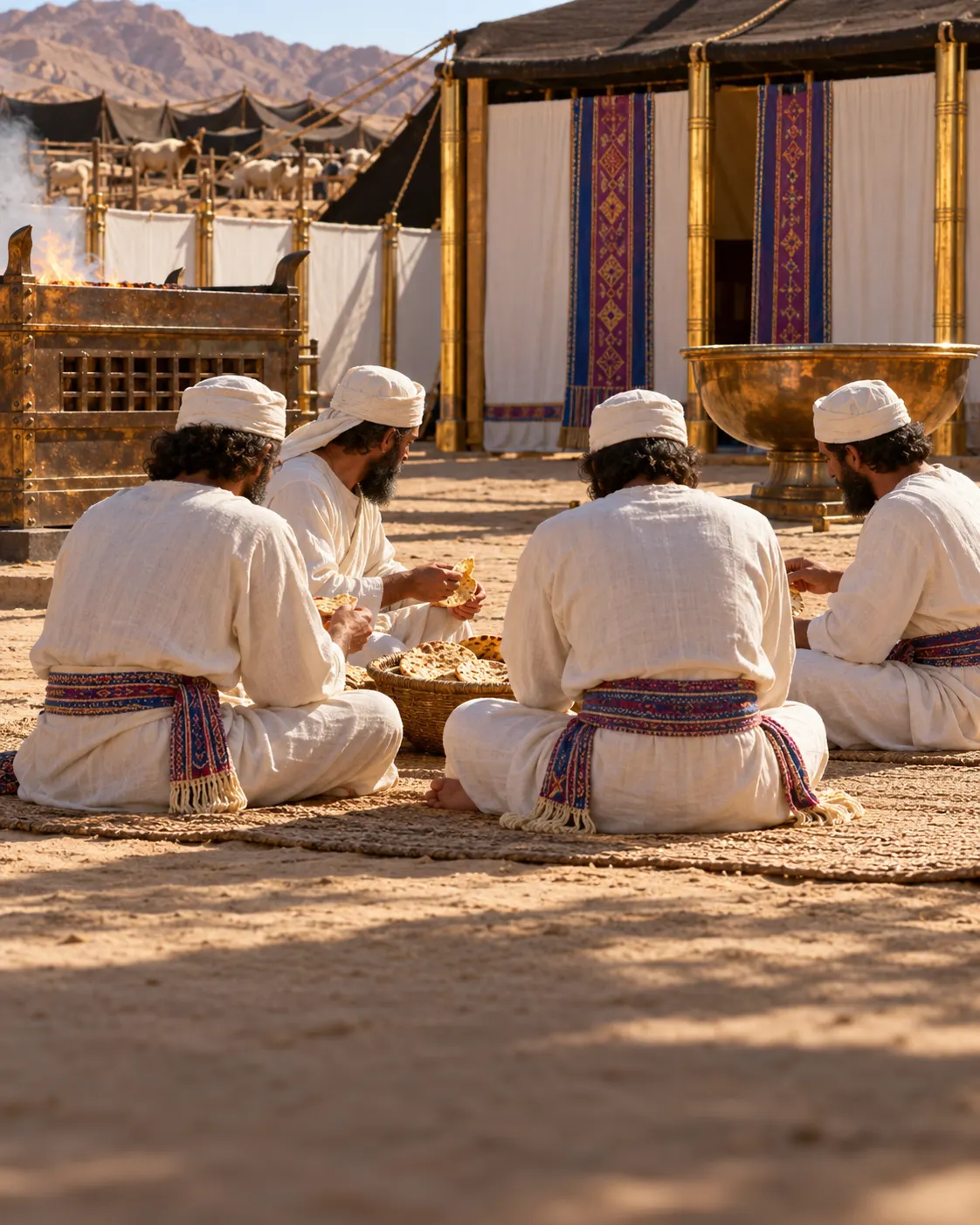
Aaron and his sons are to eat the remainder. It must be eaten without leaven in a holy place; they are to eat it in the courtyard of the Tent of Meeting.
It must not be baked with leaven; I have assigned it as their portion of My food offerings. It is most holy, like the sin offering and the guilt offering.
Any male among the sons of Aaron may eat it. This is a permanent portion from the food offerings to the LORD for the generations to come. Anything that touches them will become holy.”

Then the LORD said to Moses, “This is the offering that Aaron and his sons must present to the LORD on the day he is anointed: a tenth of an ephah of fine flour as a regular grain offering, half of it in the morning and half in the evening. It shall be prepared with oil on a griddle; you are to bring it well-kneaded and present it as a grain offering broken in pieces, a pleasing aroma to the LORD. The priest, who is one of Aaron’s sons and will be anointed to take his place, is to prepare it. As a permanent portion for the LORD, it must be burned completely. Every grain offering for a priest shall be burned completely; it is not to be eaten.”
Narrated by Bob Souer · BSB audio, public domain
For the priests
Most holy
And the LORD said to Moses, “Tell Aaron and his sons that this is the law of the sin offering: In the place where the burnt offering is slaughtered, the sin offering shall be slaughtered before the LORD; it is most holy.
The priest’s meal
The priest who offers it shall eat it; it must be eaten in a holy place, in the courtyard of the Tent of Meeting.
Holy things
Anything that touches its flesh will become holy, and if any of the blood is spattered on a garment, you must wash it in a holy place.
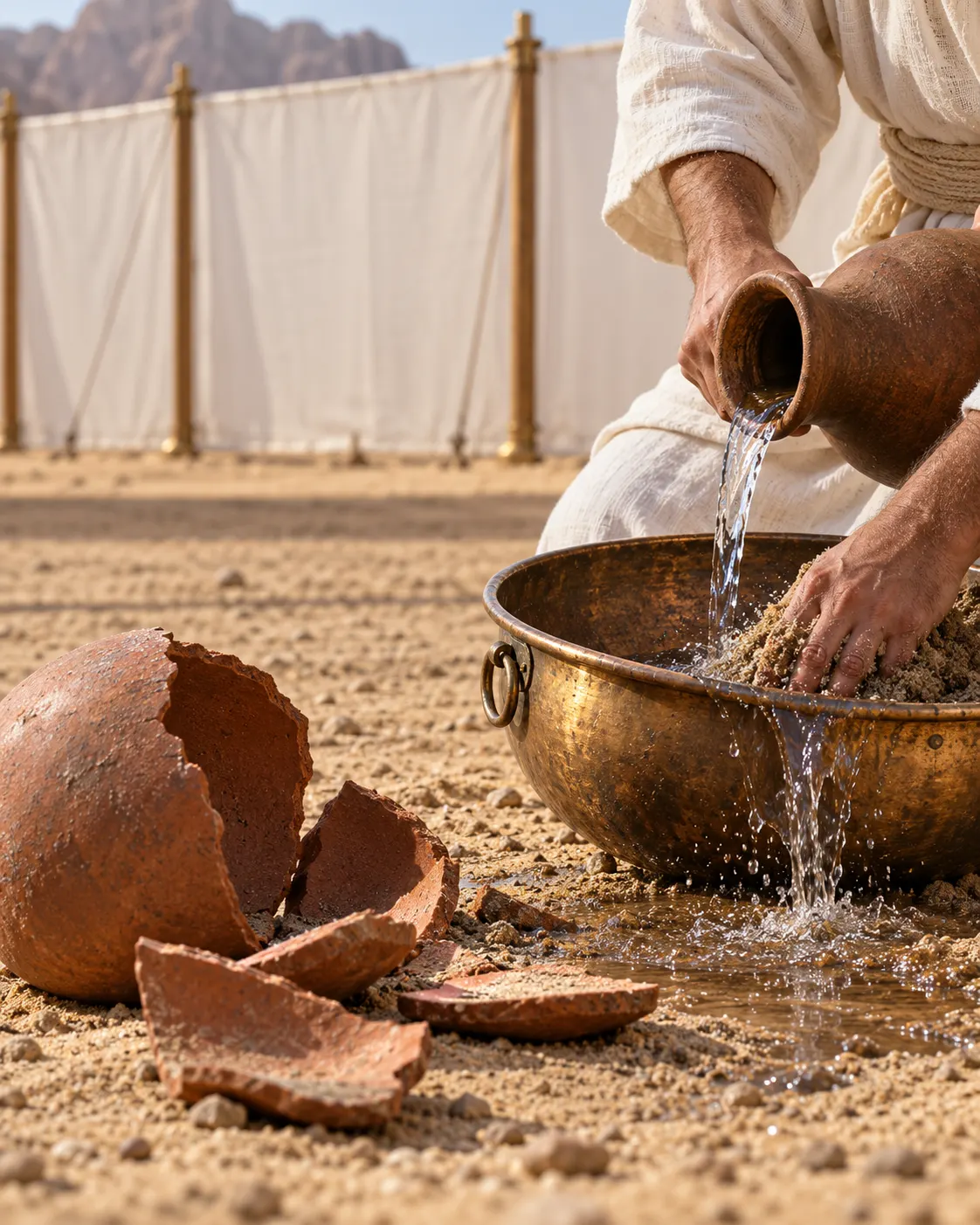
The clay pot in which the sin offering is boiled must be broken; if it is boiled in a bronze pot, the pot must be scoured and rinsed with water.
Who may eat
Any male among the priests may eat it; it is most holy.
But no sin offering may be eaten if its blood has been brought into the Tent of Meeting to make atonement in the Holy Place; it must be burned.
Plan to scale in cubits · north at the top
Where the priests served
All of this chapter’s priestly work happened in the court. The fire on the bronze altar burned day and night and was never to go out. The ashes were set beside the altar, then carried “outside the camp to a ceremonially clean place.” And the priests ate their holy portions of the grain and sin offerings “in the courtyard of the Tent of Meeting,” between the altar and the tent where God met His people. Only when a sin offering’s blood had been carried into the Holy Place was its meat burned instead of eaten.
Question
The priests had many duties at the altar. One never stopped.
How long was the fire on the altar to burn?
You’ve experienced
Leviticus 6
0 of 27 chapters read
A verse to carry with you
The fire shall be kept burning on the altar continually; it must not be extinguished.
Leviticus 6:13
or swipe left