
The Book of
Leviticus 23
44 verses≈ 9 minBSB
Images are artistic interpretations.
Tap any post to go deeper

The Book of
44 verses≈ 9 minBSB
Images are artistic interpretations.
Tap any post to go deeper
Where we are
Then the LORD said to Moses, “Speak to the Israelites and say to them, ‘These are My appointed feasts, the feasts of the LORD that you are to proclaim as sacred assemblies.
Tap to go deeper: meaning, history and related Scripture
For six days work may be done, but the seventh day is a Sabbath of complete rest, a day of sacred assembly. You must not do any work; wherever you live, it is a Sabbath to the LORD.
Leviticus 23:3

These are the LORD’s appointed feasts, the sacred assemblies you are to proclaim at their appointed times.
Spring
The Passover to the LORD begins at twilight on the fourteenth day of the first month.
On the fifteenth day of the same month begins the Feast of Unleavened Bread to the LORD.
For seven days you must eat unleavened bread.
Rest
On the first day you are to hold a sacred assembly; you are not to do any regular work.
Offering
For seven days you are to present a food offering to the LORD.
Rest
On the seventh day there shall be a sacred assembly; you must not do any regular work.’”
Whiteboard
The calendar begins with rest: every seventh day “a Sabbath of complete rest.” Then came the feasts. In spring, at the barley harvest, Passover and Unleavened Bread, the first sheaf, and fifty days later the Feast of Weeks. In autumn, the seventh month, the trumpets, the Day of Atonement and the joy of Booths. The New Testament names Christ our Passover lamb and Christ the firstfruits of the risen, and it was at Pentecost, the Feast of Weeks, that the Spirit was poured out.
You must not eat any bread or roasted or new grain until the very day you have brought this offering to your God. This is to be a permanent statute for the generations to come, wherever you live.
Reflect
No one in Israel was to eat any of the new harvest “until the very day you have brought this offering to your God.” God got the first sheaf before anyone tasted a thing. What would it look like to give Him the first, not the leftovers: of your day, your money, your strength? Write down one place to start.
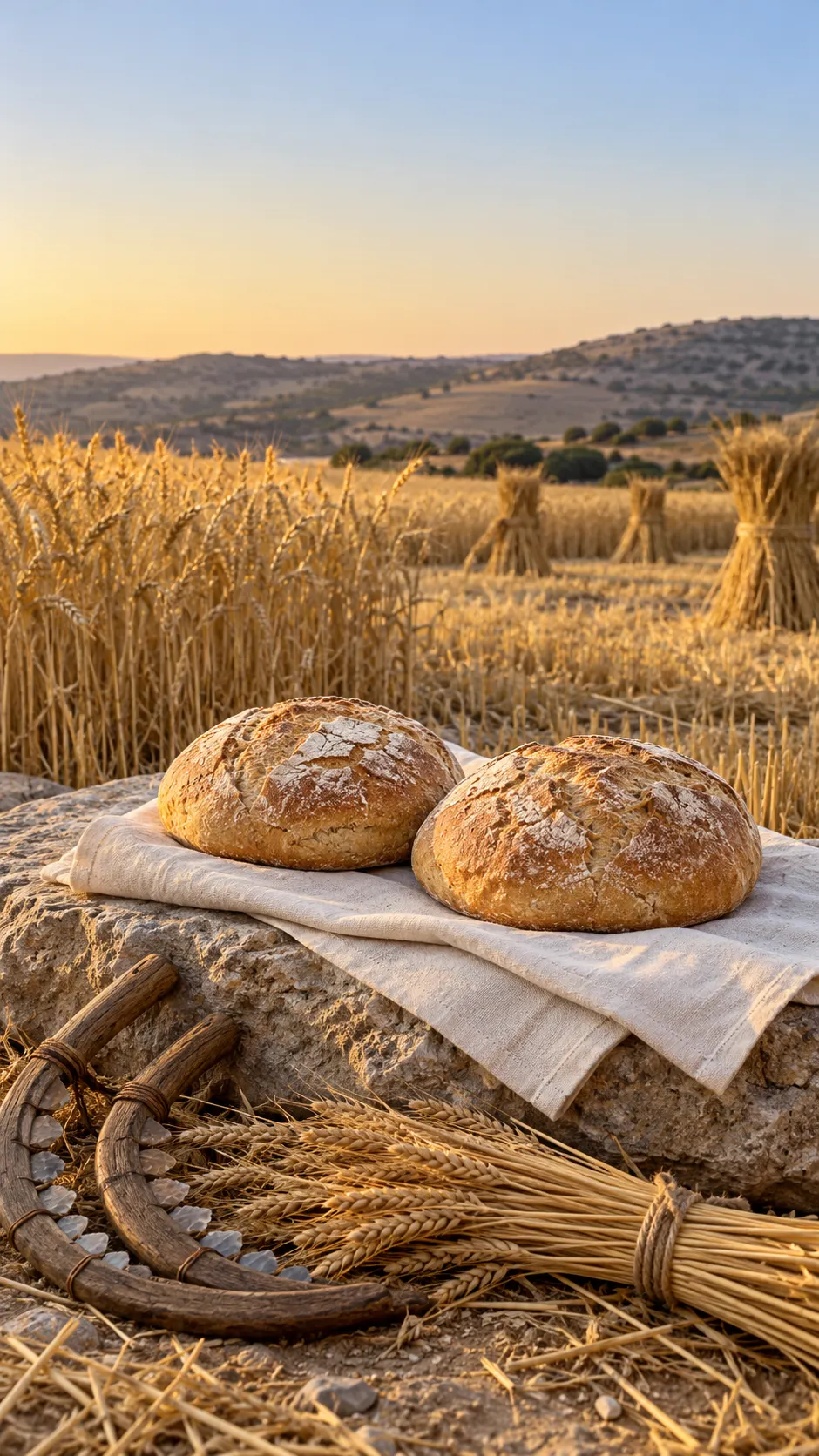
From the day after the Sabbath, the day you brought the sheaf of the wave offering, you are to count off seven full weeks. You shall count off fifty days until the day after the seventh Sabbath, and then present an offering of new grain to the LORD.
Bring two loaves of bread from your dwellings as a wave offering, each made from two-tenths of an ephah of fine flour, baked with leaven, as the firstfruits to the LORD.
Narrated by Bob Souer · BSB audio, public domain
What to bring
Burnt offering
Along with the bread you are to present seven unblemished male lambs a year old, one young bull, and two rams.
They will be a burnt offering to the LORD, together with their grain offerings and drink offerings—a food offering, a pleasing aroma to the LORD.
Sin and peace
You shall also prepare one male goat as a sin offering and two male lambs a year old as a peace offering.
Wave offering
The priest is to wave the lambs as a wave offering before the LORD, together with the bread of the firstfruits.
The bread and the two lambs shall be holy to the LORD for the priest.
Rest
On that same day you are to proclaim a sacred assembly, and you must not do any regular work.
This is to be a permanent statute wherever you live for the generations to come.
When you reap the harvest of your land, do not reap all the way to the edges of your field or gather the gleanings of your harvest. Leave them for the poor and the foreign resident. I am the LORD your God.’”
The LORD also said to Moses, “Speak to the Israelites and say, ‘On the first day of the seventh month you are to have a day of rest, a sacred assembly announced by trumpet blasts. You must not do any regular work, but you are to present a food offering to the LORD.’”
Again the LORD said to Moses, “The tenth day of this seventh month is the Day of Atonement. You shall hold a sacred assembly and humble yourselves, and present a food offering to the LORD.
The law
Rest
On this day you are not to do any work, for it is the Day of Atonement, when atonement is made for you before the LORD your God.
Cut off
If anyone does not humble himself on this day, he must be cut off from his people.
I will destroy from among his people anyone who does any work on this day.
Rest
You are not to do any work at all.
This is a permanent statute for the generations to come, wherever you live.
It will be a Sabbath of complete rest for you, and you shall humble yourselves.
From the evening of the ninth day of the month until the following evening you are to keep your Sabbath.”
atonement is made for you before the LORD your God
Leviticus 23:28
Pray
Once a year Israel stopped everything, humbled themselves, and waited while “atonement is made for you before the LORD your God.” Jesus has made that atonement once for all. Take a quiet minute. Confess what you know is wrong, by name. Then thank Him that you are forgiven, not by your work, but by His.
The LORD’s feasts
Autumn
And the LORD said to Moses, “Speak to the Israelites and say, ‘On the fifteenth day of the seventh month the Feast of Tabernacles to the LORD begins, and it continues for seven days.
Rest
On the first day there shall be a sacred assembly.
You must not do any regular work.
Offering
For seven days you are to present a food offering to the LORD.
Rest
On the eighth day you are to hold a sacred assembly and present a food offering to the LORD.
It is a solemn assembly; you must not do any regular work.
These are the LORD’s appointed feasts, which you are to proclaim as sacred assemblies for presenting food offerings to the LORD—burnt offerings and grain offerings, sacrifices and drink offerings, each on its designated day. These offerings are in addition to the offerings for the LORD’s Sabbaths, and in addition to your gifts, to all your vow offerings, and to all the freewill offerings you give to the LORD.
You are to dwell in booths for seven days. All the native-born of Israel must dwell in booths, so that your descendants may know that I made the Israelites dwell in booths when I brought them out of the land of Egypt. I am the LORD your God.’”
So Moses announced to the Israelites the appointed feasts of the LORD.
Question
At one of the feasts the priest waved two loaves of bread before the LORD, and these loaves were baked with leaven.
Which feast was it?
You’ve experienced
Leviticus 23
0 of 27 chapters read
A verse to carry with you
For six days work may be done, but the seventh day is a Sabbath of complete rest, a day of sacred assembly. You must not do any work; wherever you live, it is a Sabbath to the LORD.
Leviticus 23:3
or swipe left