
The Book of
Leviticus 22
33 verses≈ 6 min1 personBSB
Images are artistic interpretations.
Tap any post to go deeper
In this chapter

The Book of
33 verses≈ 6 min1 personBSB
Images are artistic interpretations.
Tap any post to go deeper
In this chapter
Where we are
Then the LORD said to Moses, “Tell Aaron and his sons to treat with respect the sacred offerings that the Israelites have consecrated to Me, so that they do not profane My holy name. I am the LORD.
Tap to go deeper: meaning, history and related Scripture
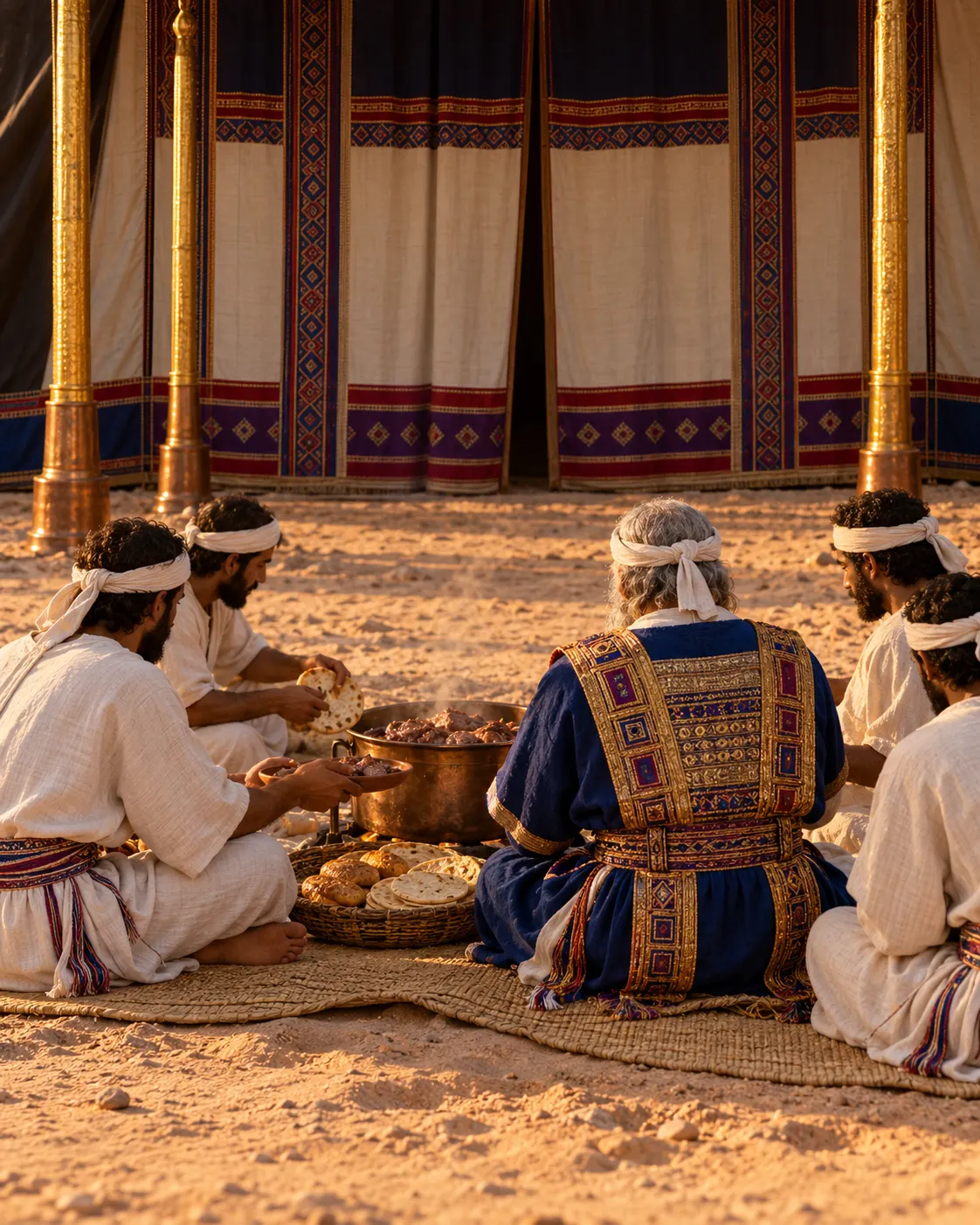
Tell them that for the generations to come, if any of their descendants in a state of uncleanness approaches the sacred offerings that the Israelites consecrate to the LORD, that person must be cut off from My presence. I am the LORD.
If a descendant of Aaron has a skin disease or a discharge, he may not eat the sacred offerings until he is clean.
Whoever touches anything defiled by a corpse or by a man who has an emission of semen, or whoever touches a crawling creature or a person that makes him unclean, whatever the uncleanness may be— the man who touches any of these will remain unclean until evening. He must not eat from the sacred offerings unless he has bathed himself with water.
When the sun has set, he will become clean, and then he may eat from the sacred offerings, for they are his food.
He must not eat anything found dead or torn by wild animals, which would make him unclean. I am the LORD.
The priests must keep My charge, lest they bear the guilt and die because they profane it. I am the LORD who sanctifies them.

Reflect
An unclean priest could not eat the holy food. But the law did not leave him outside for good: he washed, and “When the sun has set, he will become clean, and then he may eat from the sacred offerings.” What makes you hold back from God, feeling too unclean to come near? Write it down. Then ask yourself: do I believe He cleanses, and that His table is open to me again?
Outside
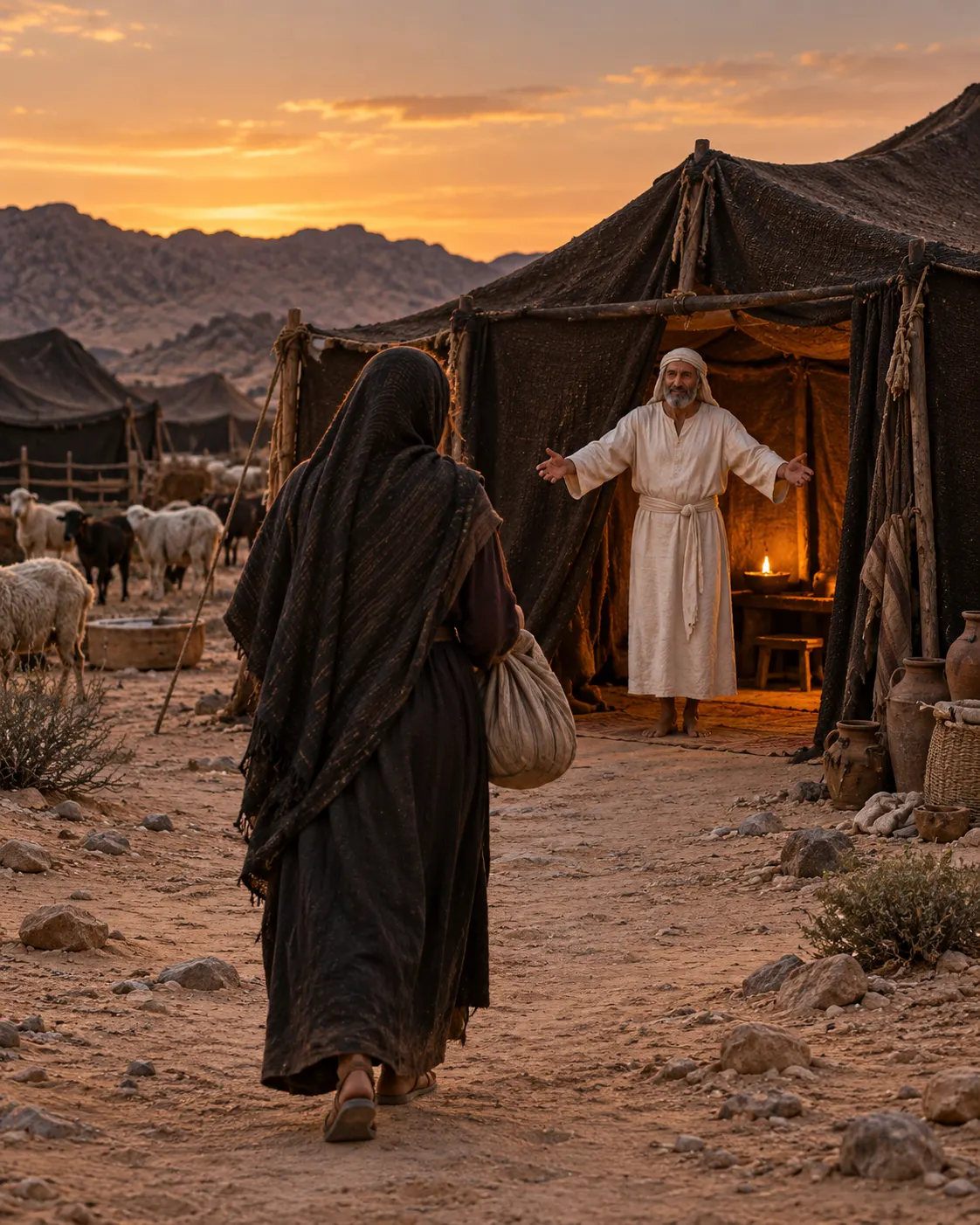
No one outside a priest’s family may eat the sacred offering, nor may the guest of a priest or his hired hand eat it.
Household
But if a priest buys a slave with his own money, or if a slave is born in his household, that slave may eat his food.
Outside
If the priest’s daughter is married to a man other than a priest, she is not to eat of the sacred contributions.
Household
But if a priest’s daughter with no children becomes widowed or divorced and returns to her father’s house, she may share her father’s food as in her youth. But no outsider may share it.
If anyone eats a sacred offering in error, he must add a fifth to its value and give the sacred offering to the priest. The priests must not profane the sacred offerings that the Israelites present to the LORD by allowing the people to eat the sacred offerings and thus to bear the punishment for guilt. For I am the LORD who sanctifies them.”
The law
When a man presents a peace offering to the LORD from the herd or flock to fulfill a vow or as a freewill offering, it must be without blemish or defect to be acceptable.
You are not to present to the LORD any animal that is blind, injured, or maimed, or anything with a running sore, a festering rash, or a scab; you must not put any of these on the altar as a food offering to the LORD.
You may present as a freewill offering an ox or sheep that has a deformed or stunted limb, but it is not acceptable in fulfillment of a vow.
You are not to present to the LORD an animal whose testicles are bruised, crushed, torn, or cut; you are not to sacrifice them in your land.
Neither you nor a foreigner shall present food to your God from any such animal. They will not be accepted on your behalf, because they are deformed and flawed.’”
Whiteboard
God asked for “an unblemished male” on the altar, and a priest without defect to offer it. Both taught that only what is whole may come before a holy God. Yet Hebrews says the blood of animals could never take away sins. Christ is both the holy High Priest and the spotless Lamb. He offered Himself once, and in Him God presents us holy and blameless.
Pray
God said of every gift, “You must not present anything with a defect.” Thank Jesus, the spotless Lamb, who gave Himself whole for you. Then ask Him where you have been giving Him the leftovers: your tired time, your spare money, your second thoughts. Pray for a glad heart to give Him your best.
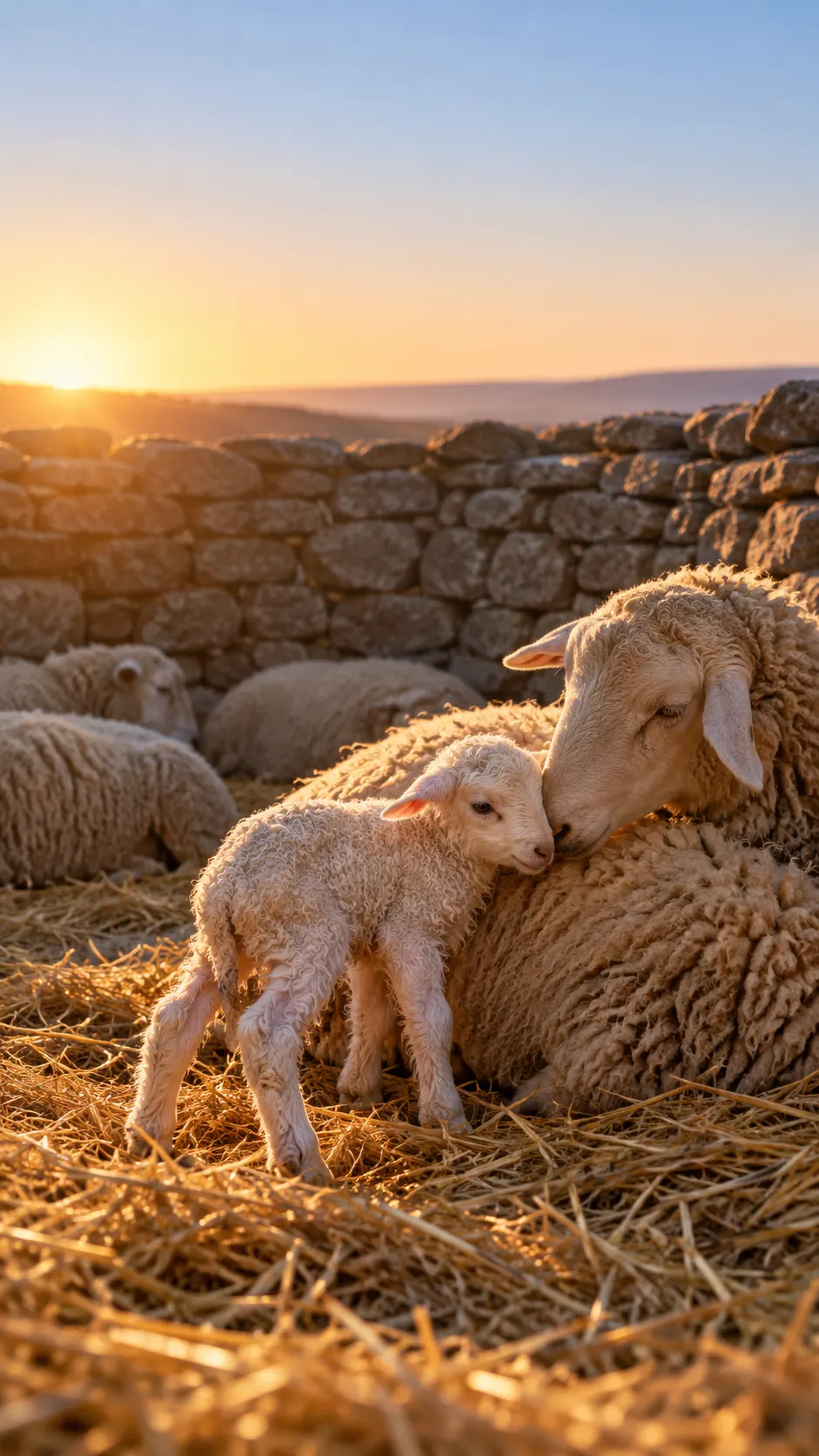
Then the LORD said to Moses, “When an ox, a sheep, or a goat is born, it must remain with its mother for seven days. From the eighth day on, it will be acceptable as a food offering presented to the LORD. But you must not slaughter an ox or a sheep on the same day as its young.
Narrated by Bob Souer · BSB audio, public domain
When you sacrifice a thank offering to the LORD, offer it so that it may be acceptable on your behalf. It must be eaten that same day. Do not leave any of it until morning. I am the LORD.
You are to keep My commandments and practice them. I am the LORD. You must not profane My holy name. I must be acknowledged as holy among the Israelites. I am the LORD who sanctifies you, who brought you out of the land of Egypt to be your God. I am the LORD.”
Leviticus 22:31–33
Question
Anyone in Israel, even a foreign resident, could bring a burnt offering to keep a vow or as a free gift.
What did a burnt offering have to be?
You’ve experienced
Leviticus 22
0 of 27 chapters read
A verse to carry with you
I am the LORD who sanctifies you, who brought you out of the land of Egypt to be your God.
Leviticus 22:32–33
or swipe left