The Book of
Judges 1
36 verses≈ 6 min4 peopleBSB
Images are artistic interpretations.
Tap any post to go deeper
In this chapter

The Book of
36 verses≈ 6 min4 peopleBSB
Images are artistic interpretations.
Tap any post to go deeper
In this chapter
Where we are
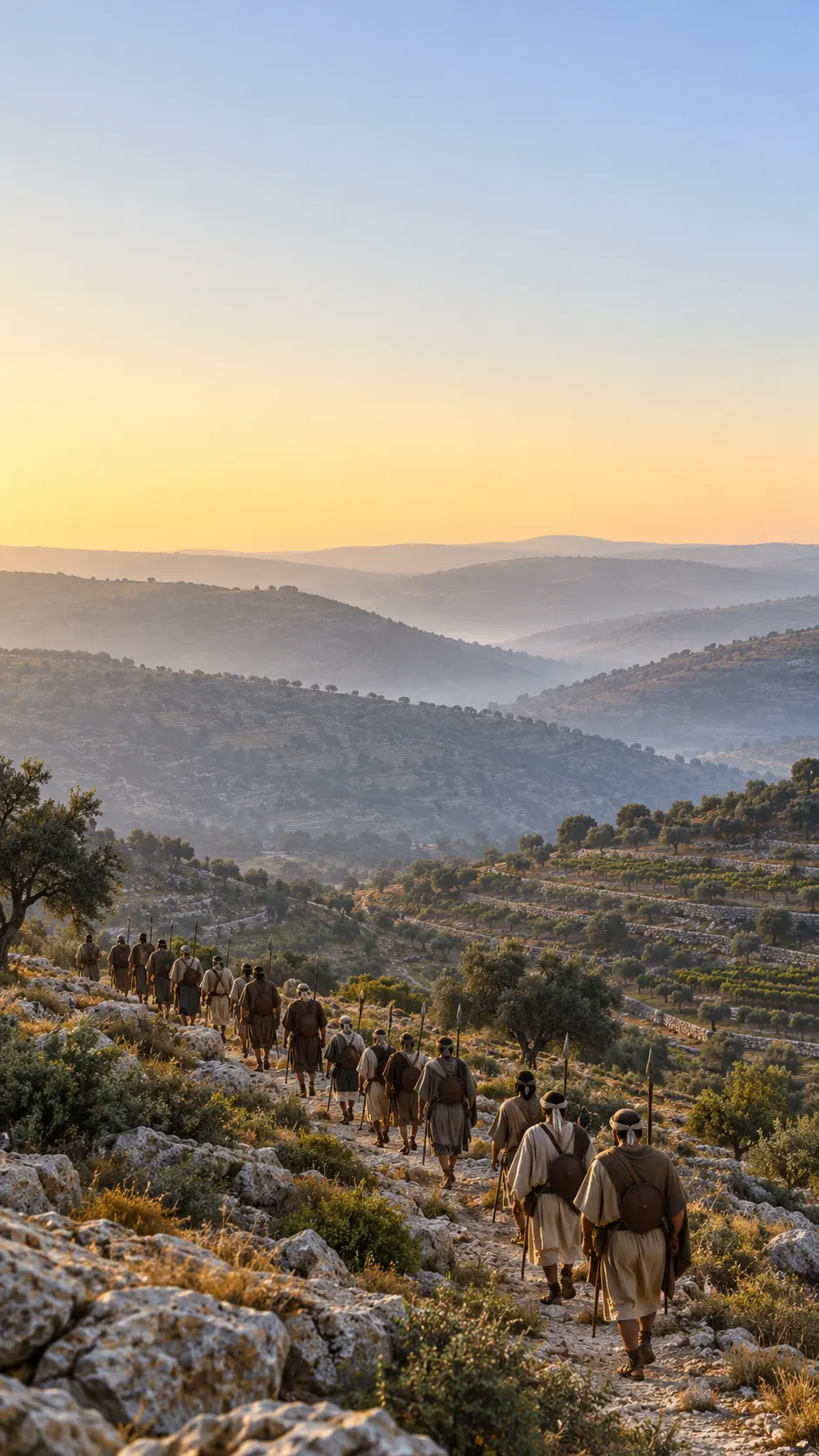
After the death of Joshua, the Israelites inquired of the LORD, “Who will be the first to go up and fight for us against the Canaanites?”
Tap to go deeper: meaning, history and related Scripture
“Judah shall go up,” answered the LORD. “Indeed, I have delivered the land into their hands.”
Judges 1:2
Then the men of Judah said to their brothers the Simeonites, “Come up with us to our allotted territory, and let us fight against the Canaanites. And we likewise will go with you to your territory.” So the Simeonites went with them.
When Judah attacked, the LORD delivered the Canaanites and Perizzites into their hands, and they struck down ten thousand men at Bezek. And there they found Adoni-bezek and fought against him, striking down the Canaanites and Perizzites. As Adoni-bezek fled, they pursued him, seized him, and cut off his thumbs and big toes.
Then Adoni-bezek said, “Seventy kings with their thumbs and big toes cut off have gathered the scraps under my table. As I have done to them, so God has repaid me.” And they brought him to Jerusalem, where he died.
Judah
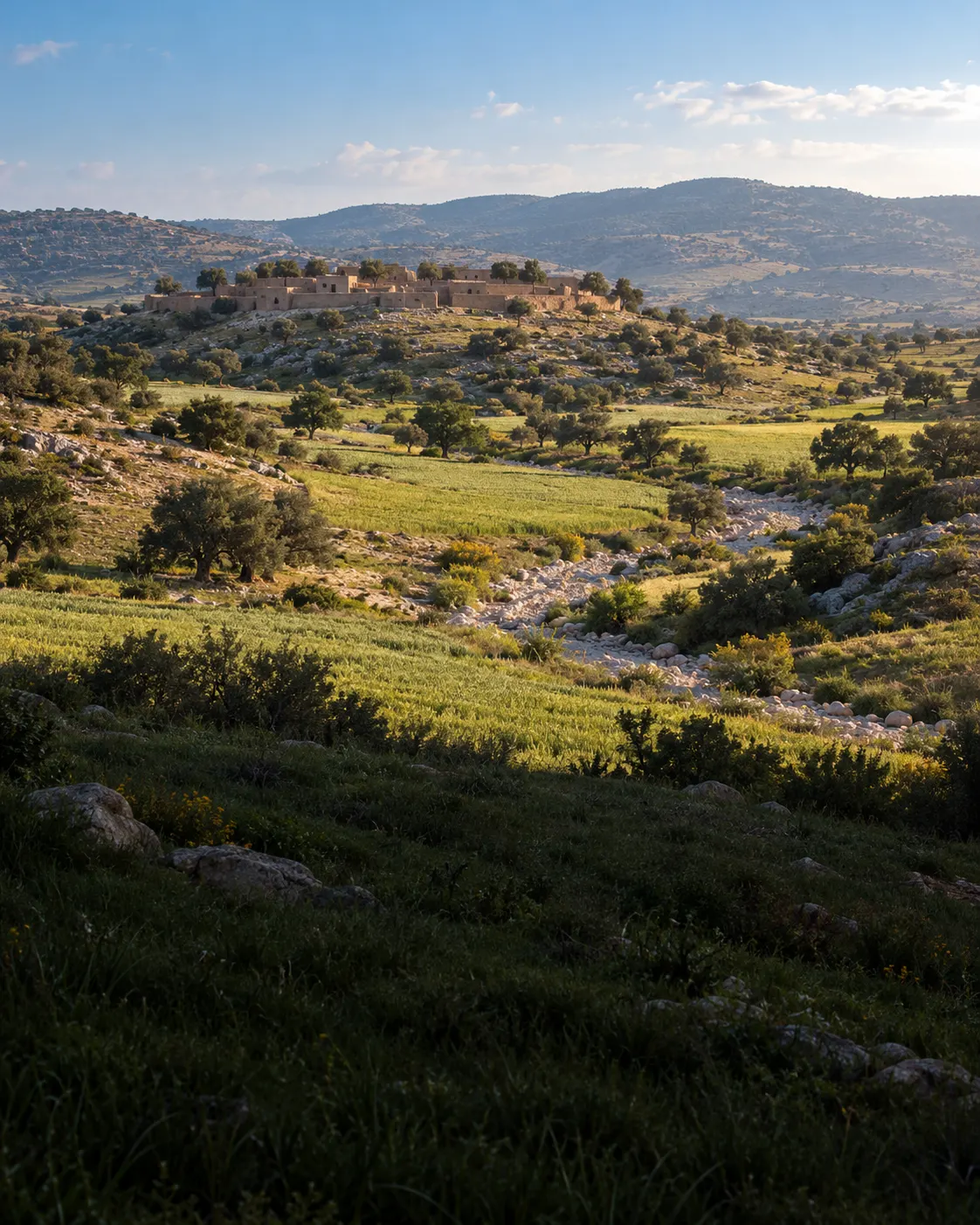
Then the men of Judah fought against Jerusalem and captured it.
They put the city to the sword and set it on fire.
Afterward, the men of Judah marched down to fight against the Canaanites living in the hill country, in the Negev, and in the foothills.
Judah also marched against the Canaanites who were living in Hebron (formerly known as Kiriath-arba), and they struck down Sheshai, Ahiman, and Talmai.
From there they marched against the inhabitants of Debir (formerly known as Kiriath-sepher).
And Caleb said, “To the man who strikes down Kiriath-sepher and captures it, I will give my daughter Acsah in marriage.” So Othniel son of Caleb’s younger brother Kenaz captured the city, and Caleb gave his daughter Acsah to him in marriage.
One day Acsah came to Othniel and urged him to ask her father for a field.
Caleb
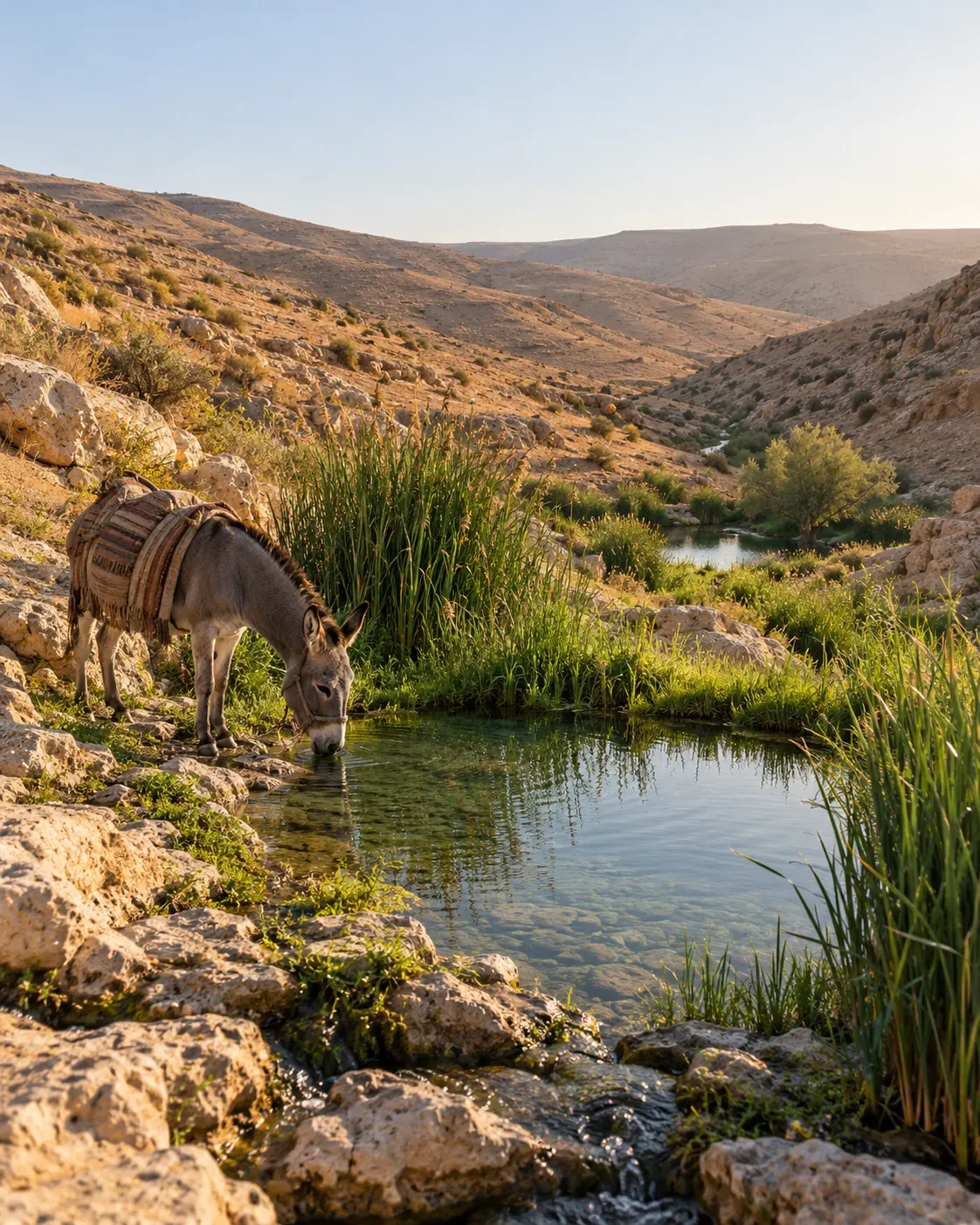
When she got off her donkey, Caleb asked her, “What do you desire?”
Acsah
“Give me a blessing,” she answered. “Since you have given me land in the Negev, give me springs of water as well.”
So Caleb gave her both the upper and lower springs.
Question
Caleb promised his daughter to the man who would take Kiriath-sepher, and a young man of his own family stepped up.
Who captured Kiriath-sepher and later became Israel’s first judge?
The LORD was with Judah, and they took possession of the hill country; but they could not drive out the inhabitants of the plains because they had chariots of iron.
The LORD was with Judah, and they took possession of the hill country
Judges 1:19
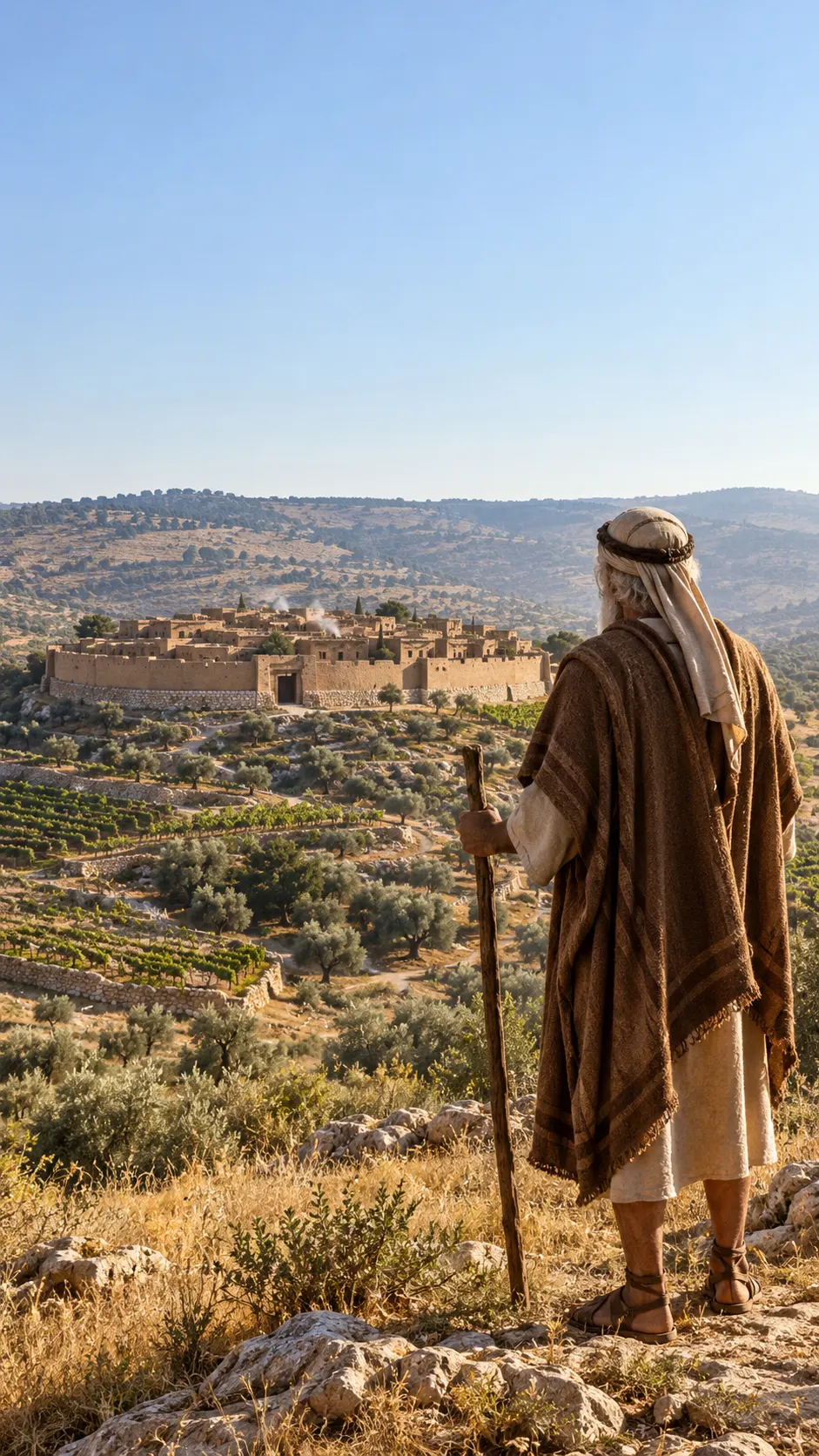
The Benjamites, however, failed to drive out the Jebusites living in Jerusalem. So to this day the Jebusites live there among the Benjamites.
The house of Joseph also attacked Bethel, and the LORD was with them. They sent spies to Bethel (formerly known as Luz),
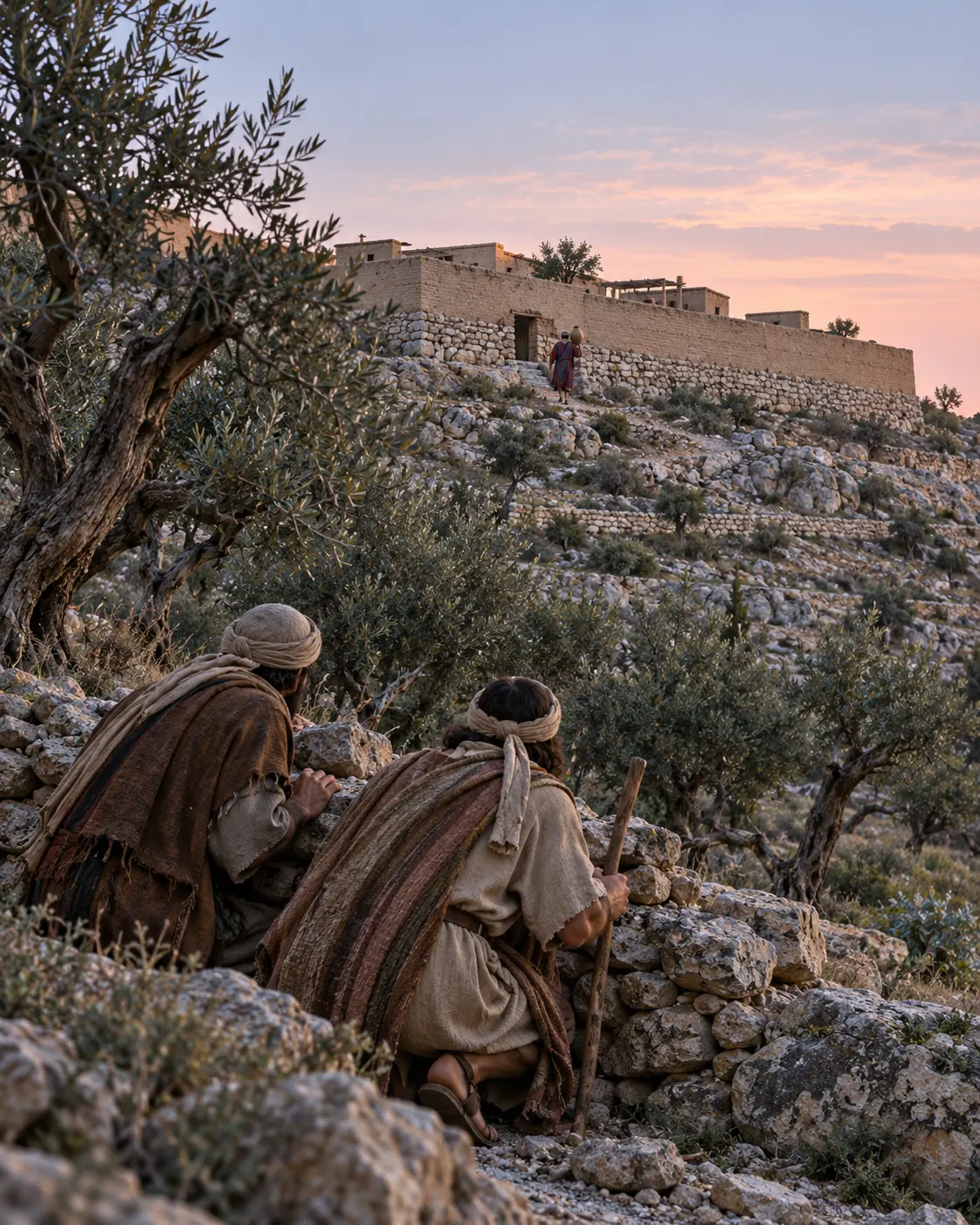
So the man showed them the entrance to the city, and they put the city to the sword but released that man and all his family. And the man went to the land of the Hittites, built a city, and called it Luz, which is its name to this day.
Narrated by Bob Souer · BSB audio, public domain
Reflect
“The LORD was with Judah,” and still they stopped at the edge of the plain, “because they had chariots of iron.” God had already said chariots would not stop His people. Where have you stopped short of something God plainly told you to do? Write it down, and be honest about whether it is really ‘could not’ or ‘would not’.
Stylised map · locations approximate
On the map
Judah took the hills around Jerusalem, Hebron and Debir and the south toward Arad and Hormah, and Gaza for a time; Joseph took Bethel. But Gezer, Megiddo and Beth-shean stayed Canaanite, and so did Acco and Sidon on the coast, north of this map. Jerusalem itself was burned but not held. The site of Bezek is uncertain, and so are those of Debir, Arad and Hormah.
Manasseh
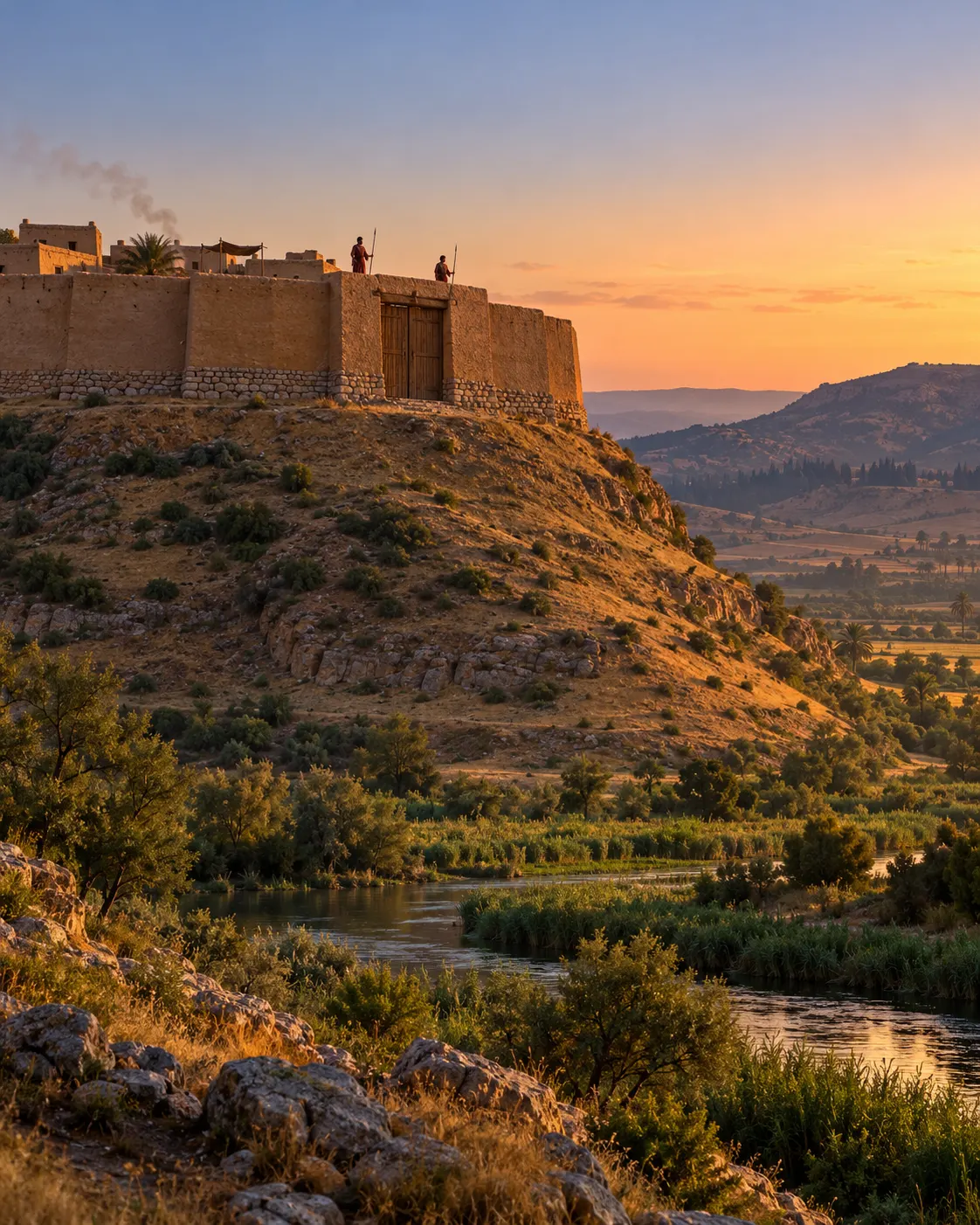
At that time Manasseh failed to drive out the inhabitants of Beth-shean, Taanach, Dor, Ibleam, Megiddo, and their villages; for the Canaanites were determined to dwell in that land.
When Israel became stronger, they pressed the Canaanites into forced labor, but they never drove them out completely.
Ephraim
Ephraim also failed to drive out the Canaanites living in Gezer; so the Canaanites continued to dwell among them in Gezer.
Zebulun
Zebulun failed to drive out the inhabitants of Kitron and Nahalol; so the Canaanites lived among them and served as forced laborers.
Asher
Asher failed to drive out the inhabitants of Acco, Sidon, Ahlab, Achzib, Helbah, Aphik, and Rehob.
So the Asherites lived among the Canaanite inhabitants of the land, because they did not drive them out.
Naphtali
Naphtali failed to drive out the inhabitants of Beth-shemesh and Beth-anath.
So the Naphtalites also lived among the Canaanite inhabitants of the land, but the inhabitants of Beth-shemesh and Beth-anath served them as forced laborers.
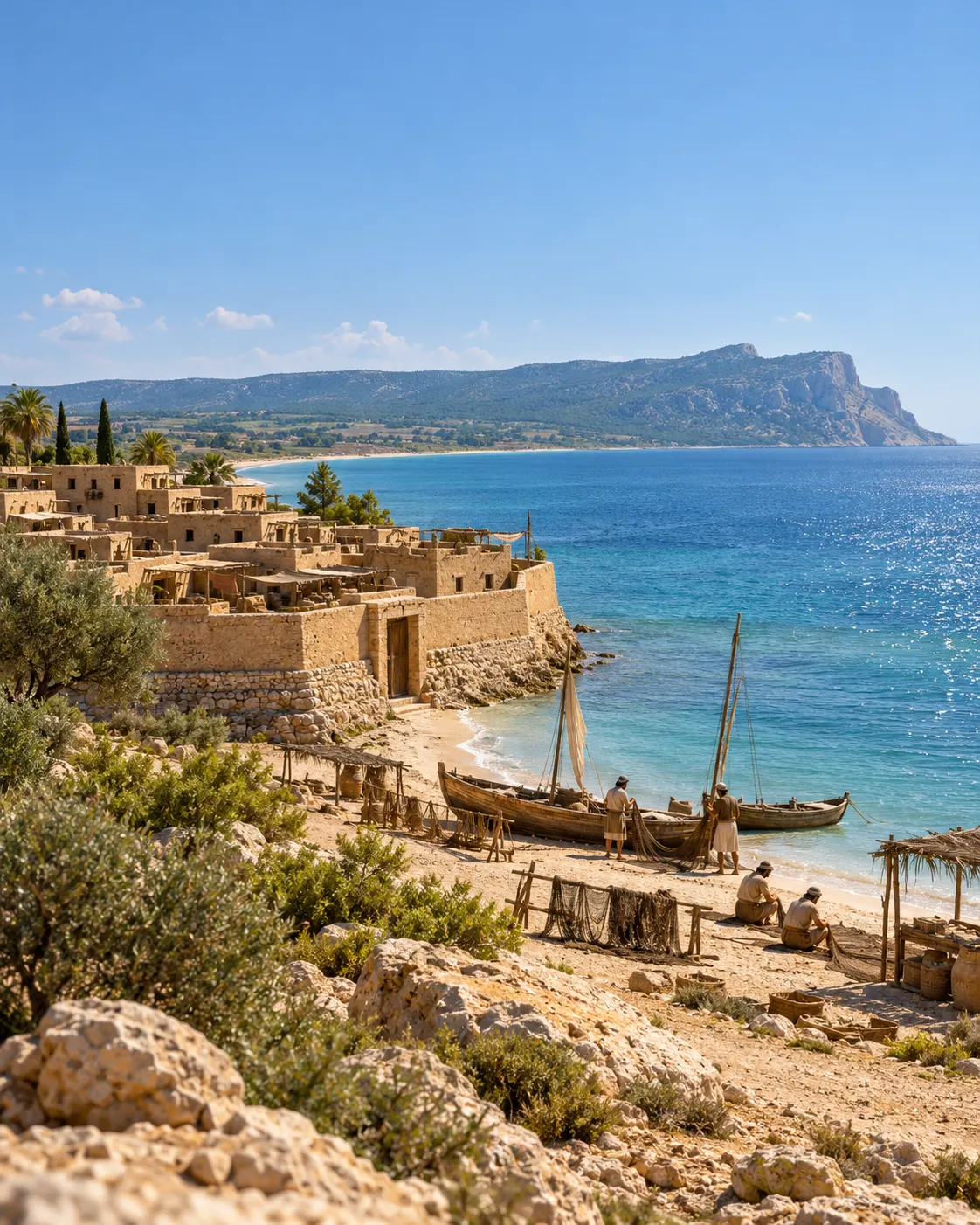
The Amorites forced the Danites into the hill country and did not allow them to come down into the plain. And the Amorites were determined to dwell in Mount Heres, Aijalon, and Shaalbim. But when the house of Joseph grew in strength, they pressed the Amorites into forced labor.
And the border of the Amorites extended from the Ascent of Akrabbim to Sela and beyond.
Whiteboard
Read from south to north, the list goes downhill. Judah takes the hill country but not the plains. Benjamin leaves the Jebusites in Jerusalem. Then the Canaanites live among Israel, then “the Asherites lived among the Canaanite inhabitants of the land,” and at last the Amorites “did not allow them to come down into the plain.” The LORD had not changed. Israel’s obedience had.
Pray
Judah went up because the LORD said, “Indeed, I have delivered the land into their hands,” and then tribe after tribe settled for less. Thank God that He stays with His people even when they stop short. Then ask Him for a whole heart: Lord, keep me from making peace with what You told me to drive out. Give me faith to take You at Your word, all the way. Amen.
You’ve experienced
Judges 1
0 of 21 chapters read
A verse to carry with you
“Judah shall go up,” answered the LORD. “Indeed, I have delivered the land into their hands.”
Judges 1:2
or swipe left