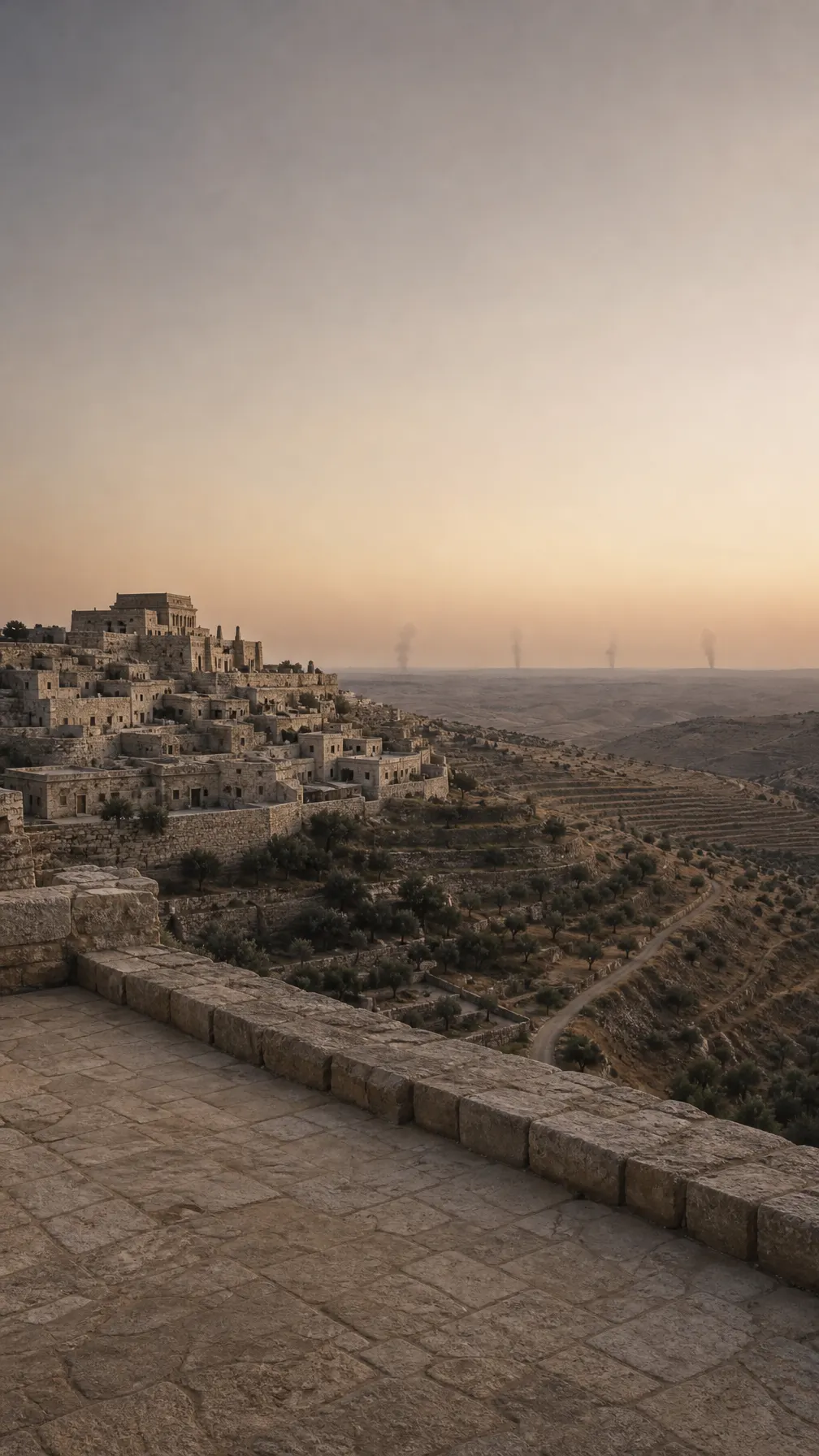
Hezekiah’s crisis
Isaiah 36
22 verses≈ 5 minBSB
Images are artistic interpretations.
Tap any post to go deeper

Hezekiah’s crisis
22 verses≈ 5 minBSB
Images are artistic interpretations.
Tap any post to go deeper
Where we are
In the fourteenth year of Hezekiah’s reign, Sennacherib king of Assyria attacked and captured all the fortified cities of Judah.
Tap to go deeper: meaning, history and related Scripture
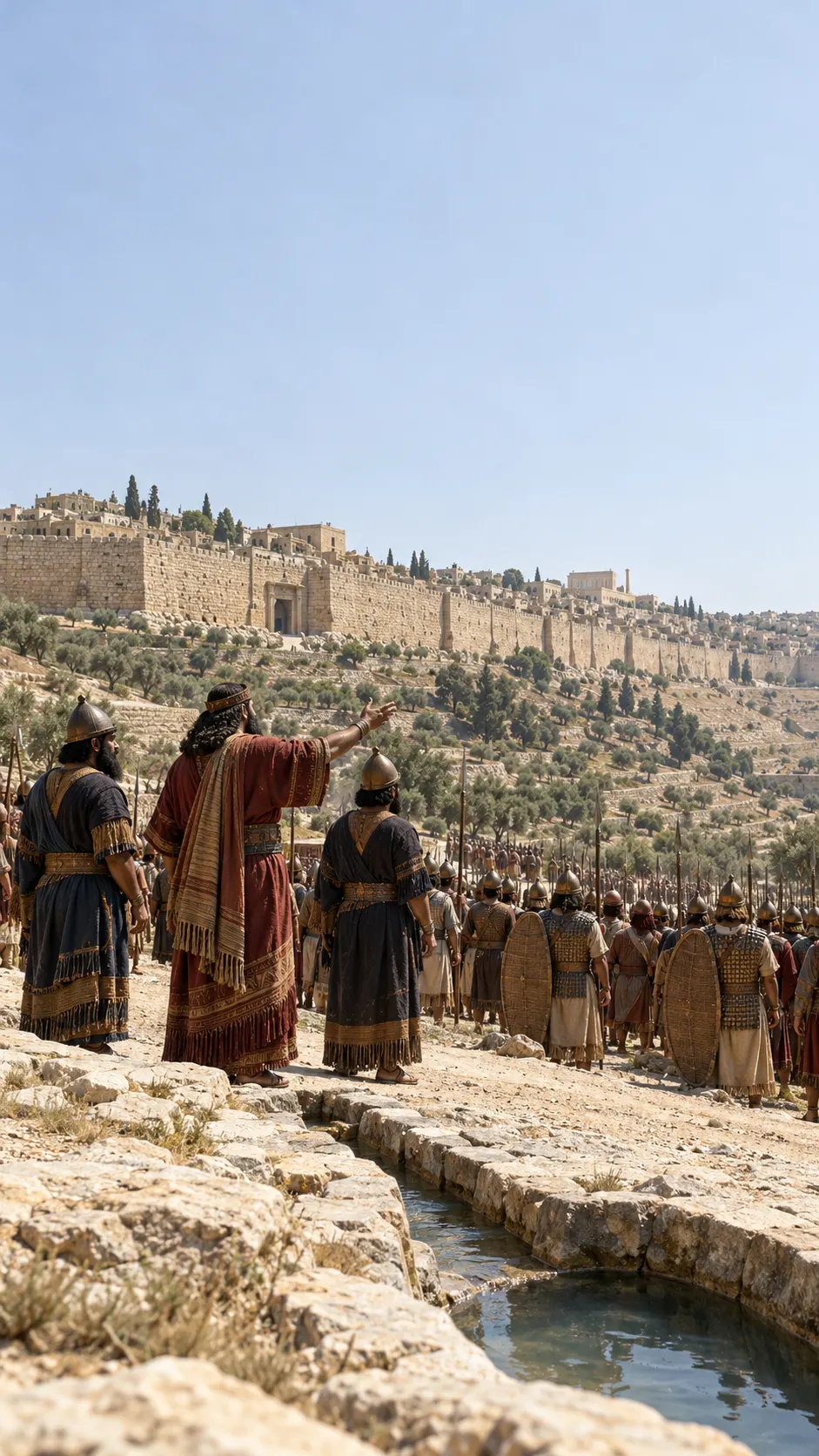
And the king of Assyria sent the Rabshakeh, with a great army, from Lachish to King Hezekiah at Jerusalem. And he stopped by the aqueduct of the upper pool, on the road to the Launderer’s Field.
Narrated by Bob Souer · BSB audio, public domain
Then Eliakim son of Hilkiah the palace administrator, Shebna the scribe, and Joah son of Asaph the recorder, went out to him.
Stylised map · locations approximate
On the map
Sennacherib took Judah’s fortified cities and made his camp at Lachish, about thirty miles southwest of Jerusalem. From there he sent his commanders with a great army up to Jerusalem. Later he was fighting at Libnah, a few miles away (its site is uncertain), as an army from Egypt and Cush came up the coast road past Gaza.
The Rabshakeh said to them, “Tell Hezekiah that this is what the great king, the king of Assyria, says: What is the basis of this confidence of yours? You claim to have a strategy and strength for war, but these are empty words. In whom are you now trusting, that you have rebelled against me?
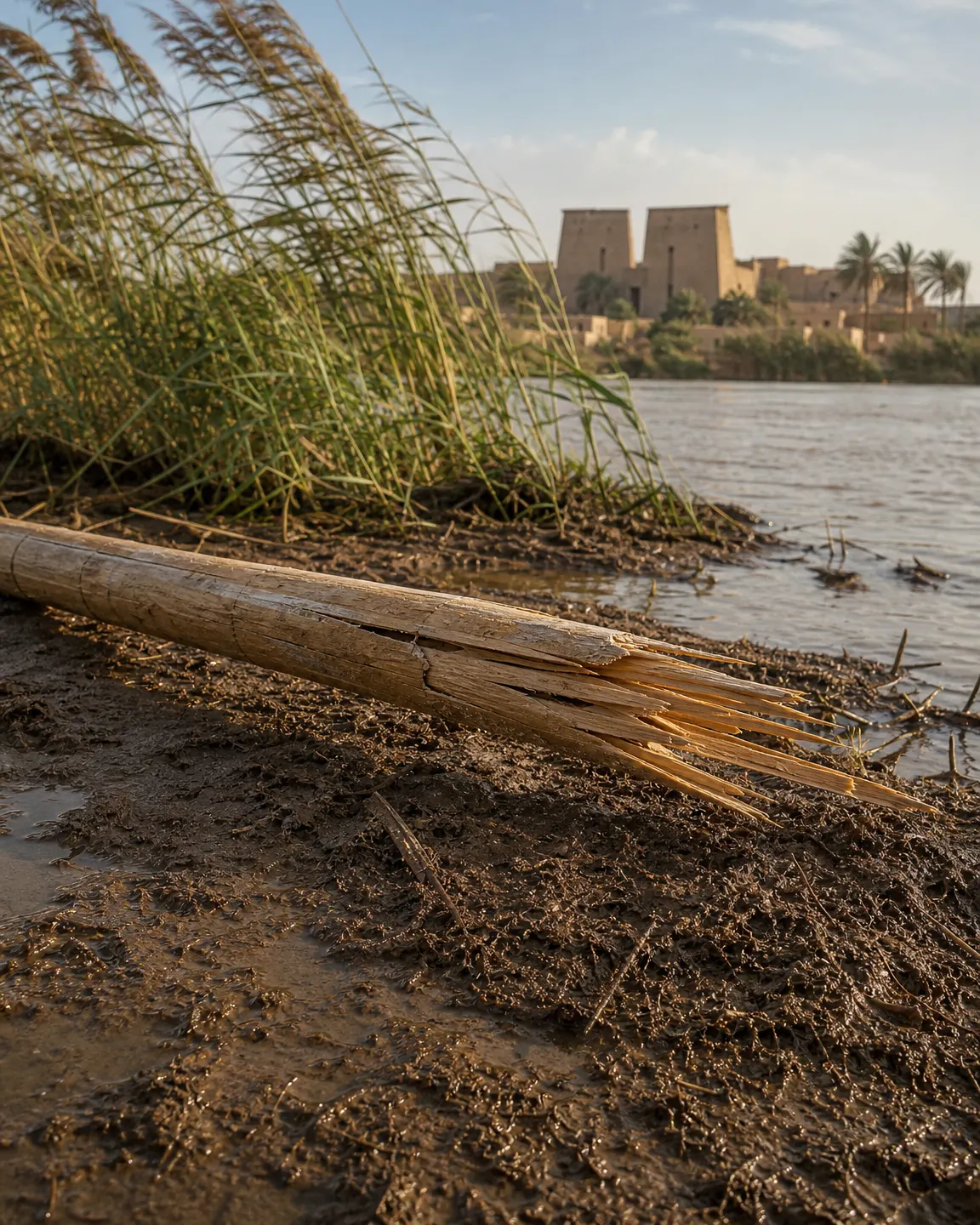
But if you say to me, ‘We trust in the LORD our God,’ is He not the One whose high places and altars Hezekiah has removed, saying to Judah and Jerusalem, ‘You must worship before this altar’?
Now, therefore, make a bargain with my master, the king of Assyria. I will give you two thousand horses—if you can put riders on them! For how can you repel a single officer among the least of my master’s servants when you depend on Egypt for chariots and horsemen?
So now, was it apart from the LORD that I have come up against this land to destroy it? The LORD Himself said to me, ‘Go up against this land and destroy it.’”
Question
The Rabshakeh went through every support Judah might lean on, and started with Egypt.
What did the Rabshakeh call Egypt (36:6)?
Eliakim
Then Eliakim, Shebna, and Joah said to the Rabshakeh, “Please speak to your servants in Aramaic, since we understand it. Do not speak to us in Hebrew in the hearing of the people on the wall.”
The Rabshakeh
But the Rabshakeh replied, “Has my master sent me to speak these words only to you and your master, and not to the men sitting on the wall, who are destined with you to eat their own dung and drink their own urine?”
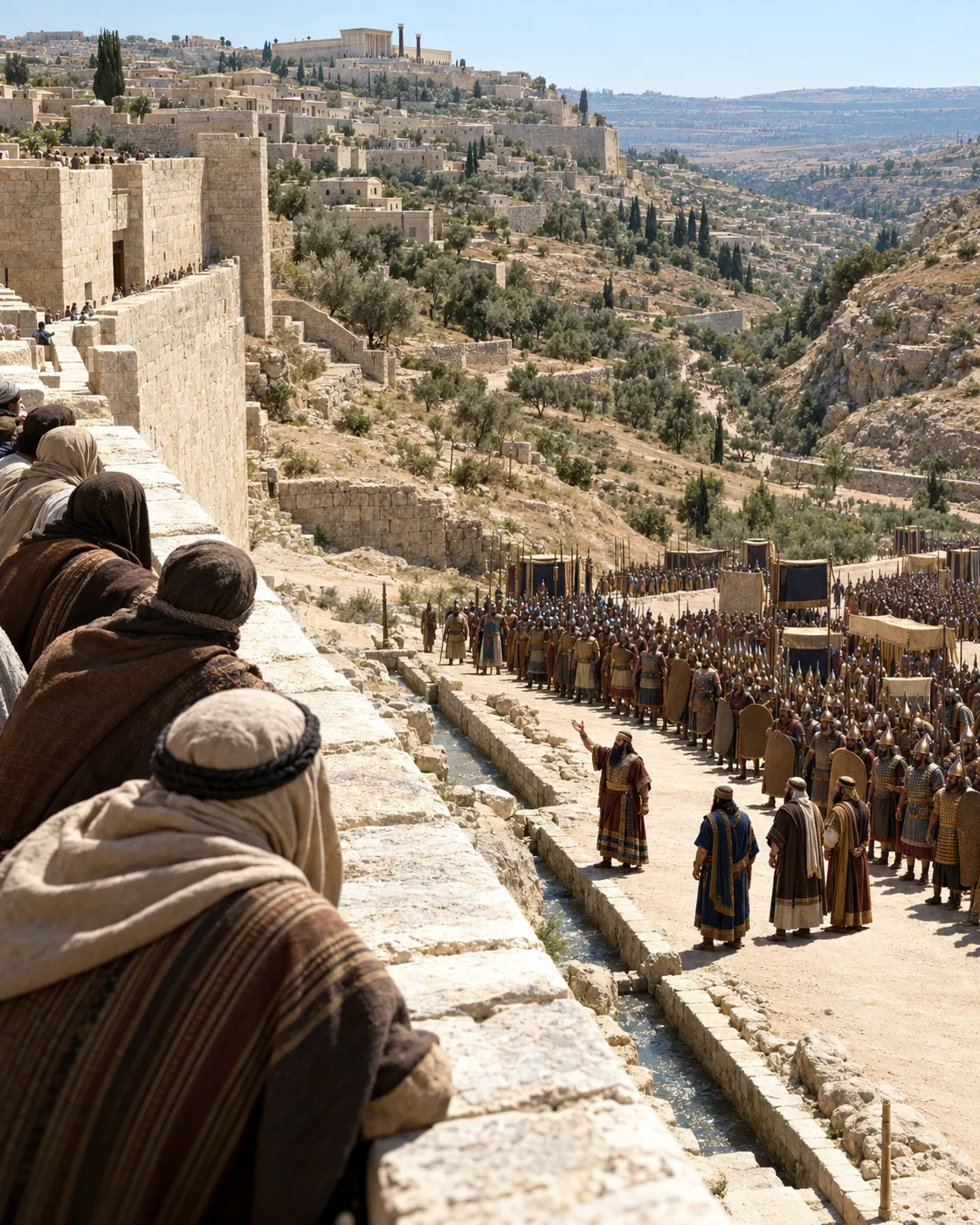
Do not let Hezekiah persuade you to trust in the LORD when he says, ‘The LORD will surely deliver us; this city will not be given into the hand of the king of Assyria.’
Do not listen to Hezekiah, for this is what the king of Assyria says: Make peace with me and come out to me. Then every one of you will eat from his own vine and his own fig tree, and drink water from his own cistern, until I come and take you away to a land like your own—a land of grain and new wine, a land of bread and vineyards.
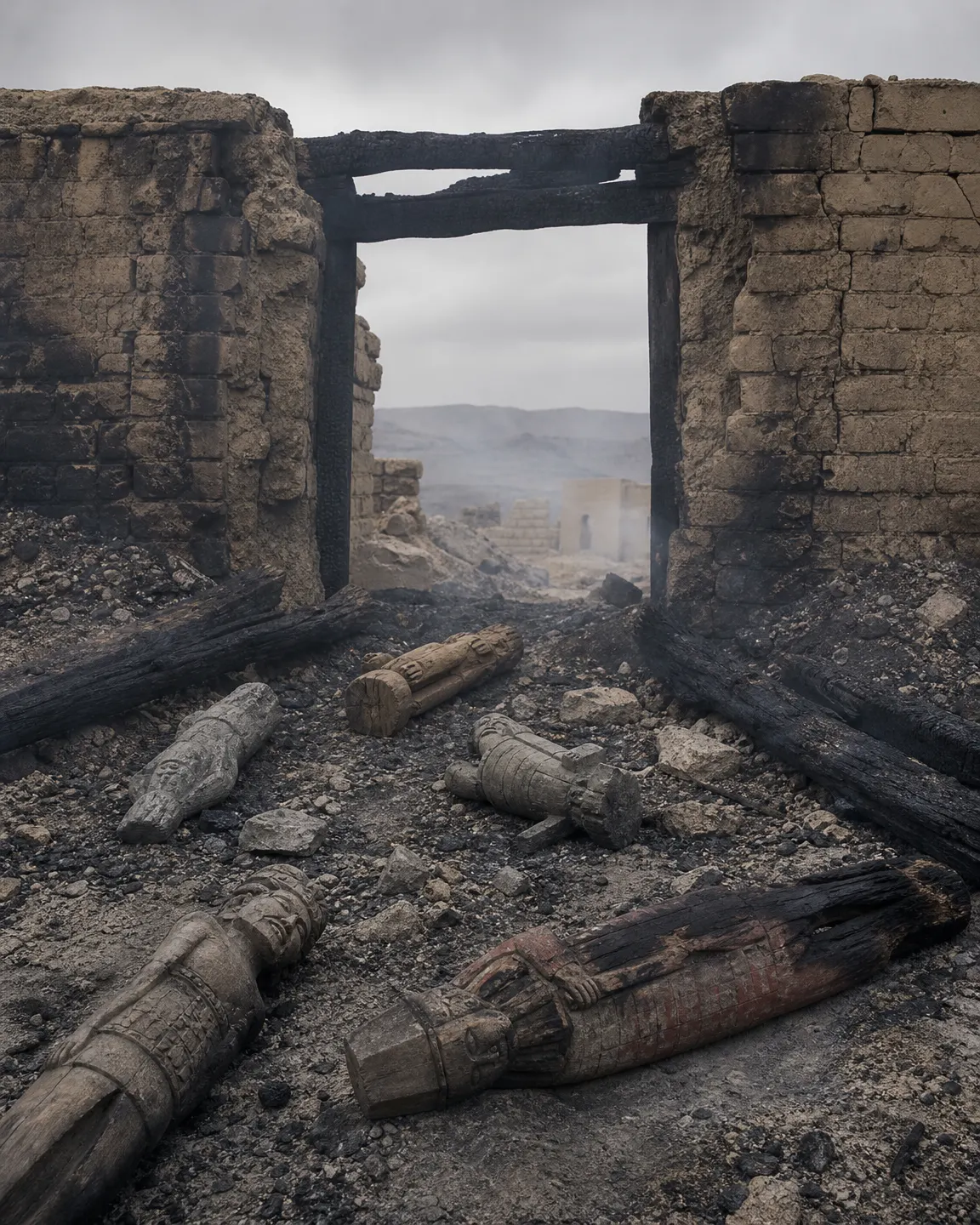
But the people remained silent and did not answer a word, for Hezekiah had commanded, “Do not answer him.”
Isaiah 36:21
Then Hilkiah’s son Eliakim the palace administrator, Shebna the scribe, and Asaph’s son Joah the recorder came to Hezekiah with their clothes torn, and they relayed to him the words of the Rabshakeh.
Pray
Lord, voices around me ask what my confidence is. Give me the wisdom to keep silent when silence is right, and to bring every taunt to You, as Hezekiah’s men did.
Whiteboard
Every argument was built to break trust in the LORD. The people’s answer was silence, and the king took it to God.
You’ve experienced
Isaiah 36
0 of 66 chapters read
A verse to carry with you
But the people remained silent and did not answer a word, for Hezekiah had commanded, “Do not answer him.”
Isaiah 36:21
or swipe left