The Book of
Hebrews 9
28 verses≈ 5 min2 peopleBSB
Images are artistic interpretations.
Tap any post to go deeper
In this chapter

The Book of
28 verses≈ 5 min2 peopleBSB
Images are artistic interpretations.
Tap any post to go deeper
In this chapter
Where we are
Now the first covenant had regulations for worship and also an earthly sanctuary.
Tap to go deeper: meaning, history and related Scripture
In this chapter
When everything had been prepared in this way, the priests entered regularly into the first room to perform their sacred duties.
But only the high priest entered the second room, and then only once a year, and never without blood, which he offered for himself and for the sins the people had committed in ignorance.
Whiteboard
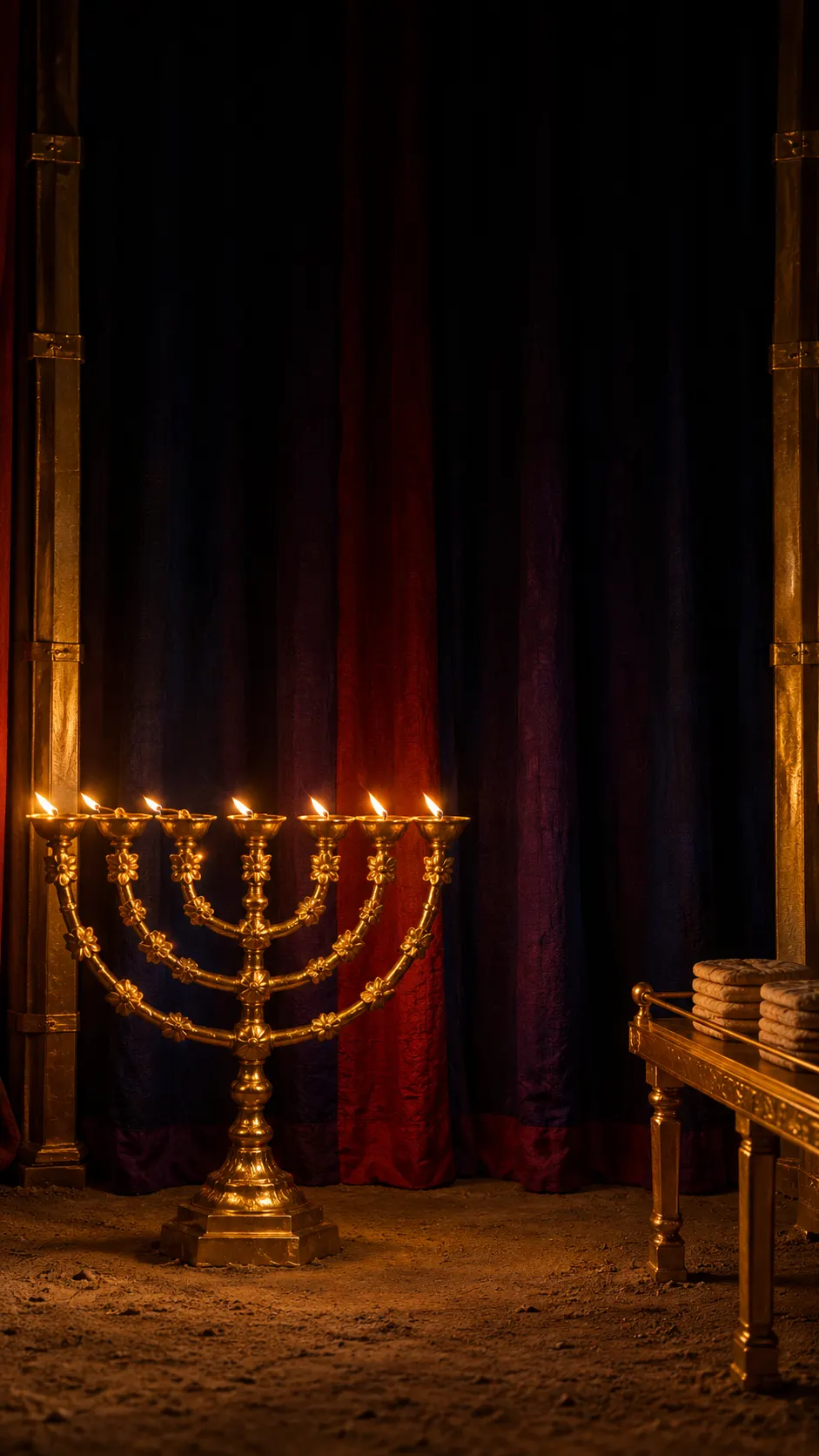
Picture the tent as Exodus describes it. In the open court stood the bronze altar and basin. Inside the tent, “the first room” held the lampstand, the table and “the consecrated bread,” and priests went in every day. The golden altar of incense stood at the second curtain, and on the Day of Atonement the high priest carried incense behind that curtain (Leviticus 16:12–13). Beyond it, in “the Most Holy Place,” was the ark, under “the cherubim of glory.” One man, one day a year: the way was real, but it was narrow.
By this arrangement the Holy Spirit was showing that the way into the Most Holy Place had not yet been disclosed as long as the first tabernacle was still standing.
Hebrews 9:8
It is an illustration for the present time, because the gifts and sacrifices being offered were unable to cleanse the conscience of the worshiper. They consist only in food and drink and special washings—external regulations imposed until the time of reform.
Reflect
The old sacrifices could make a worshiper ceremonially clean on the outside, but they were “unable to cleanse the conscience.” Is there something on your conscience that you keep carrying, even after asking for forgiveness? Write it down. Then keep reading: this chapter is about the blood that can “purify our consciences.”
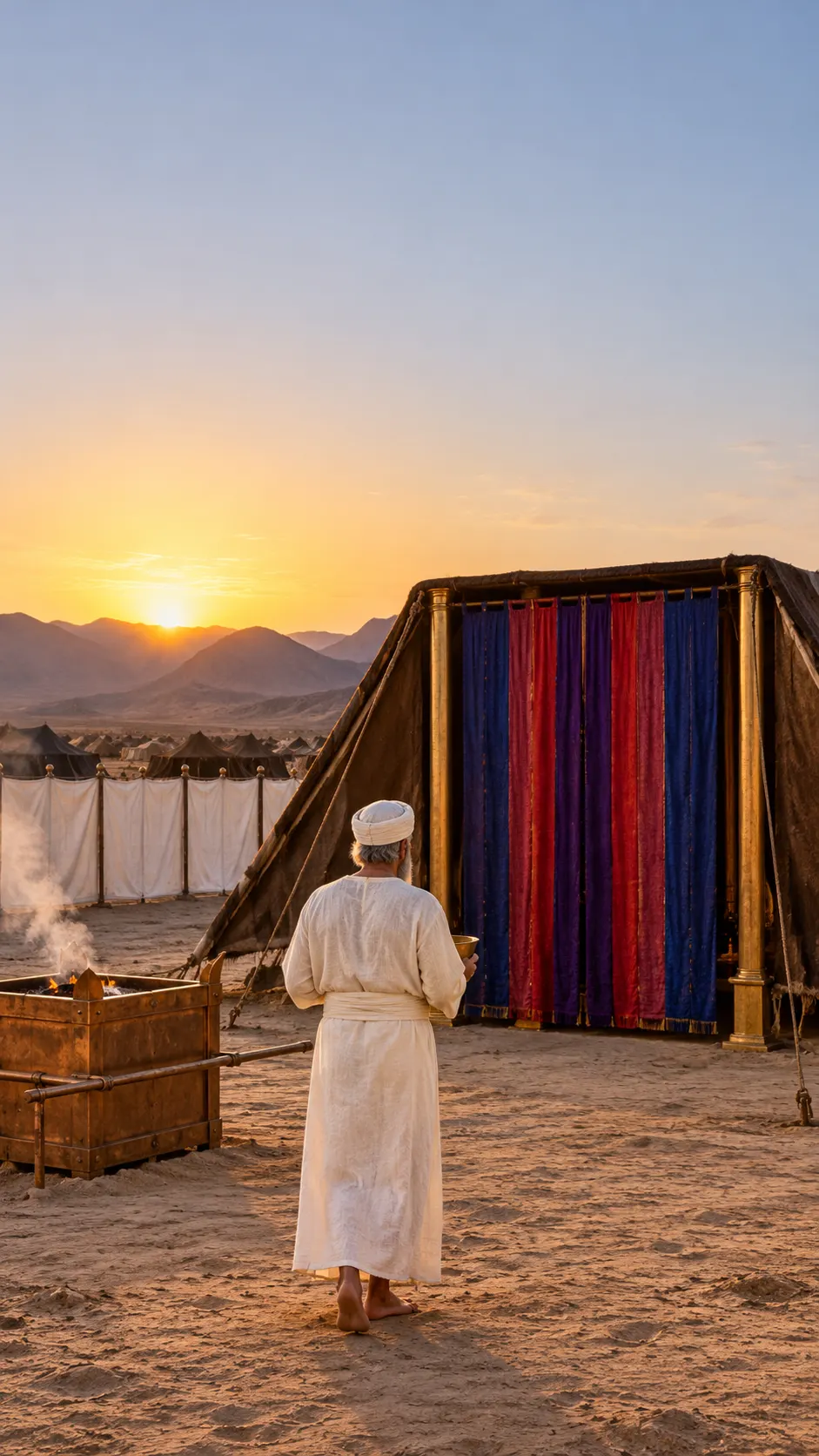
But when Christ came as high priest of the good things that have come, He went through the greater and more perfect tabernacle that is not made by hands and is not a part of this creation. He did not enter by the blood of goats and calves, but He entered the Most Holy Place once for all by His own blood, thus securing eternal redemption.
For if the blood of goats and bulls and the ashes of a heifer sprinkled on those who are ceremonially unclean sanctify them so that their bodies are clean, how much more will the blood of Christ, who through the eternal Spirit offered Himself unblemished to God, purify our consciences from works of death, so that we may serve the living God!
Narrated by Bob Souer · BSB audio, public domain
Therefore Christ is the mediator of a new covenant, so that those who are called may receive the promised eternal inheritance, now that He has died to redeem them from the transgressions committed under the first covenant.
Whiteboard
The old order was God’s good gift, and it pointed ahead. Christ went through “the greater and more perfect tabernacle,” not with animal blood but “by His own blood,” and He did it “once for all.” What He secured is “eternal redemption.” The old offerings could make bodies clean; His blood can “purify our consciences.” That is why He is “the mediator of a new covenant.”
In the case of a will, it is necessary to establish the death of the one who made it, because a will does not take effect until the one who made it has died; it cannot be executed while he is still alive.
That is why even the first covenant was not put into effect without blood. For when Moses had proclaimed every commandment of the law to all the people, he took the blood of calves and goats, along with water, scarlet wool, and hyssop, and sprinkled the scroll and all the people, saying, “This is the blood of the covenant, which God has commanded you to keep.”
In the same way, he sprinkled with blood the tabernacle and all the vessels used in worship.
According to the law, in fact, nearly everything must be purified with blood, and without the shedding of blood there is no forgiveness.
Hebrews 9:22
Question
Hebrews 9 compares the high priest’s yearly visit behind the curtain with what Christ has done.
According to verse 12, by what did Christ enter the Most Holy Place?
So it was necessary for the copies of the heavenly things to be purified with these sacrifices, but the heavenly things themselves with better sacrifices than these.
For Christ did not enter a man-made copy of the true sanctuary, but He entered heaven itself, now to appear on our behalf in the presence of God.
Nor did He enter heaven to offer Himself again and again, as the high priest enters the Most Holy Place every year with blood that is not his own. Otherwise, Christ would have had to suffer repeatedly since the foundation of the world.
But now He has appeared once for all at the end of the ages to do away with sin by the sacrifice of Himself.
Hebrews 9:26
Pray
Right now Christ is in heaven, “in the presence of God,” and He is there “on our behalf.” Thank Him that His sacrifice was “once for all” and never needs to be repeated. Bring Him what is on your heart today, and ask Him to help you live as someone who has been made clean.
Just as man is appointed to die once, and after that to face judgment, so also Christ was offered once to bear the sins of many; and He will appear a second time, not to bear sin, but to bring salvation to those who eagerly await Him.
Hebrews 9:27–28
You’ve experienced
Hebrews 9
0 of 13 chapters read
A verse to carry with you
Just as man is appointed to die once, and after that to face judgment, so also Christ was offered once to bear the sins of many; and He will appear a second time, not to bear sin, but to bring salvation to those who eagerly await Him.
Hebrews 9:27–28
or swipe left