
The Book of
2 Kings 4
44 verses≈ 10 min4 peopleBSB
Images are artistic interpretations.
Tap any post to go deeper
In this chapter

The Book of
44 verses≈ 10 min4 peopleBSB
Images are artistic interpretations.
Tap any post to go deeper
In this chapter
Where we are
The prophet’s widow
Now the wife of one of the sons of the prophets cried out to Elisha, “Your servant, my husband, is dead, and you know that your servant feared the LORD. And now his creditor is coming to take my two children as his slaves!”
Elisha
“How can I help you?” asked Elisha. “Tell me, what do you have in the house?”
The prophet’s widow
She answered, “Your servant has nothing in the house but a jar of oil.”
Tap to go deeper: meaning, history and related Scripture
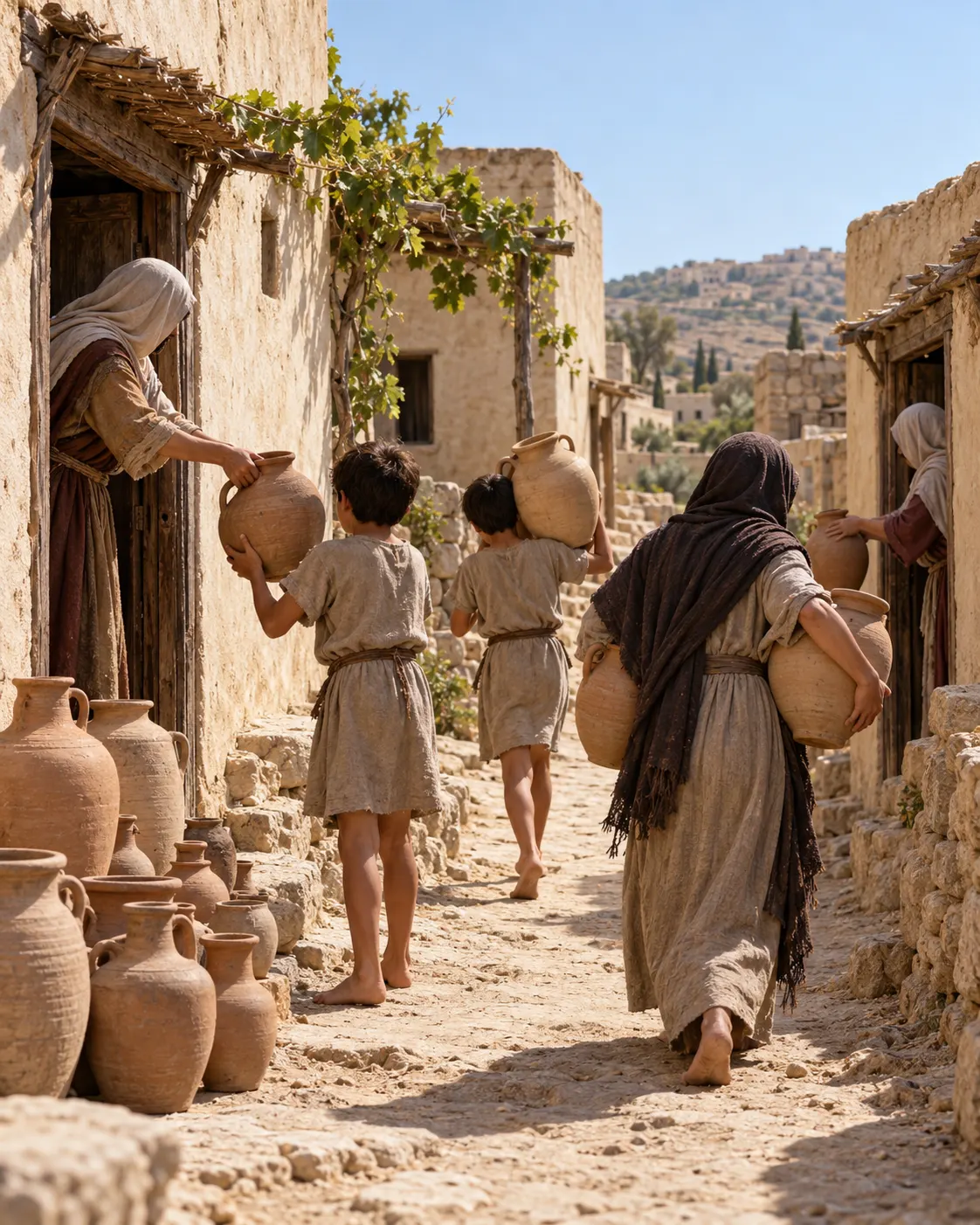
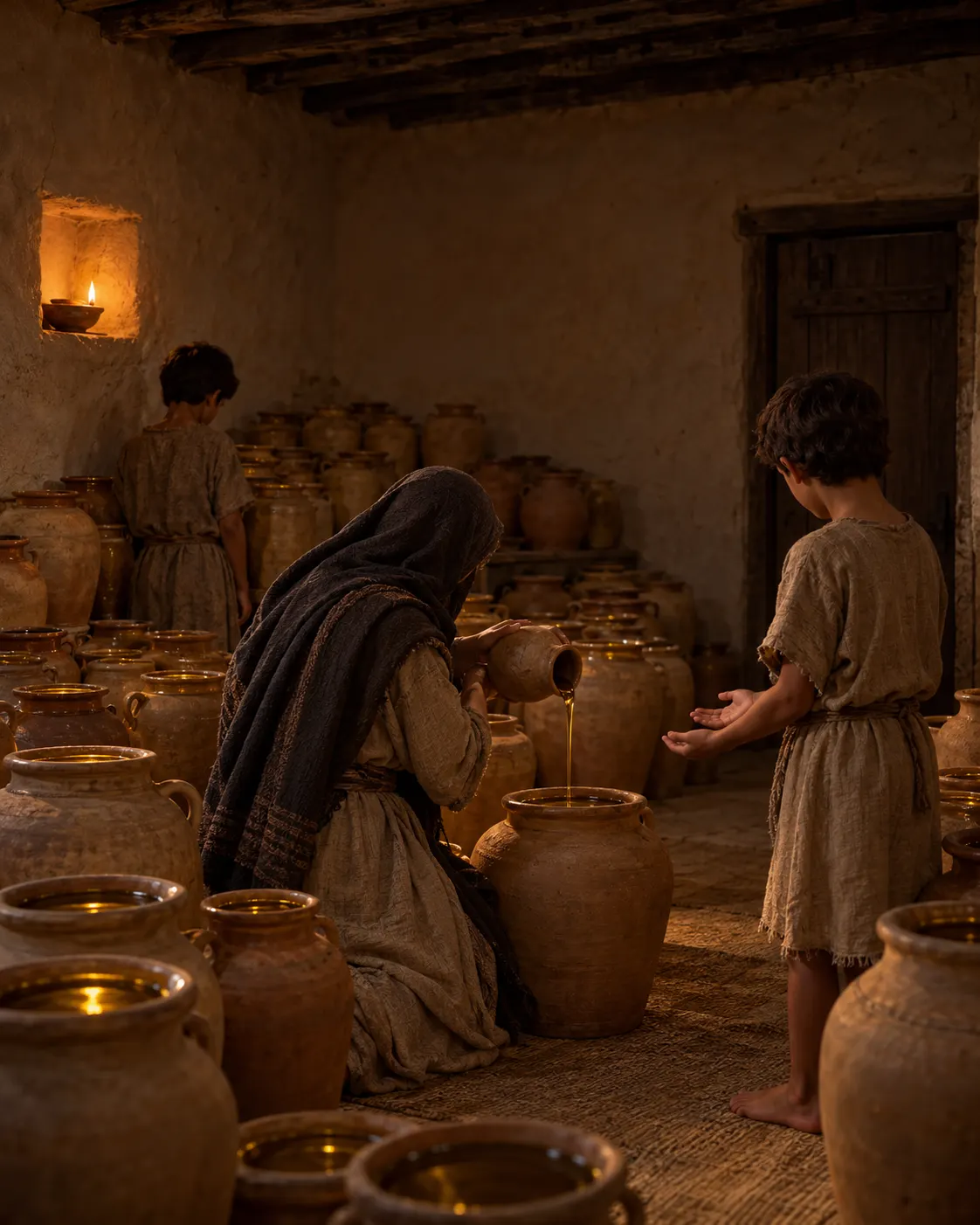
She went and told the man of God, and he said, “Go, sell the oil, and pay your debt. Then you and your sons can live on the remainder.”
Reflect
Elisha did not start with what the widow lacked but with what she had, “a jar of oil,” and with how many empty jars she would dare to gather: “Do not gather just a few.” What small thing has God already put in your hands? Where might He be asking you to bring more empty jars, more room for Him to fill?
Elisha
And he said to Gehazi his servant, “Call the Shunammite woman.”
And when he had called her, she stood before him,
Elisha
and Elisha said to Gehazi, “Now tell her, ‘Look, you have gone to all this trouble for us. What can we do for you?
Can we speak on your behalf to the king or the commander of the army?’” “I have a home among my own people,” she replied.
Elisha
So he asked, “Then what should be done for her?”
Gehazi
“Well, she has no son,” Gehazi replied, “and her husband is old.”
Elisha
“Call her,” said Elisha.
So Gehazi called her, and she stood in the doorway.
Elisha
And Elisha declared, “At this time next year, you will hold a son in your arms.”
The Shunammite woman
“No, my lord,” she said. “Do not lie to your maidservant, O man of God.”
just as Elisha had told her
2 Kings 4:17
Question
The Shunammite woman and her husband built a small room on their roof for the prophet.
What did the Shunammite woman put in Elisha’s little room upstairs?
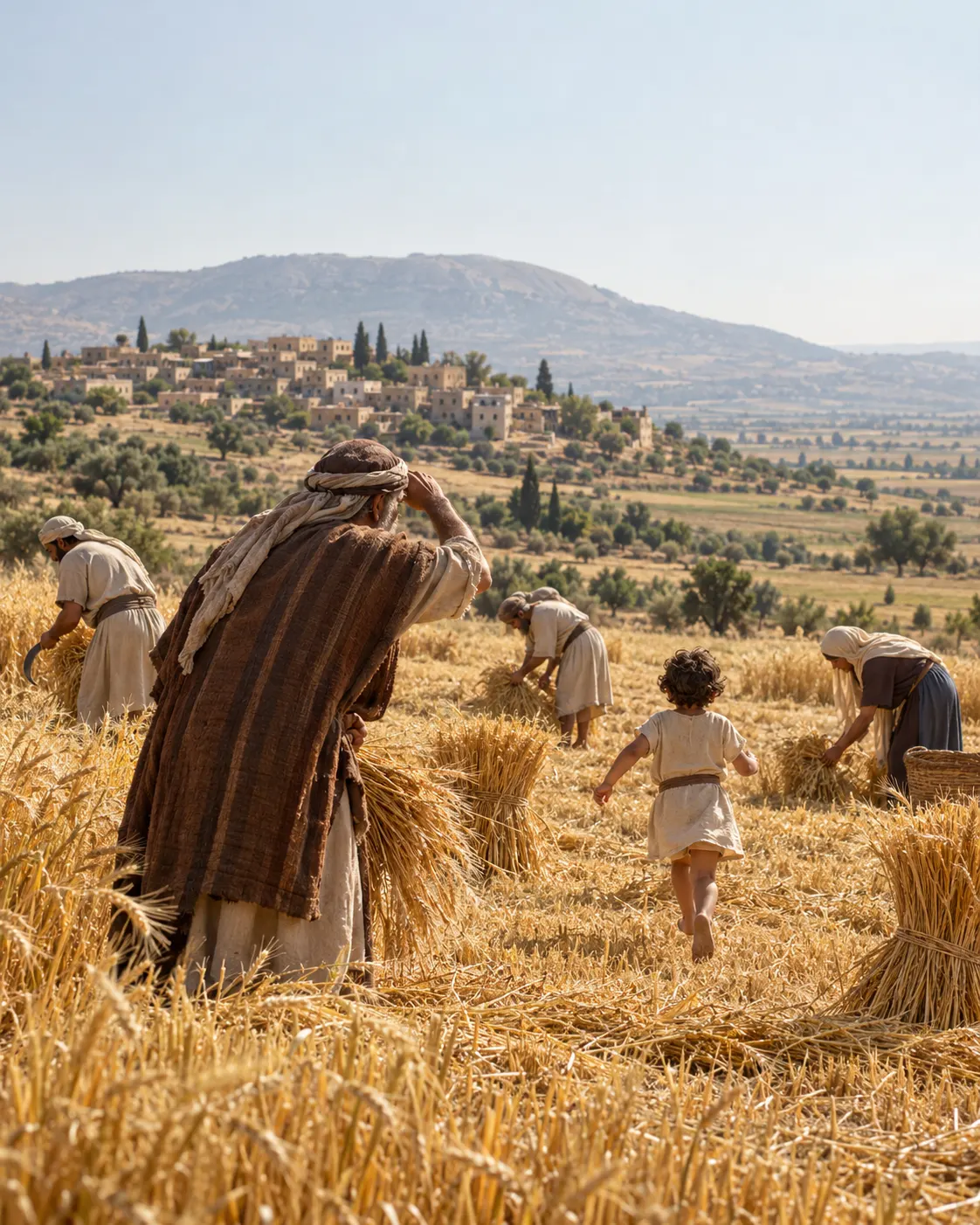
After the servant had picked him up and carried him to his mother, the boy sat on her lap until noon, and then he died. And she went up and laid him on the bed of the man of God. Then she shut the door and went out.
The Shunammite woman
And the woman called her husband and said, “Please send me one of the servants and one of the donkeys, that I may go quickly to the man of God and return.”
The Shunammite’s husband
“Why would you go to him today?” he replied. “It is not a New Moon or a Sabbath.”
The Shunammite woman
“Everything is all right,” she said.

Then she saddled the donkey and told her servant, “Drive onward; do not slow the pace for me unless I tell you.” So she set out and went to the man of God at Mount Carmel.
Narrated by Bob Souer · BSB audio, public domain
Elisha
When the man of God saw her at a distance, he said to his servant Gehazi, “Look, there is the Shunammite woman.
Please run out now to meet her and ask, ‘Are you all right? Is your husband all right?
Is your child all right?’” And she answered, “Everything is all right.”
When she reached the man of God at the mountain, she clung to his feet.
Elisha
Gehazi came over to push her away, but the man of God said, “Leave her alone, for her soul is in deep distress, and the LORD has hidden it from me and has not told me.”
The Shunammite woman
Then she said, “Did I ask you for a son, my lord? Didn’t I say, ‘Do not deceive me?’”
So Elisha said to Gehazi, “Tie up your garment, take my staff in your hand, and go! If you meet anyone, do not greet him, and if anyone greets you, do not answer him. Then lay my staff on the boy’s face.”
The Shunammite woman
And the mother of the boy said, “As surely as the LORD lives and as you yourself live, I will not leave you.”
So he got up and followed her.
Gehazi went on ahead of them and laid the staff on the boy’s face, but there was no sound or response.
Gehazi
So he went back to meet Elisha and told him, “The boy has not awakened.”
When Elisha reached the house, there was the boy lying dead on his bed. So he went in, closed the door behind the two of them, and prayed to the LORD.
the boy sneezed seven times and opened his eyes
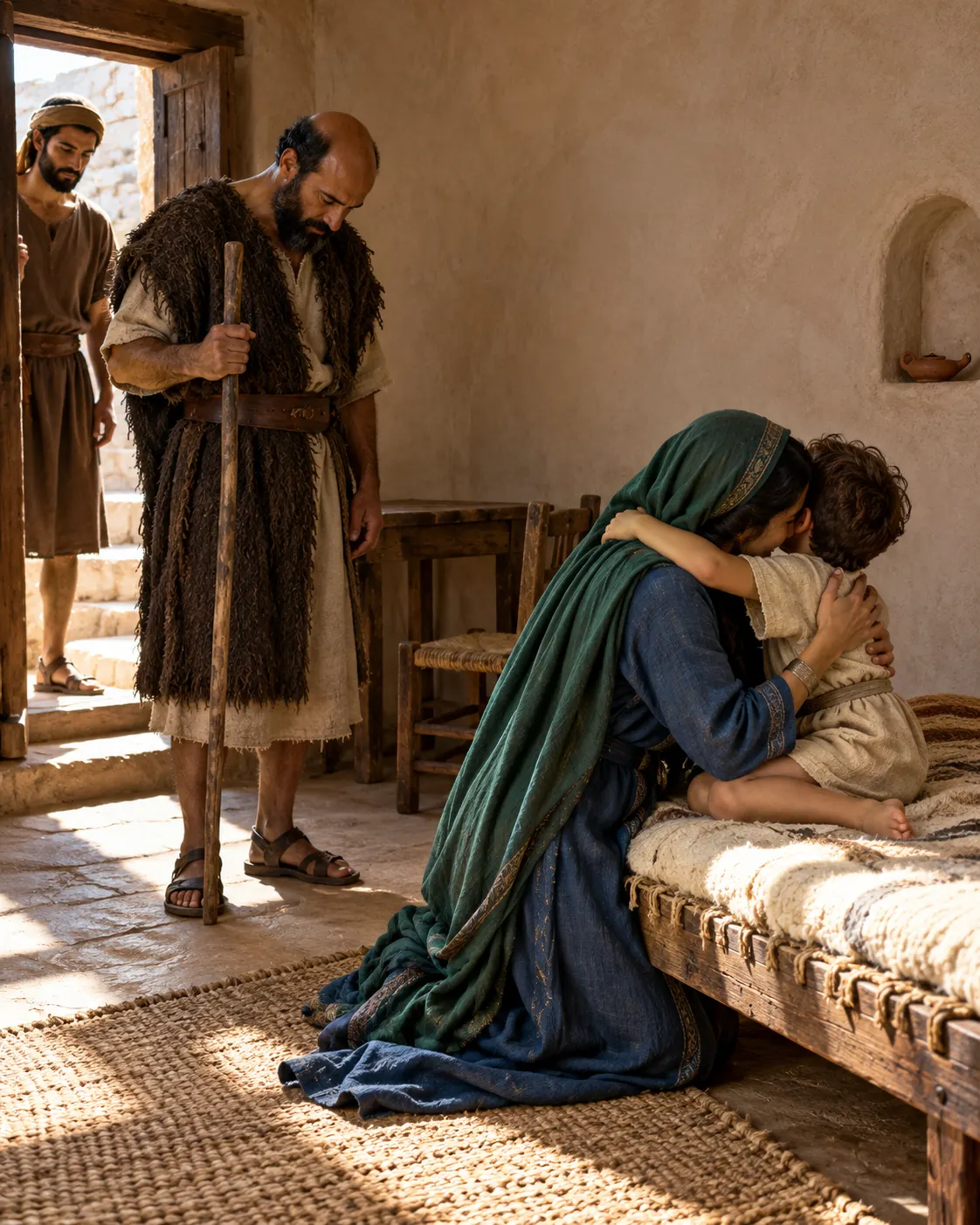
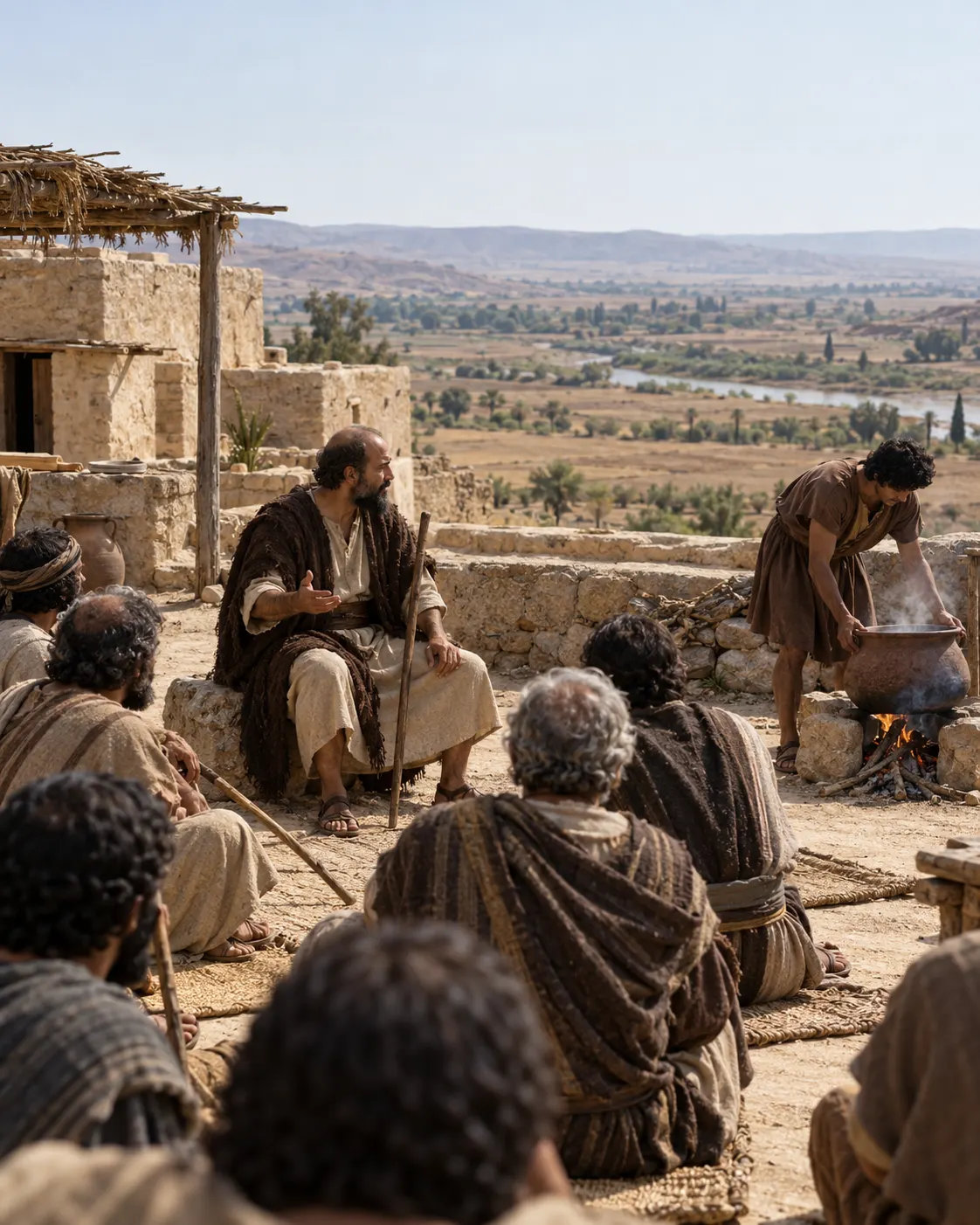
One of them went out to the field to gather herbs, and he found a wild vine from which he gathered as many wild gourds as his garment could hold. Then he came back and cut them up into the pot of stew, though no one knew what they were.
The sons of the prophets
And they poured it out for the men to eat, but when they tasted the stew they cried out, “There is death in the pot, O man of God!”
And they could not eat it.
Elisha
Then Elisha said, “Get some flour.” He threw it into the pot and said, “Pour it out for the people to eat.”
And there was nothing harmful in the pot.
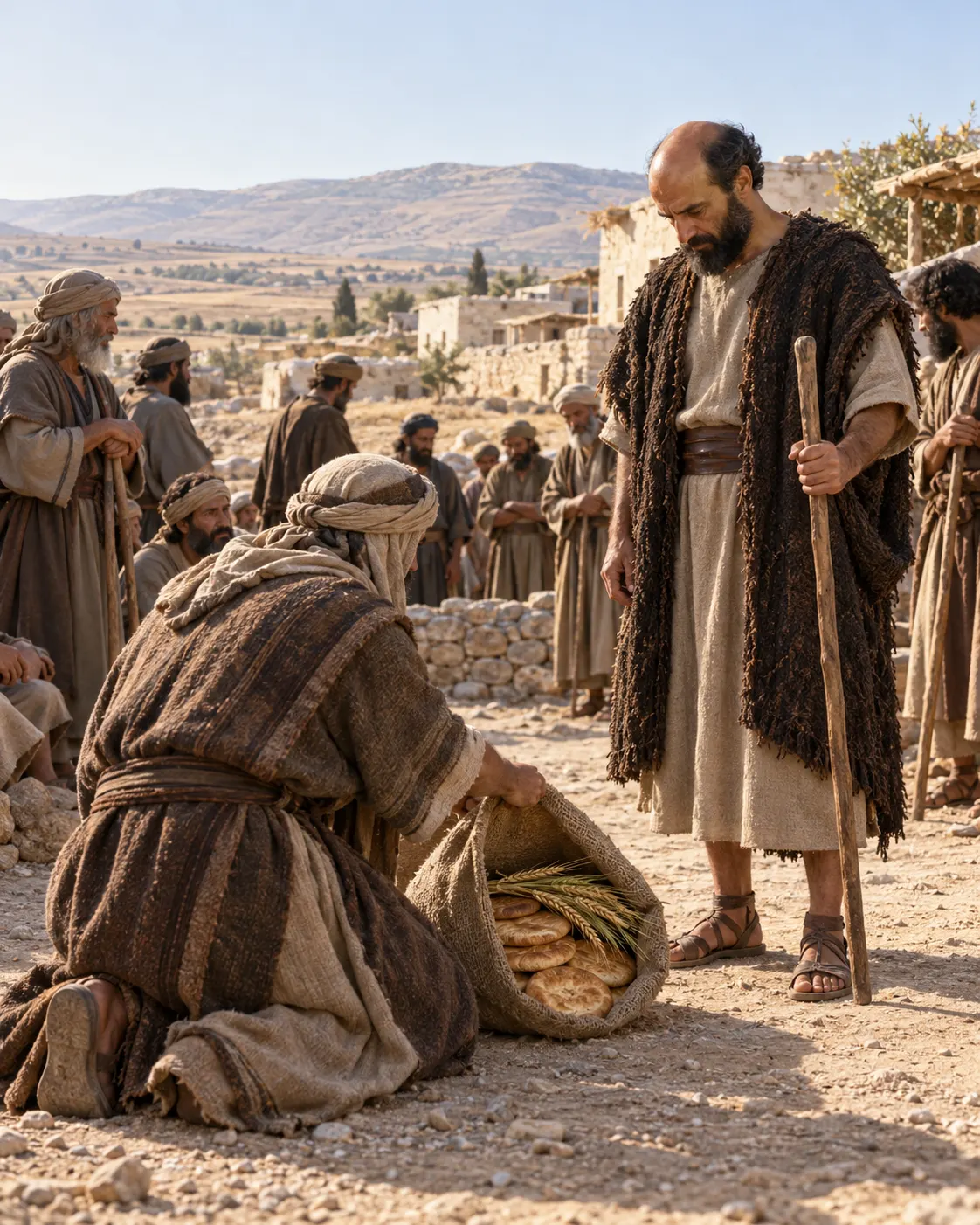
Elisha’s servant at Gilgal
But his servant asked, “How am I to set twenty loaves before a hundred men?”
Elisha
“Give it to the people to eat,” said Elisha, “for this is what the LORD says: ‘They will eat and have some left over.’”
So he set it before them, and they ate and had some left over, according to the word of the LORD.
2 Kings 4:44
Pray
Pray for widows, single mothers and families in debt, that the LORD would defend them and provide. Pray for any who grieve a child, that they would find the God who gives life. Thank Him for daily bread, and for the One who feeds many from little, so that they “ate and had some left over.”
You’ve experienced
2 Kings 4
0 of 25 chapters read
A verse to carry with you
So he set it before them, and they ate and had some left over, according to the word of the LORD.
2 Kings 4:44
or swipe left