UNROLL
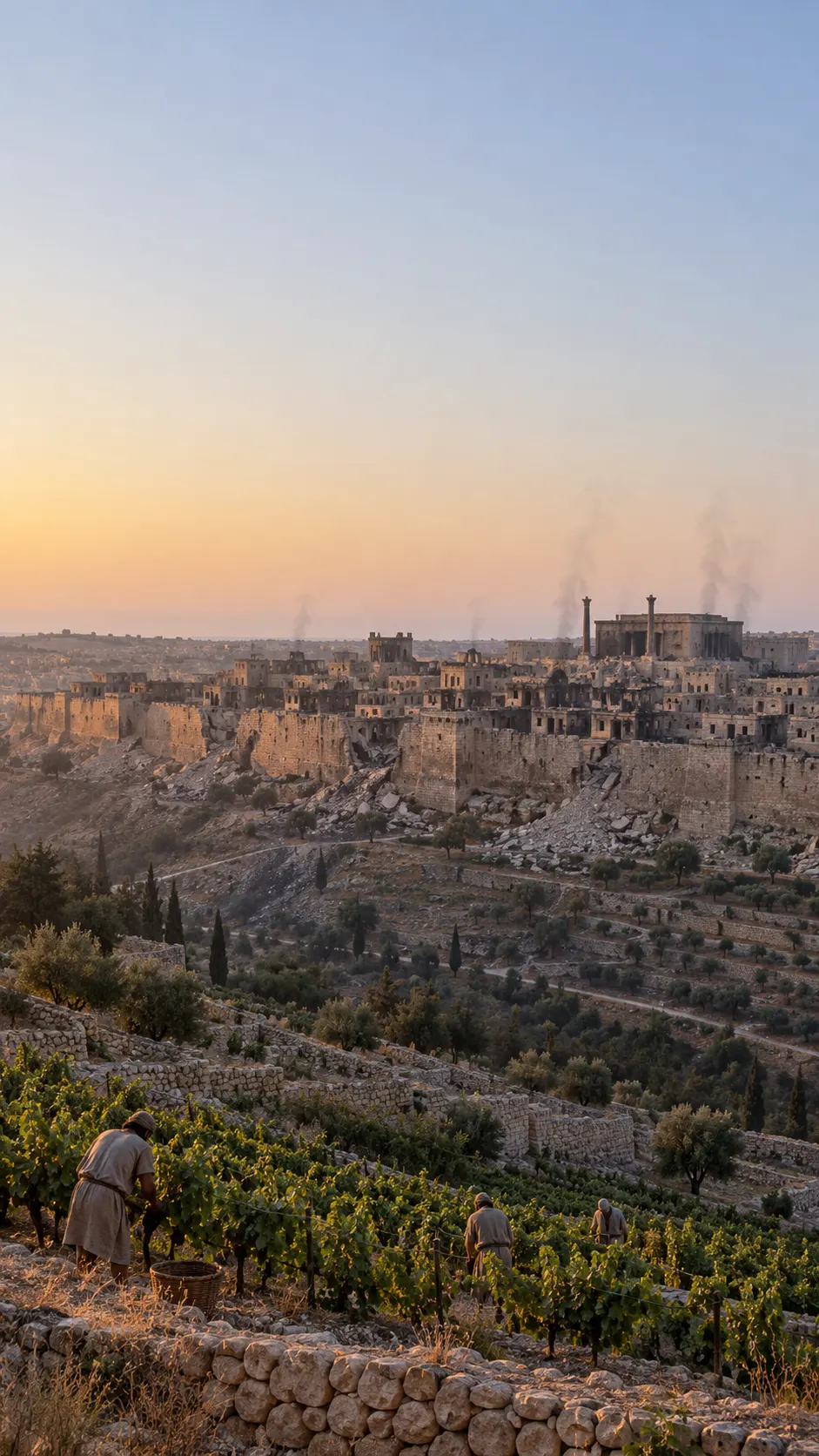
The morning after the fire, Jerusalem's eastern ridge seen from across the Kidron valley: the city wall broken in long gaps, thin threads of gray smoke rising straight up from roofless houses and the burned shell of the temple, green vines on the terraces below where two poor vinedressers work, under a pale, empty dawn sky.

The Book of

2 Kings 25

The city falls, the temple burns, the last king goes into the dark. And then, thirty-seven years later, in Babylon, a prison door opens.

30 verses≈ 6 min6 peopleBSB

Images are artistic interpretations.

Tap any post to go deeper

In this chapter

Where we are
  1. 1–8ElishaThe prophet's double portion
  2. 9–12JehuThe house of Ahab falls
  3. 13–17Last kings of IsraelSamaria falls
  4. 18–20HezekiahTrust in the LORD
  5. 21–23JosiahThe Book found
  6. 24–25ExileJerusalem fallsChapter 25

Nebuchadnezzar Besieges Jerusalem

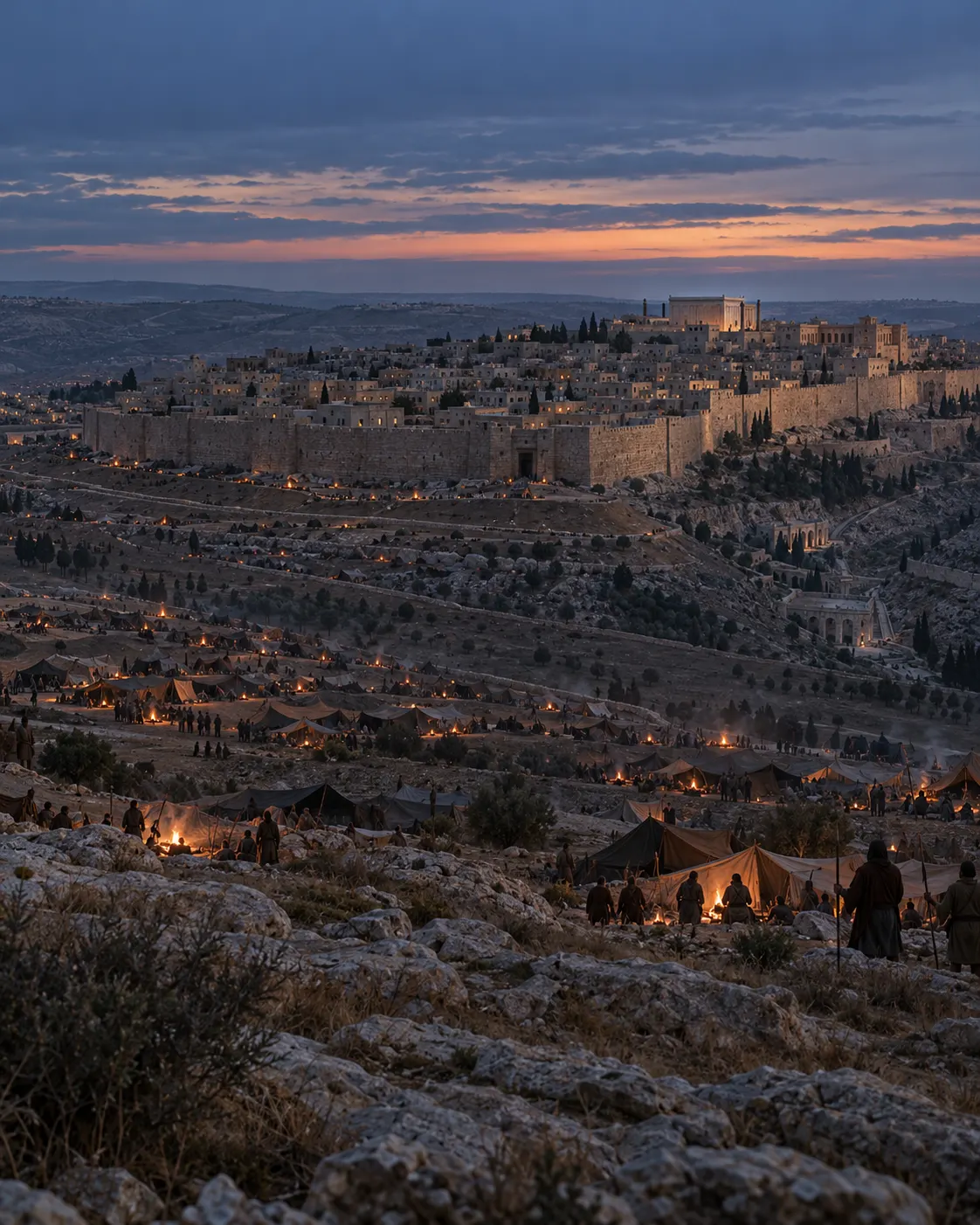
Winter dusk over Jerusalem seen from the hills to the north: the city on its ridges inside plain stone walls, the long flat-roofed temple at the top, and all around it a low raised wall of heaped earth and stone with the tents and small cooking fires of a vast Babylonian camp behind it.

So in the ninth year of Zedekiah’s reign, on the tenth day of the tenth month, Nebuchadnezzar king of Babylon marched against Jerusalem with his entire army. They encamped outside the city and built a siege wall all around it. And the city was kept under siege until King Zedekiah’s eleventh year.

By the ninth day of the fourth month, the famine in the city was so severe that the people of the land had no food.

Tap to go deeper: meaning, history and related Scripture

Then the city was breached; and though the Chaldeans had surrounded the city, all the men of war fled by night by way of the gate between the two walls near the king’s garden. They headed toward the Arabah,

but the army of the Chaldeans pursued the king and overtook him in the plains of Jericho, and his whole army deserted him.

The Chaldeans seized the king and brought him up to the king of Babylon at Riblah, where they pronounced judgment on him. And they slaughtered the sons of Zedekiah before his eyes. Then they put out his eyes, bound him with bronze shackles, and took him to Babylon.

Reflect

By night

Zedekiah “fled by night” from a judgment he had been warned of for eleven years, and he was overtaken. Running from God’s plain word never ends well; turning to Him always can. Is there something God has made plain to you that you are trying to get away from? What would it look like to stop running and turn to Him today?
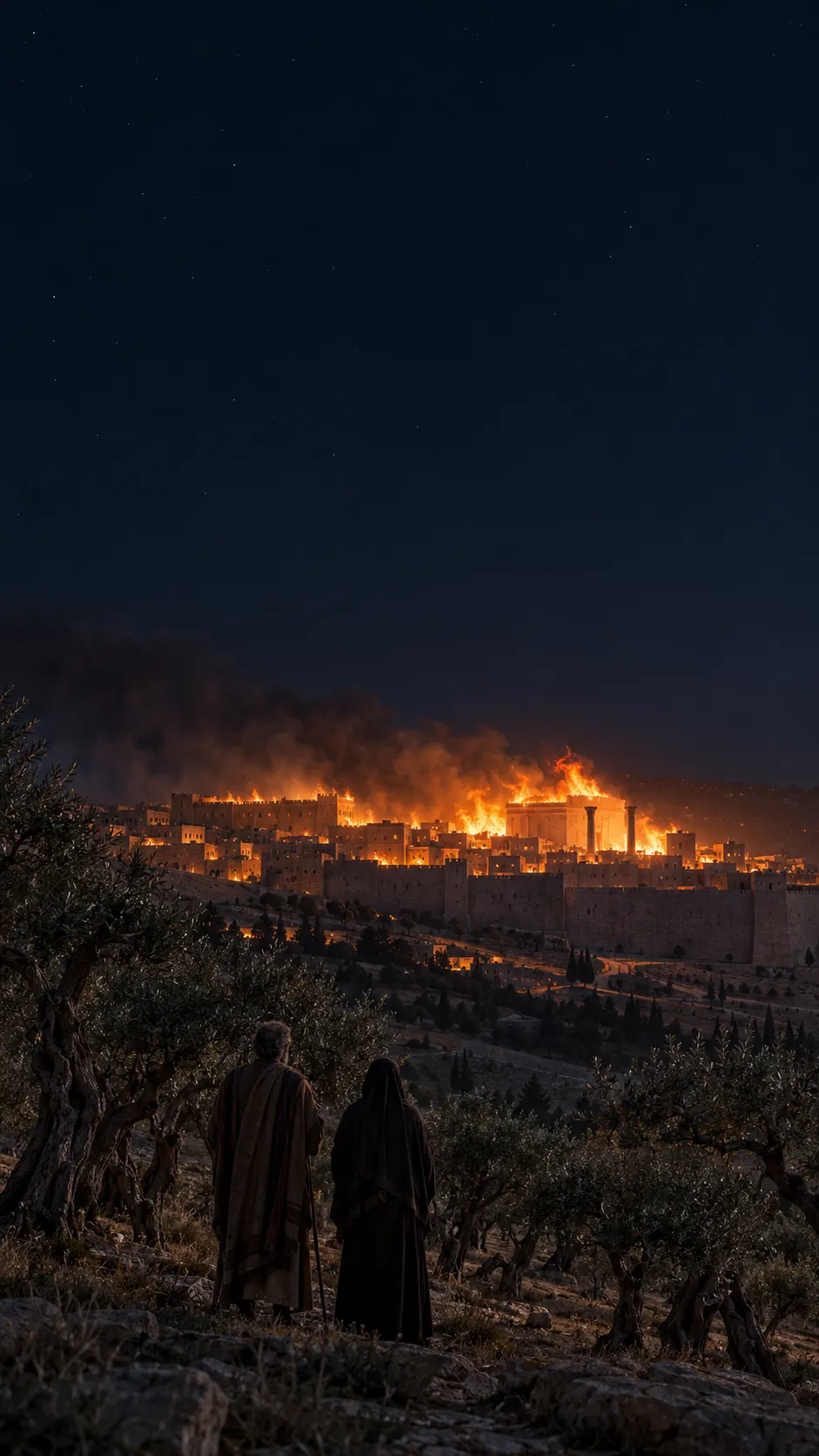
The Temple Destroyed

Night, from far across the Kidron valley among olive trees: on Jerusalem's ridge the long, plain temple burns, fire standing up through its cedar roof and the palace beside it, the two bronze pillars dark against the glow, while an old man and a woman stand watching from behind.

On the seventh day of the fifth month, in the nineteenth year of Nebuchadnezzar’s reign over Babylon, Nebuzaradan captain of the guard, a servant of the king of Babylon, entered Jerusalem. He burned down the house of the LORD, the royal palace, and all the houses of Jerusalem—every significant building. And the whole army of the Chaldeans under the captain of the guard broke down the walls around Jerusalem.

0:22

Narrated by Bob Souer · BSB audio, public domain
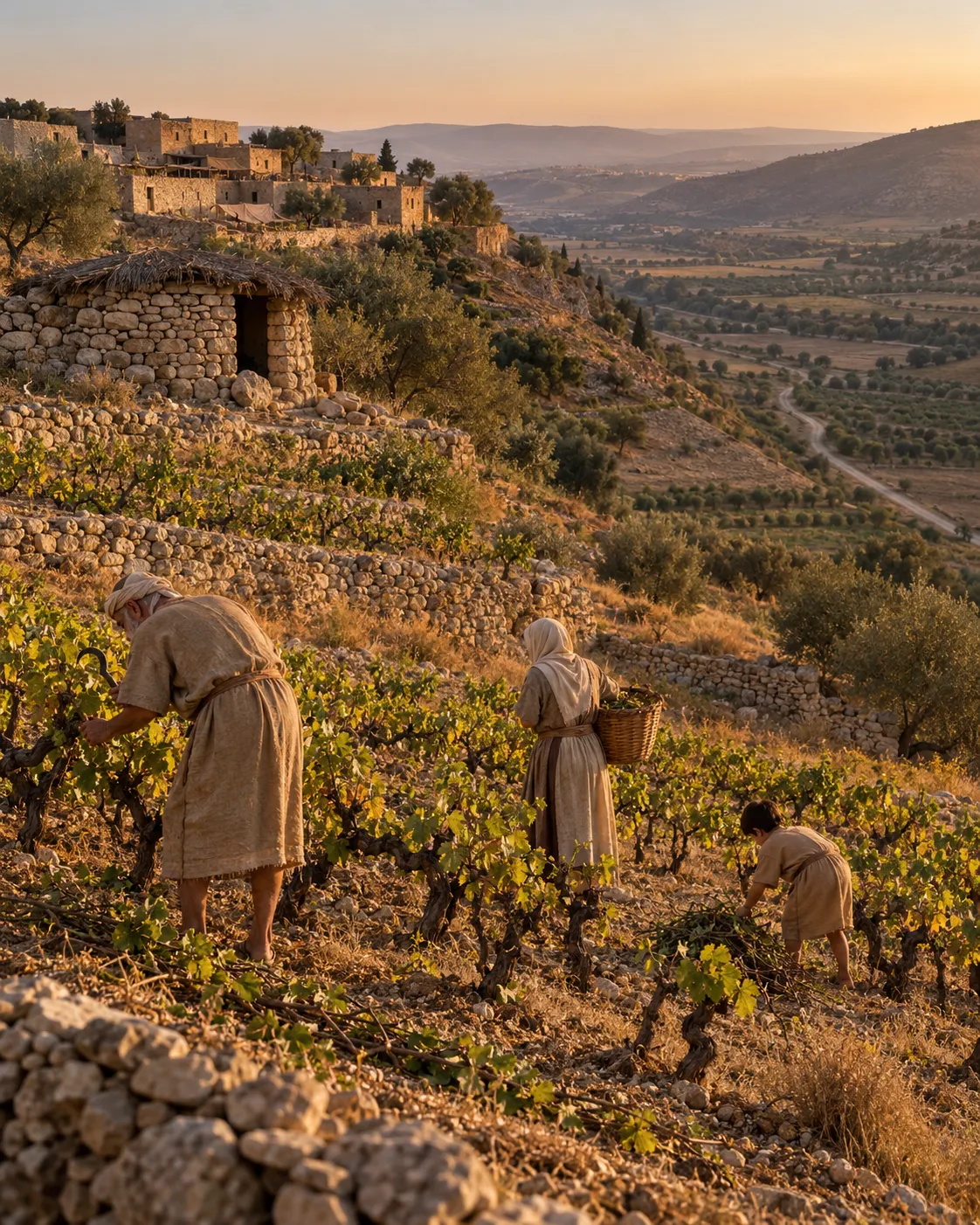
Late afternoon on terraced hills below a quiet Judean village: a few poor families in patched wool tunics work the vine rows alone, an old man pruning, a woman with a basket, a child, the valley road empty.

Then Nebuzaradan captain of the guard carried into exile the people who remained in the city, along with the deserters who had defected to the king of Babylon and the rest of the population. But the captain of the guard left behind some of the poorest of the land to tend the vineyards and fields.

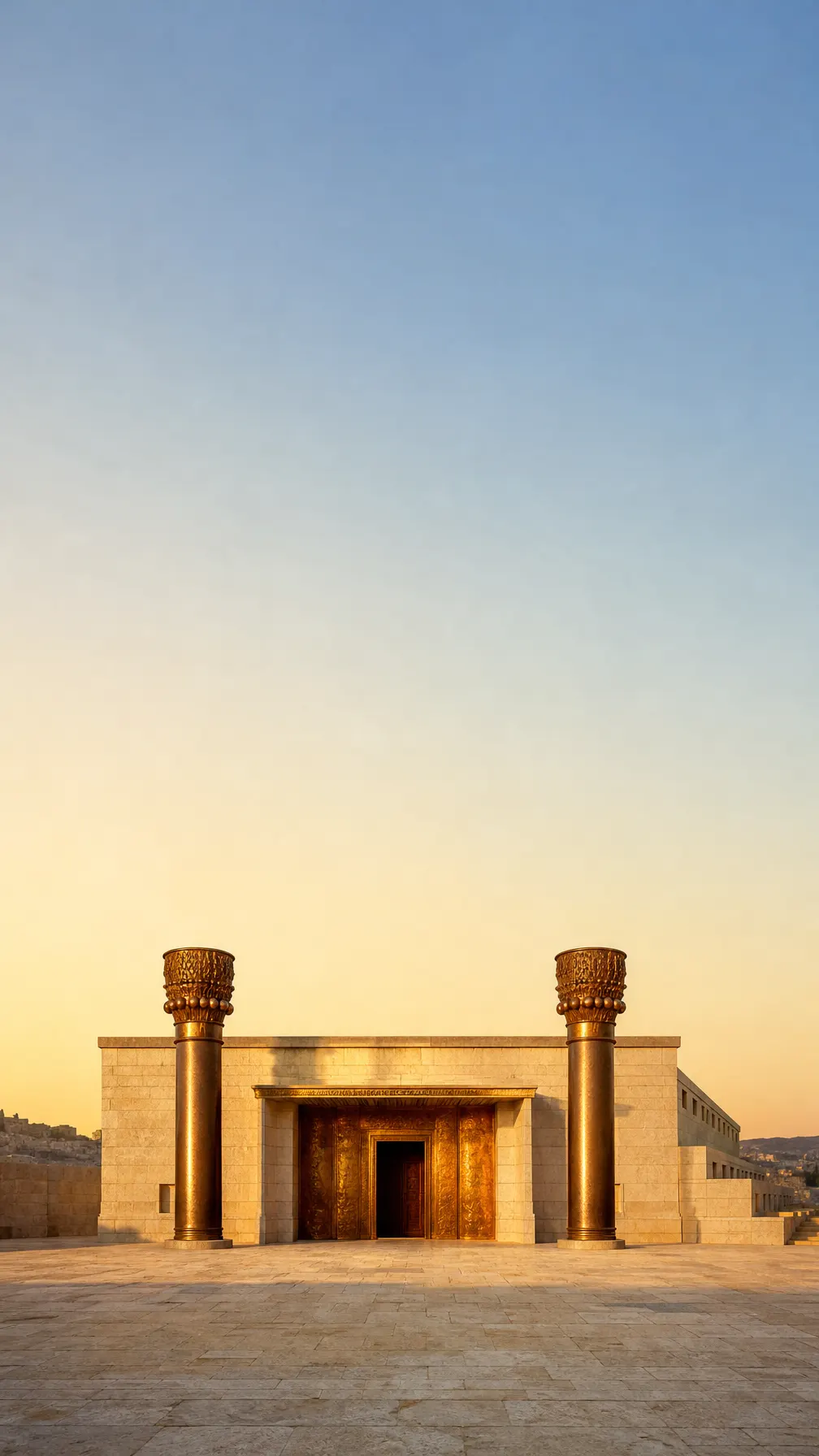
Seen from far across the temple court at dawn, the pale limestone house with its porch, and before the porch on either side the two great bronze pillars with lily capitals, glowing warm gold-brown.

As for the two pillars, the Sea, and the movable stands that Solomon had made for the house of the LORD, the weight of the bronze from all these articles was beyond measure. Each pillar was eighteen cubits tall. The bronze capital atop one pillar was three cubits high, with a network of bronze pomegranates all around. The second pillar, with its network, was similar.

Inner court · size not givenNEastThe houseBronze altarThe SeaStandsStandsThe house, enlarged · 60 × 20 cubitsBoazJachinArkCherubimLampstandsSide roomsMost Holy PlaceHoly PlacePortico

Plan to scale in cubits · north at the top

Where it stood

What Babylon carried away

The Chaldeans broke up the two bronze pillars that stood at the porch, the ten stands on the north and south sides of the house and the Sea at its southeast corner, and carried the bronze to Babylon. The court’s size is not given; it is drawn modestly.

Question

Quick question

Solomon had cast the bronze for the house of the LORD nearly four centuries before.

What did the Chaldeans do with the bronze pillars, the stands and the bronze Sea?

Captives Carried to Babylon

The captain of the guard also took away Seraiah the chief priest, Zephaniah the priest of second rank, and the three doorkeepers. Of those still in the city, he took a court official who had been appointed over the men of war, as well as five royal advisors. He also took the scribe of the captain of the army, who had enlisted the people of the land, and sixty men who were found in the city.

Nebuzaradan captain of the guard took them and brought them to the king of Babylon at Riblah. There at Riblah in the land of Hamath, the king of Babylon struck them down and put them to death.
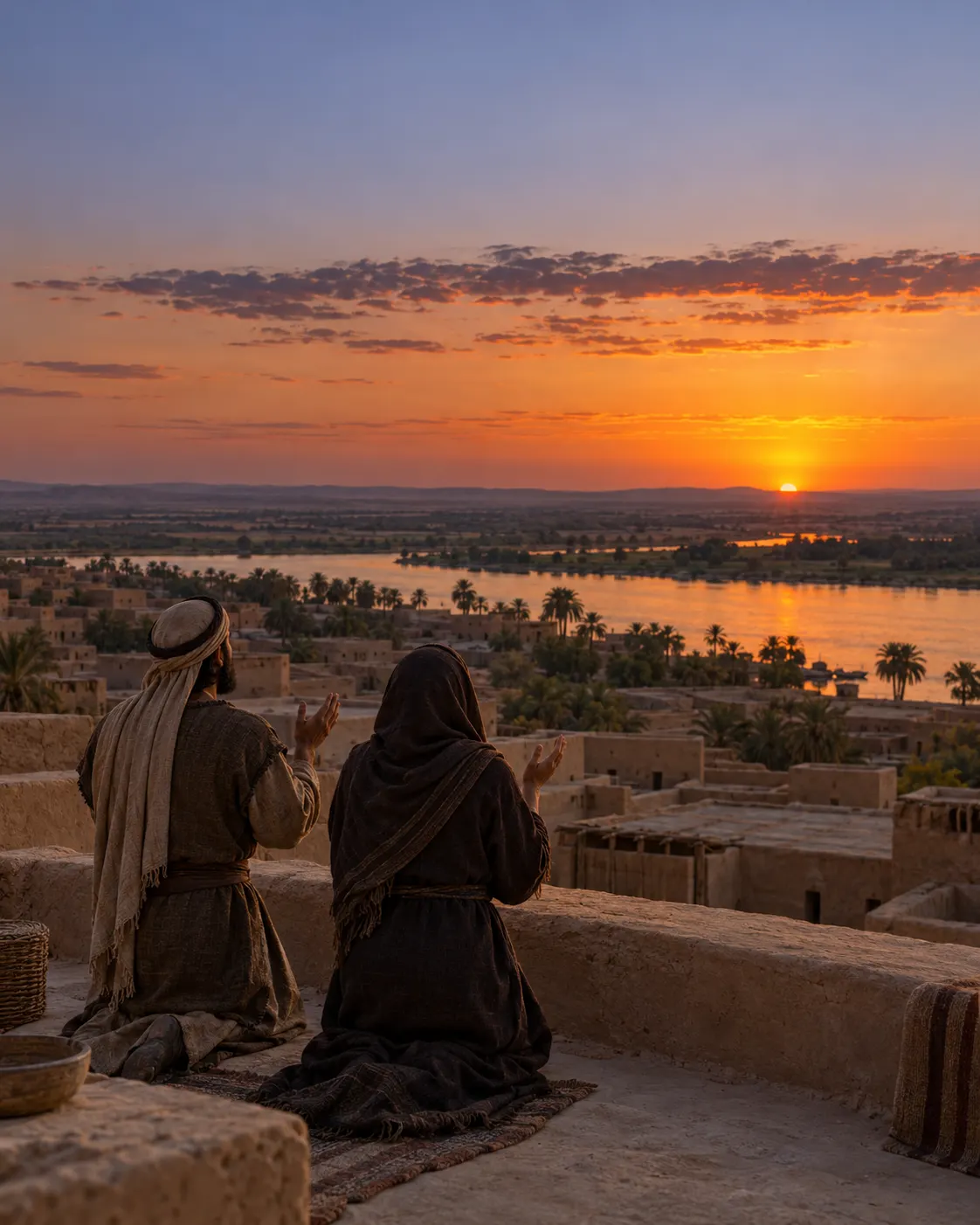
At dusk in a foreign city of mud brick on a wide river plain, a Judean man and his wife kneel on a flat roof facing west toward their far-off land, hands spread, date palms along a slow river below.

So Judah was taken into exile, away from its own land.

EuphratesEgyptJerusalemRiblahBabylon

Stylised map · locations approximate

On the map

Riblah and the road to Babylon

Zedekiah was overtaken in the plains of Jericho and brought north to Riblah “in the land of Hamath,” Nebuchadnezzar’s headquarters on the Orontes River, some two hundred miles from Jerusalem. From there the exiles’ road ran on north and then down the Euphrates to Babylon, around the desert rather than across it: about nine hundred miles, some four months on foot.
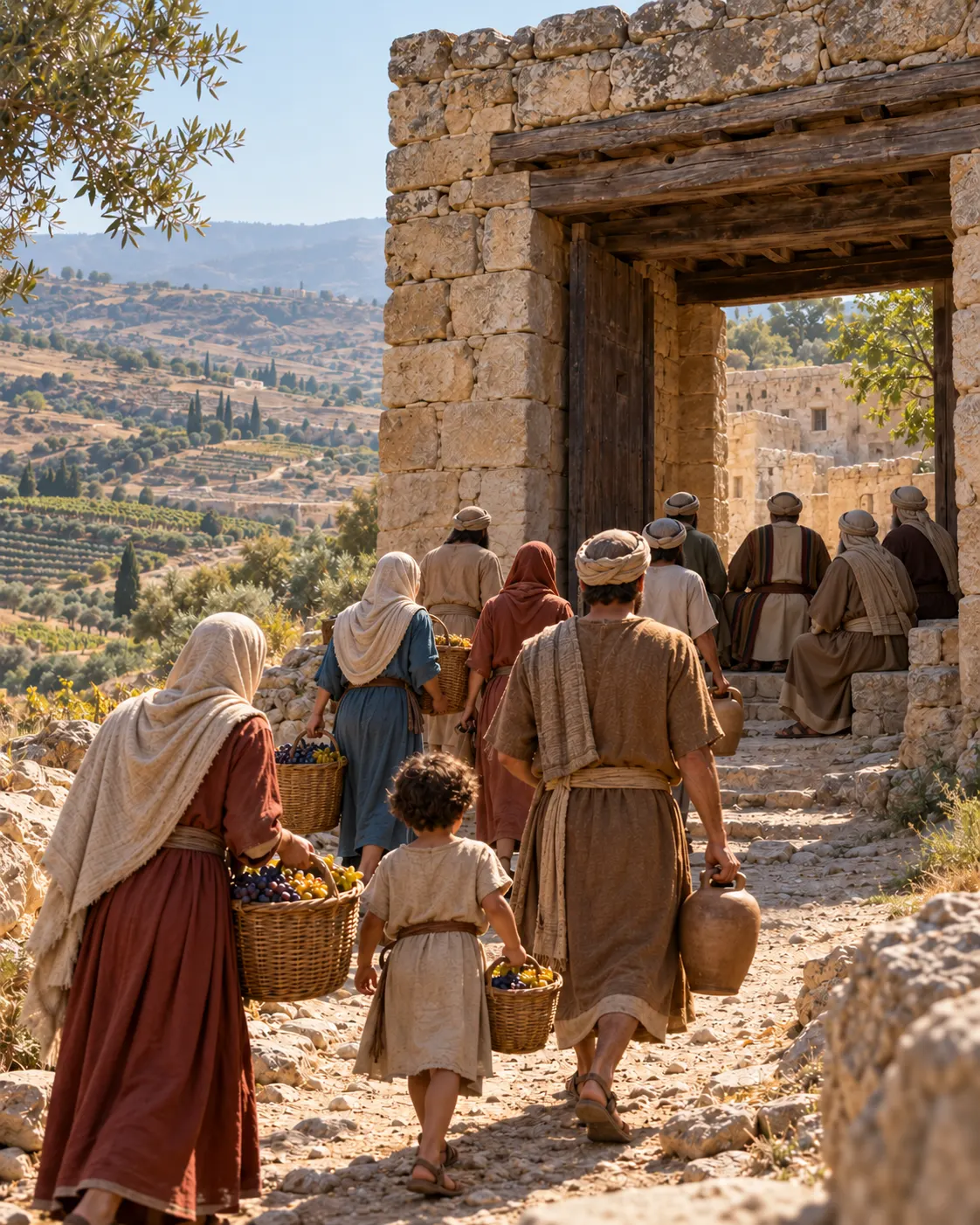
Gedaliah Governs in Judah

Autumn morning at the gate of the small hill town of Mizpah: in the shade of the plain stone gateway the governor Gedaliah, a grave gray-bearded man in a brown wool robe, sits on a stone bench with a few elders while poor families come up the path with baskets of grapes and jars of oil, vineyards and olive terraces behind.

Nebuchadnezzar king of Babylon appointed Gedaliah son of Ahikam, the son of Shaphan, over the people he had left behind in the land of Judah.

When all the commanders of the armies and their men heard that the king of Babylon had appointed Gedaliah as governor, they came to Gedaliah at Mizpah—Ishmael son of Nethaniah, Johanan son of Kareah, Seraiah son of Tanhumeth the Netophathite, and Jaazaniah son of the Maacathite, as well as their men.

And Gedaliah took an oath before them and their men, assuring them, “Do not be afraid of the servants of the Chaldeans. Live in the land and serve the king of Babylon, and it will be well with you.”

The Murder of Gedaliah

In the seventh month, however, Ishmael son of Nethaniah, the son of Elishama, who was a member of the royal family, came with ten men and struck down and killed Gedaliah, along with the Judeans and Chaldeans who were with him at Mizpah.
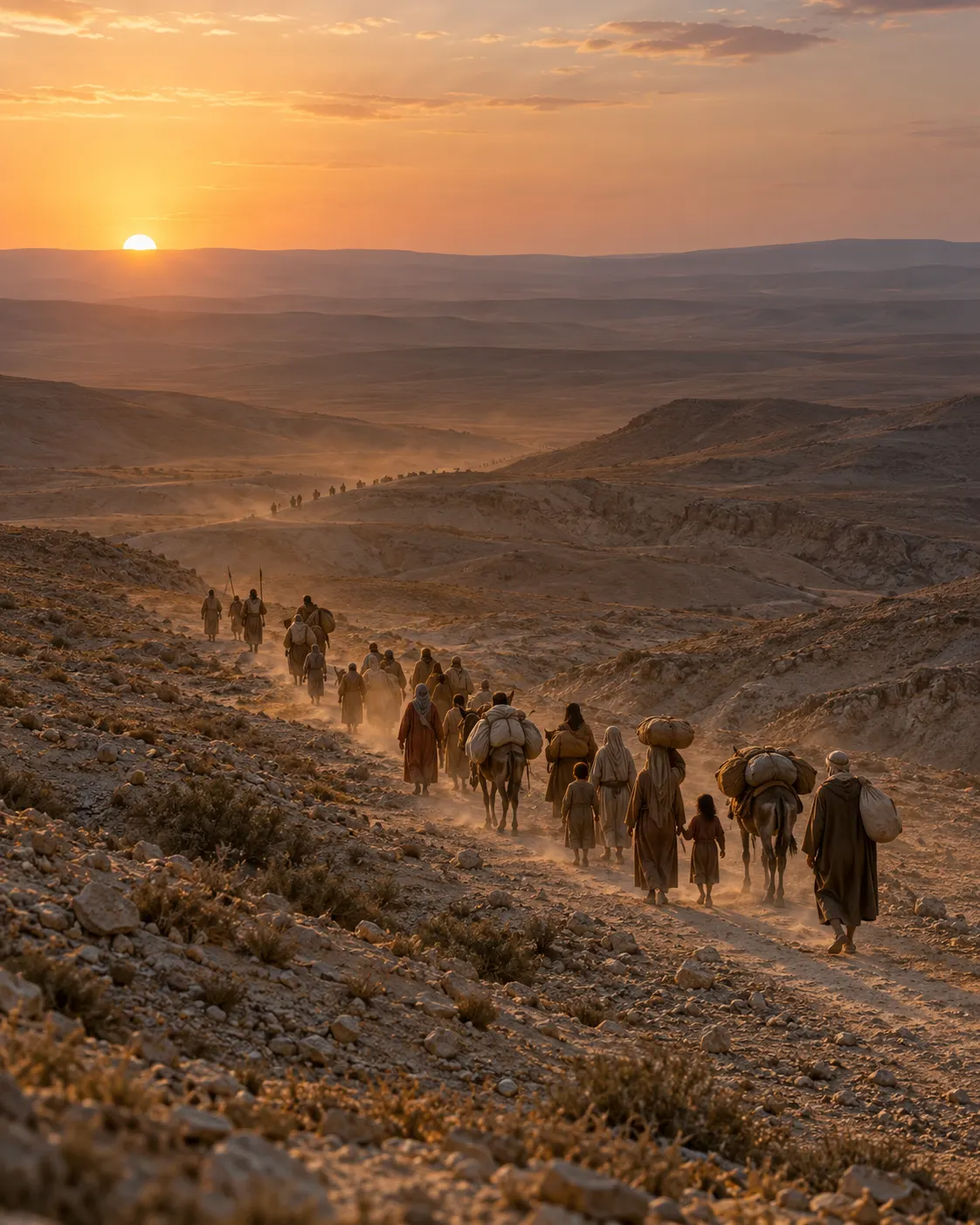
Evening in the dry, stony hills of the Negev, seen from far off: a long, thin straggling line of small walking figures, families with bundles and laden donkeys, heads southwest toward a hazy horizon, their dust hanging in low gold light.

Then all the people small and great, together with the commanders of the army, arose and fled to Egypt for fear of the Chaldeans.

Jehoiachin Released from Prison

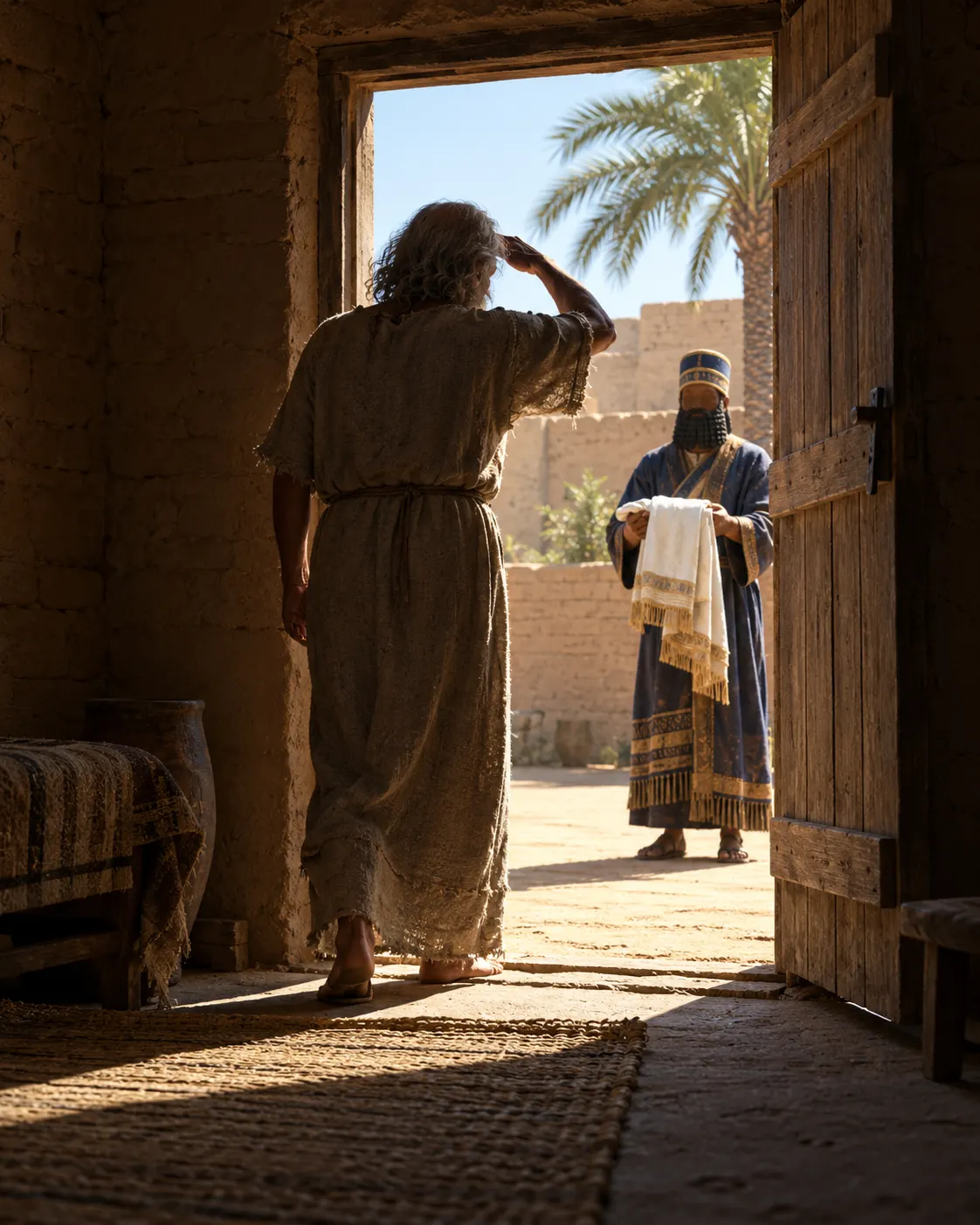
Inside a plain mud-brick prison in Babylon, a heavy wooden door swung open onto bright morning light; in the doorway, seen against the light, the thin, gray-bearded Jehoiachin in a coarse prison tunic steps out shading his eyes, while a Babylonian official in the sunlit courtyard holds out a folded white linen robe.

On the twenty-seventh day of the twelfth month of the thirty-seventh year of the exile of Judah’s King Jehoiachin, in the year Evil-merodach became king of Babylon, he released King Jehoiachin of Judah from prison.

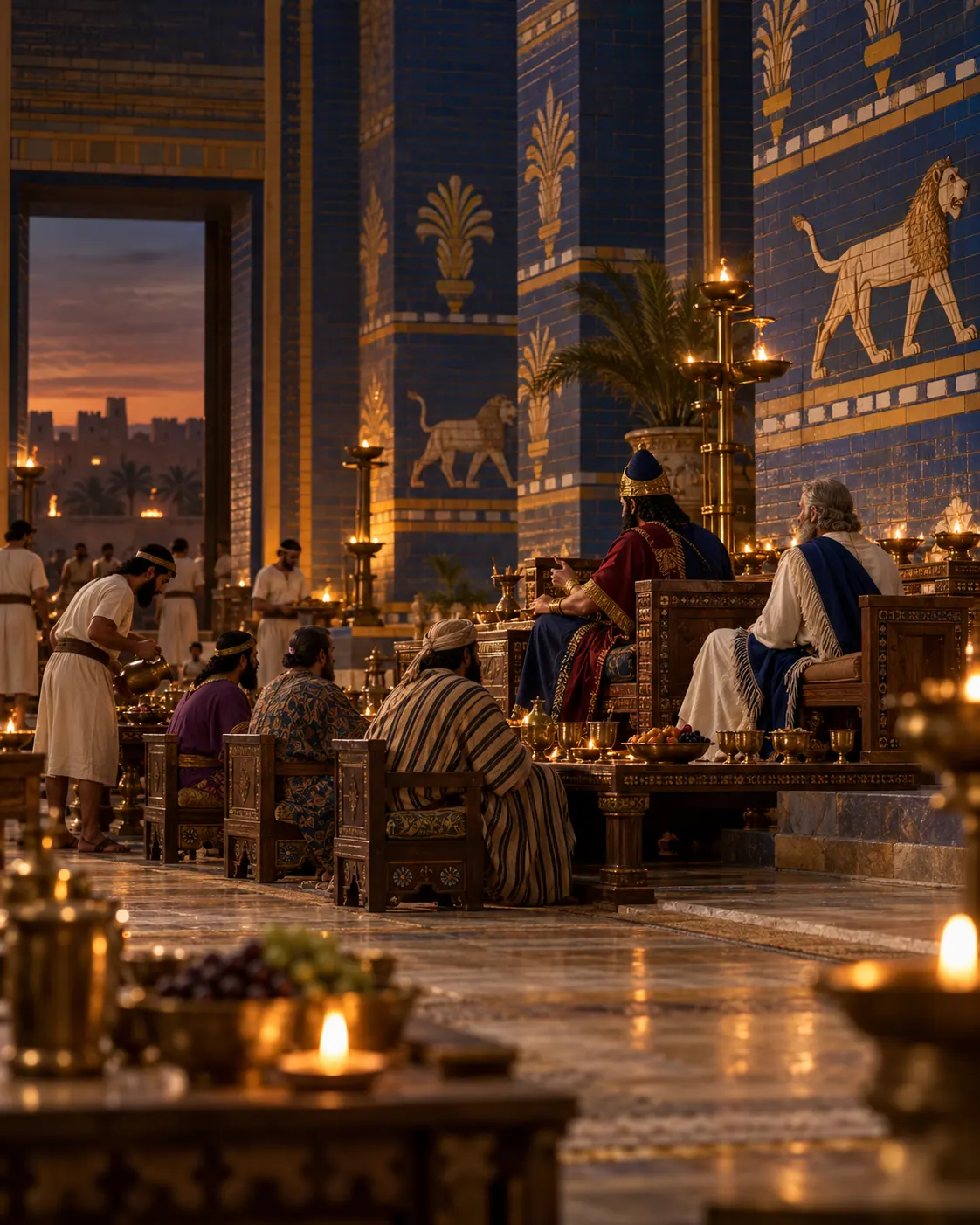
The great hall of the palace of Babylon in warm lamplight, walls of blue glazed brick with yellow lions and palmettes: the king Evil-merodach at the raised end, and nearest him, on the highest seat, the gray-haired Jehoiachin in a white linen robe and deep-blue mantle, with other captive kings seated lower down the long table as servants bring bread, fruit and wine.

And he spoke kindly to Jehoiachin and set his throne above the thrones of the other kings who were with him in Babylon.

So Jehoiachin changed out of his prison clothes, and he dined regularly at the king’s table for the rest of his life.

2 Kings 25:29

And the king provided Jehoiachin a daily portion for the rest of his life.

The lamp of David

A houseforeverthe promise toDavidA lamp forDavidkept forDavid’s sakeThe hiddenprinceJoash saved asa babyJehoiachinlifted upout of prisonin BabylonZerubbabelhis grandsonleads thereturnJesus, sonof Davidthe King whosethrone lasts

Whiteboard

God promised David a house and a throne that would last forever, and through every bad king He kept a lamp burning for David. When Athaliah tried to wipe out the royal line, one baby prince was hidden. Now the temple is ash and the kingdom gone, but David’s son is alive and out of prison. His grandson Zerubbabel would lead the exiles home, and Matthew traces the line on to Jesus, the son of David.

Pray

The light not put out

Thank God that even when everything falls, He keeps His promises and does not let the light go out. Pray for anyone in a long, dark season, that they would not give up hope. Thank Him for Jesus, the Son of David, who welcomes the undeserving to His table. Ask for grace to trust Him in exile, and to wait for His door to open.

You’ve experienced

2 Kings 25

0 of 25 chapters read

A verse to carry with you

So Jehoiachin changed out of his prison clothes, and he dined regularly at the king’s table for the rest of his life.

2 Kings 25:29

or swipe left