The Book of
2 Kings 18
37 verses≈ 9 min5 peopleBSB
Images are artistic interpretations.
Tap any post to go deeper
In this chapter

The Book of
37 verses≈ 9 min5 peopleBSB
Images are artistic interpretations.
Tap any post to go deeper
In this chapter
Where we are
Judah
Hoshea’s 3rd year
In the third year of the reign of Hoshea son of Elah over Israel, Hezekiah son of Ahaz became king of Judah.
He was twenty-five years old when he became king, and he reigned in Jerusalem twenty-nine years.
His mother’s name was Abi, the daughter of Zechariah.
did right
And he did what was right in the eyes of the LORD, just as his father David had done.
Tap to go deeper: meaning, history and related Scripture
Hezekiah trusted in the LORD, the God of Israel. No king of Judah was like him, either before him or after him.
2 Kings 18:5
He remained faithful to the LORD and did not turn from following Him; he kept the commandments that the LORD had given Moses.
And the LORD was with Hezekiah, and he prospered wherever he went.
He rebelled against the king of Assyria and refused to serve him. He defeated the Philistines as far as Gaza and its borders, from watchtower to fortified city.
In the fourth year of Hezekiah’s reign, which was the seventh year of the reign of Hoshea son of Elah over Israel, Shalmaneser king of Assyria marched against Samaria and besieged it. And at the end of three years, the Assyrians captured it. So Samaria was captured in the sixth year of Hezekiah, which was the ninth year of Hoshea king of Israel.
The king of Assyria exiled the Israelites to Assyria and settled them in Halah, in Gozan by the Habor River, and in the cities of the Medes. This happened because they did not listen to the voice of the LORD their God, but violated His covenant—all that Moses the servant of the LORD had commanded—and would neither listen nor obey.
Reflect
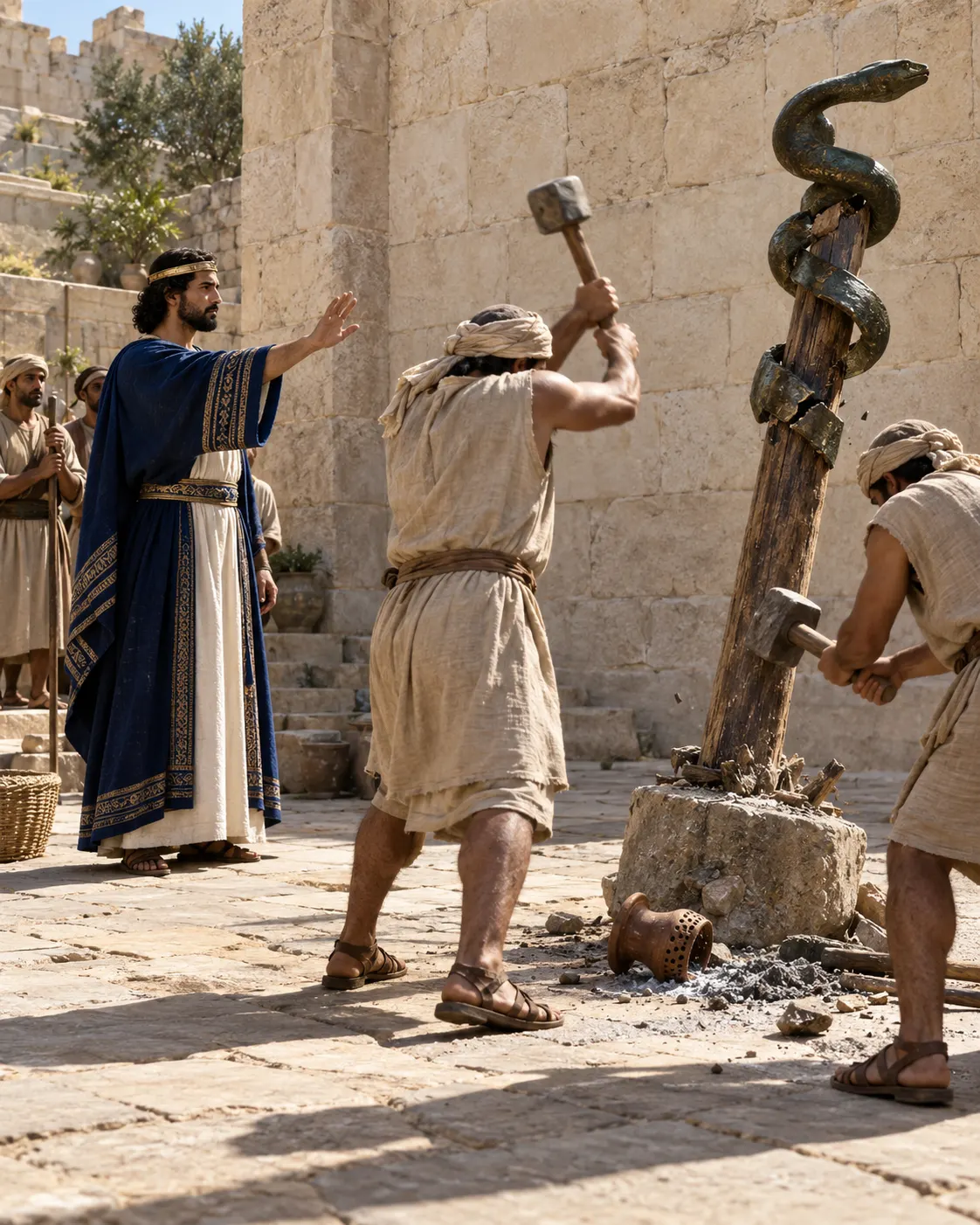
The bronze snake was a gift from God through Moses. Centuries later “the Israelites had burned incense to it,” and Hezekiah broke it. Is there something good in your life, even something religious, that has quietly taken the place only God should have? Write it down, and ask the LORD what to do with it.
Stylised map · locations approximate
On the map
Sennacherib took Judah’s fortified cities and made his camp at Lachish, about thirty miles southwest of Jerusalem. From there he sent his commanders with a great army up to Jerusalem. Later he was fighting at Libnah, a few miles away (its site is uncertain), as an army from Egypt and Cush came up the coast road past Gaza.
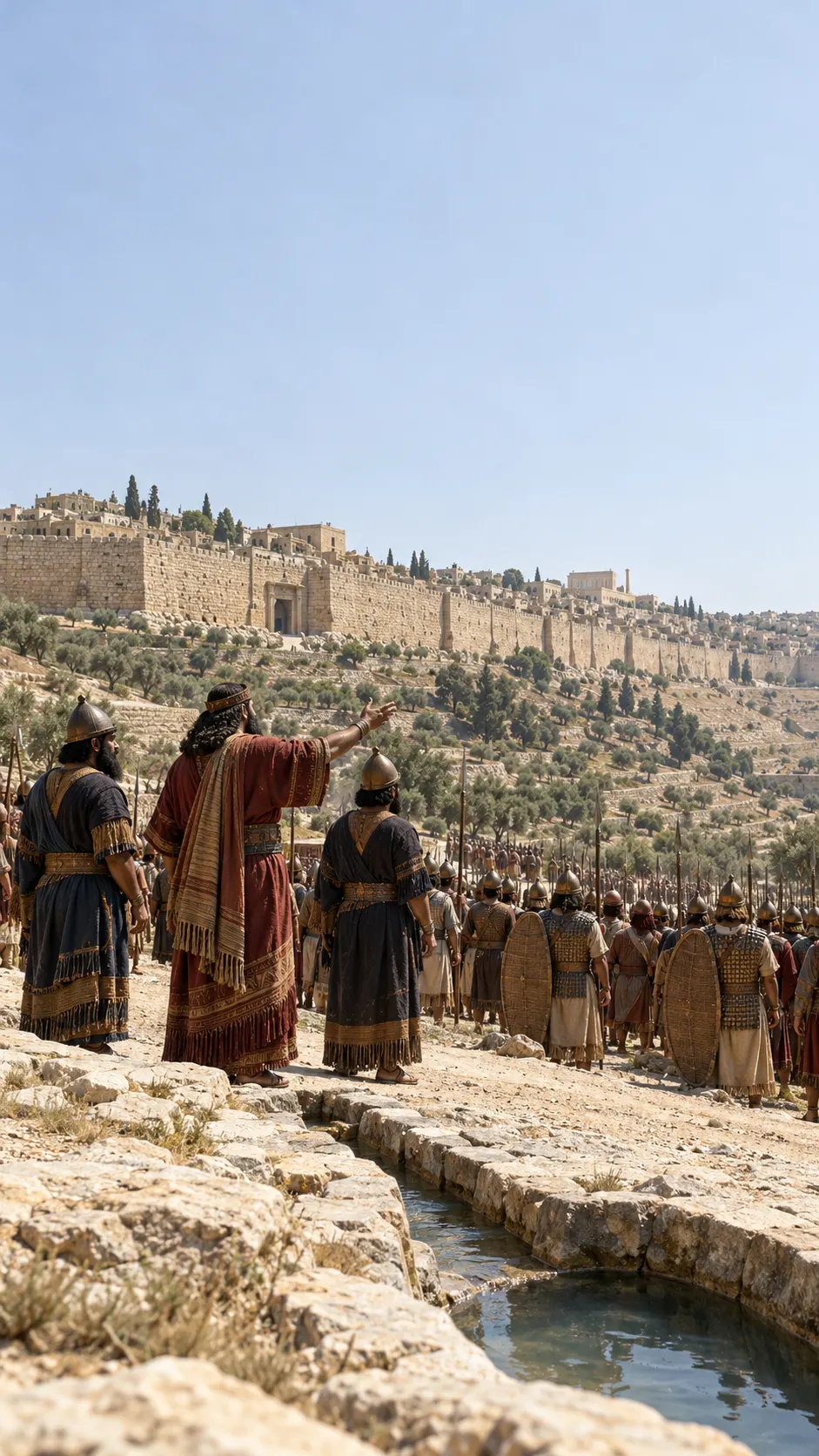
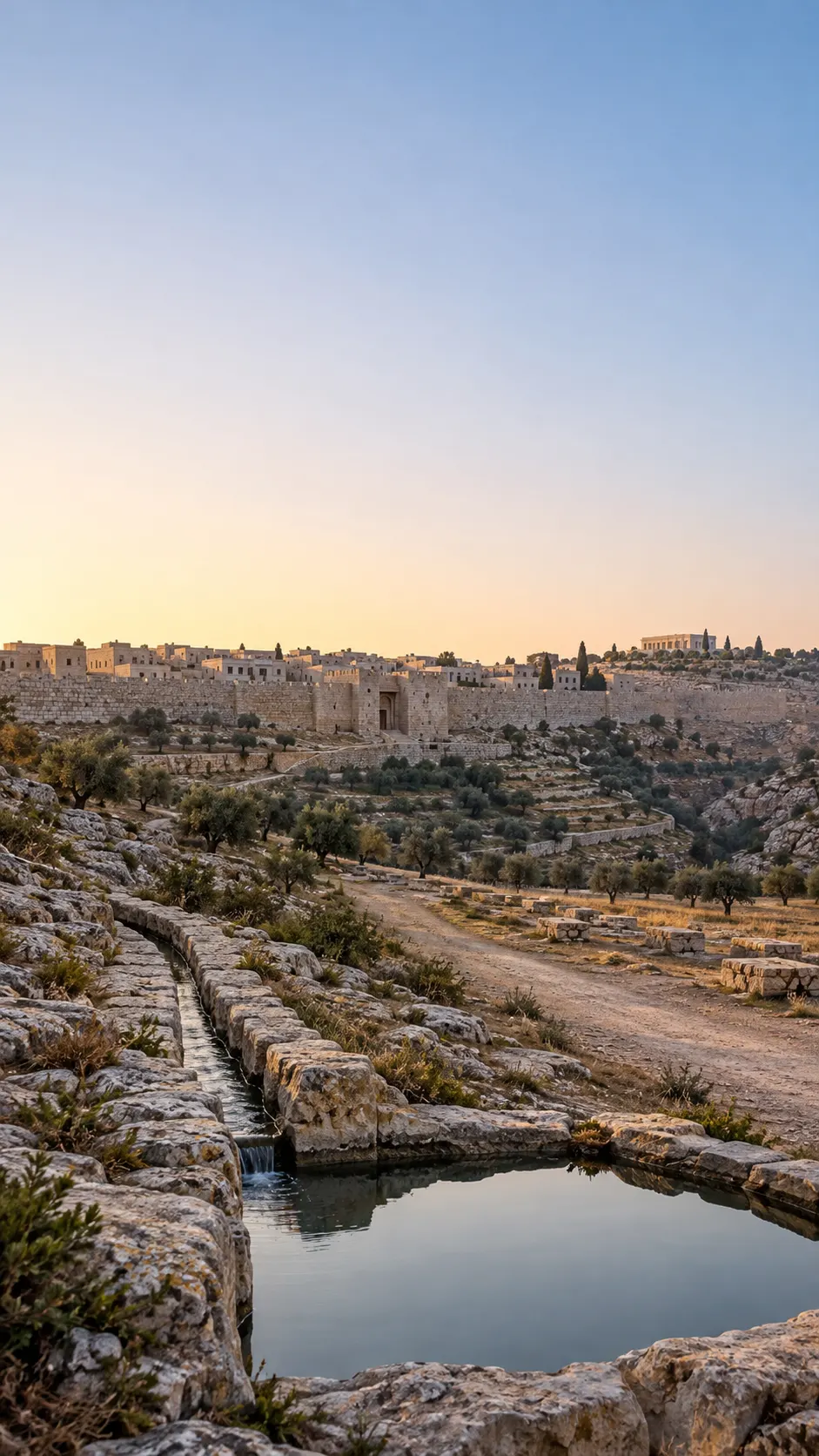
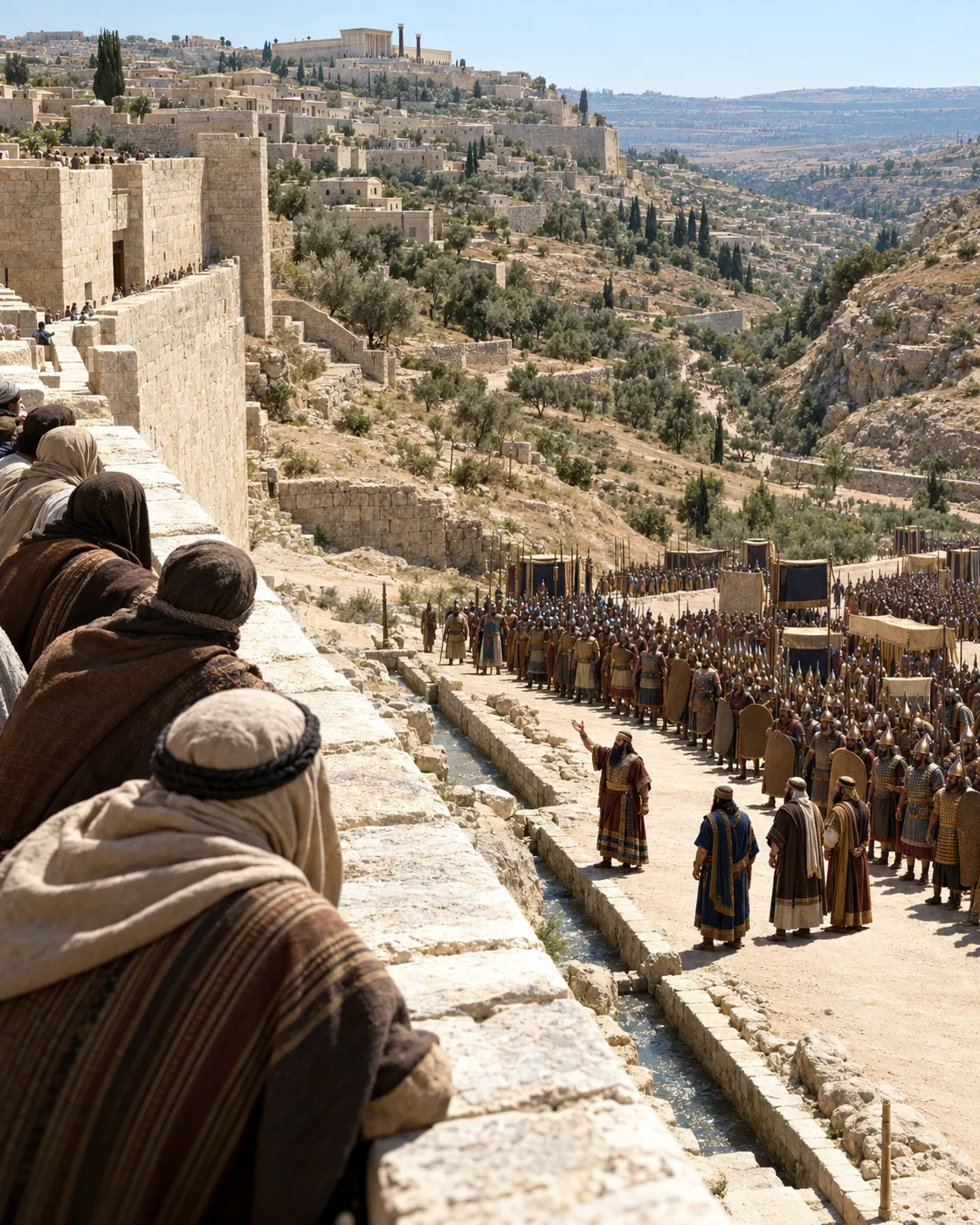
Nevertheless, the king of Assyria sent the Tartan, the Rabsaris, and the Rabshakeh, along with a great army, from Lachish to King Hezekiah at Jerusalem. They advanced up to Jerusalem and stationed themselves by the aqueduct of the upper pool, on the road to the Launderer’s Field.
Narrated by Bob Souer · BSB audio, public domain
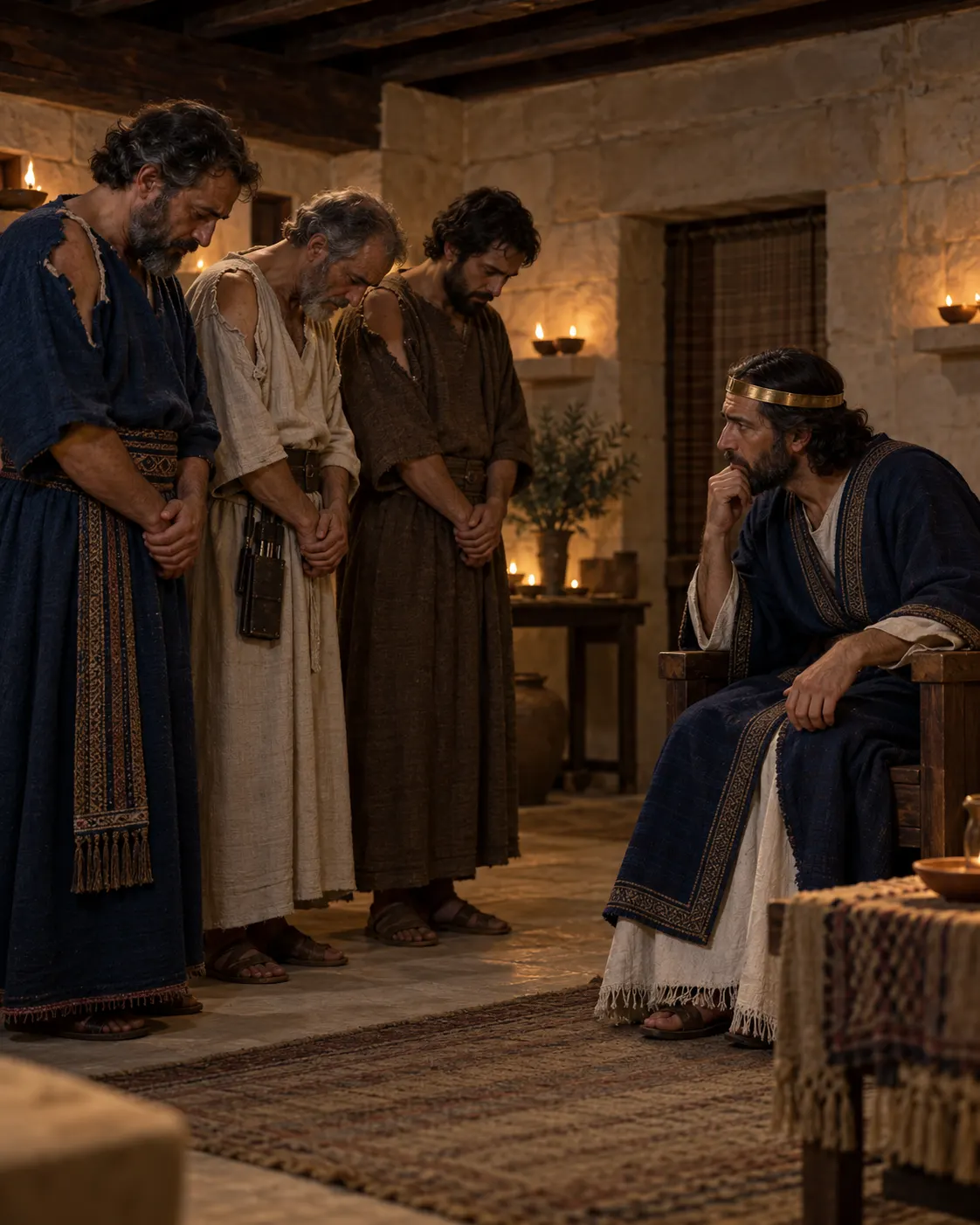
Then they called for the king. And Eliakim son of Hilkiah the palace administrator, Shebnah the scribe, and Joah son of Asaph the recorder, went out to them.
The Rabshakeh
The Rabshakeh said to them, “Tell Hezekiah that this is what the great king, the king of Assyria, says: What is the basis of this confidence of yours? You claim to have a strategy and strength for war, but these are empty words. In whom are you now trusting, that you have rebelled against me?
The Rabshakeh
Look now, you are trusting in Egypt, that splintered reed of a staff that will pierce the hand of anyone who leans on it. Such is Pharaoh king of Egypt to all who trust in him. But if you say to me, ‘We trust in the LORD our God,’ is He not the One whose high places and altars Hezekiah has removed, saying to Judah and Jerusalem: ‘You must worship before this altar in Jerusalem’?
The Rabshakeh
Now, therefore, make a bargain with my master, the king of Assyria. I will give you two thousand horses—if you can put riders on them! For how can you repel a single officer among the least of my master’s servants when you depend on Egypt for chariots and horsemen?
The Rabshakeh
So now, was it apart from the LORD that I have come up against this place to destroy it? The LORD Himself said to me, ‘Go up against this land and destroy it.’”
Eliakim
Then Eliakim son of Hilkiah, along with Shebnah and Joah, said to the Rabshakeh, “Please speak to your servants in Aramaic, since we understand it. Do not speak with us in Hebrew in the hearing of the people on the wall.”
The Rabshakeh
But the Rabshakeh replied, “Has my master sent me to speak these words only to you and your master, and not to the men sitting on the wall, who are destined with you to eat their own dung and drink their own urine?”
In whom are you now trusting, that you have rebelled against me?
2 Kings 18:20
Question
The Assyrian commanders came up from Lachish with a great army and called for the king.
Where did the Assyrian commanders take their stand at Jerusalem?
This is what the king says: Do not let Hezekiah deceive you; he cannot deliver you from my hand. Do not let Hezekiah persuade you to trust in the LORD when he says, ‘The LORD will surely deliver us; this city will not be given into the hand of the king of Assyria.’

Has the god of any nation ever delivered his land from the hand of the king of Assyria? Where are the gods of Hamath and Arpad? Where are the gods of Sepharvaim, Hena, and Ivvah? Have they delivered Samaria from my hand? Who among all the gods of these lands has delivered his land from my hand? How then can the LORD deliver Jerusalem from my hand?”
But the people remained silent and did not answer a word, for Hezekiah had commanded, “Do not answer him.”
2 Kings 18:36
Pray
The Rabshakeh counted the LORD as one more god of one more land: “How then can the LORD deliver Jerusalem from my hand?” Thank God that He is not like the gods of the nations but the living God. Ask Him for trust when every other help turns out to be a splintered reed, for the wisdom to keep silent when silence is right, and for the habit of bringing every fear and every mocking word straight to Him, as Hezekiah’s officials brought these to their king.
You’ve experienced
2 Kings 18
0 of 25 chapters read
A verse to carry with you
Hezekiah trusted in the LORD, the God of Israel. No king of Judah was like him, either before him or after him.
2 Kings 18:5
or swipe left