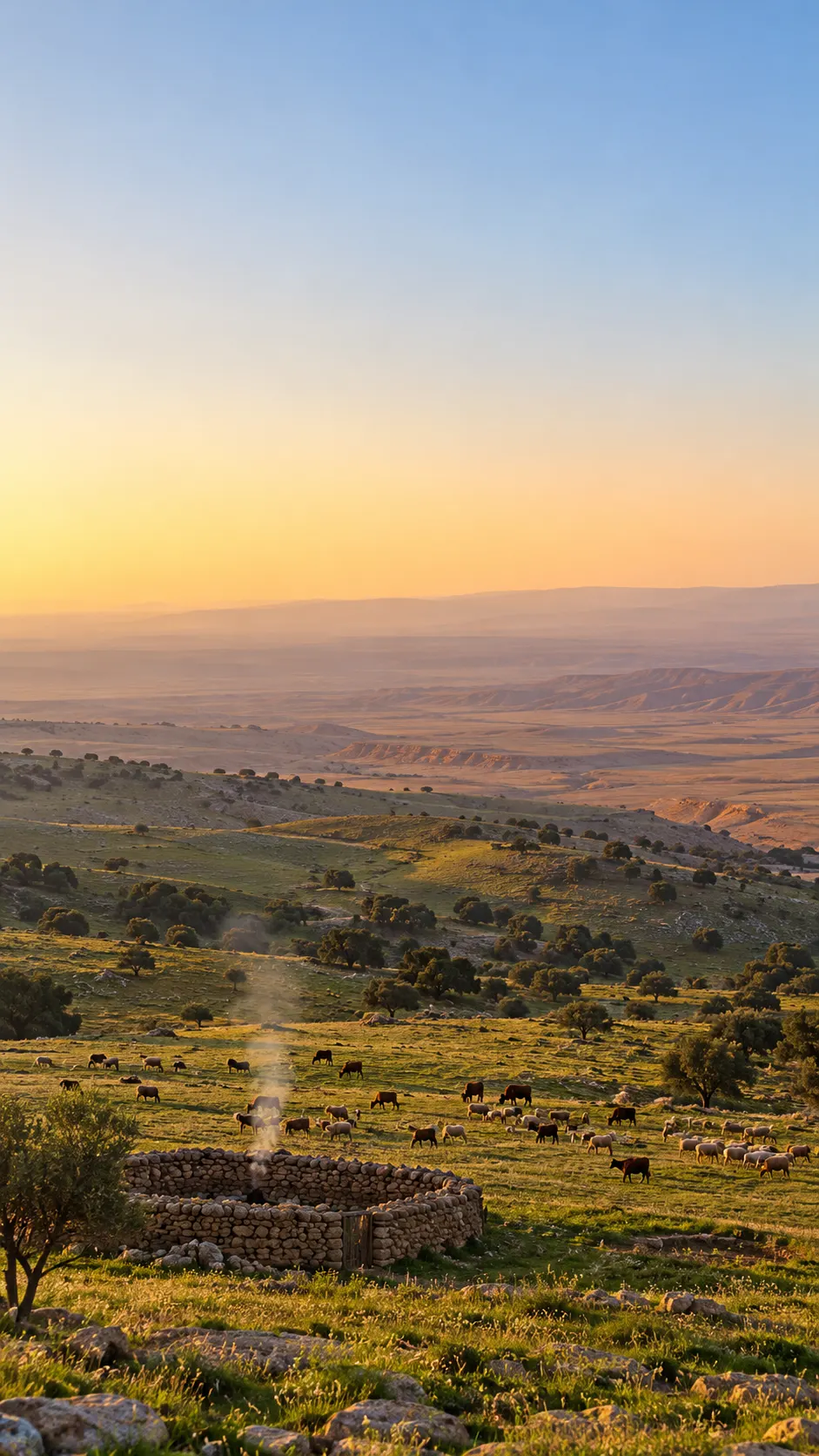
The Book of
1 Chronicles 5
26 verses≈ 5 min2 peopleBSB
Images are artistic interpretations.
Tap any post to go deeper
In this chapter

The Book of
26 verses≈ 5 min2 peopleBSB
Images are artistic interpretations.
Tap any post to go deeper
In this chapter
Where we are
These were the sons of Reuben the firstborn of Israel. Though he was the firstborn, his birthright was given to the sons of Joseph son of Israel, because Reuben defiled his father’s bed. So he is not reckoned according to birthright.
Tap to go deeper: meaning, history and related Scripture
And though Judah prevailed over his brothers and a ruler came from him, the birthright belonged to Joseph.
Family line
Firstborn of Israel
The sons of Reuben, the firstborn of Israel:
Hanoch, Pallu, Hezron, and Carmi.
The descendants of Joel:
Shemaiah his son, Gog his son, Shimei his son,
Micah his son, Reaiah his son, Baal his son,
Exiled by Tiglath-pileser
and Beerah his son, whom Tiglath-pileser king of Assyria carried into exile.
A leader of the Reubenites
Beerah was a leader of the Reubenites.
Relatives by clans
His relatives by their clans are recorded in their genealogy:
Jeiel the chief, Zechariah,
and Bela son of Azaz, the son of Shema, the son of Joel.
Question
Reuben was Israel’s firstborn. So who received his birthright?
Who received Reuben’s birthright as Israel’s firstborn?
In Bashan, to Salecah
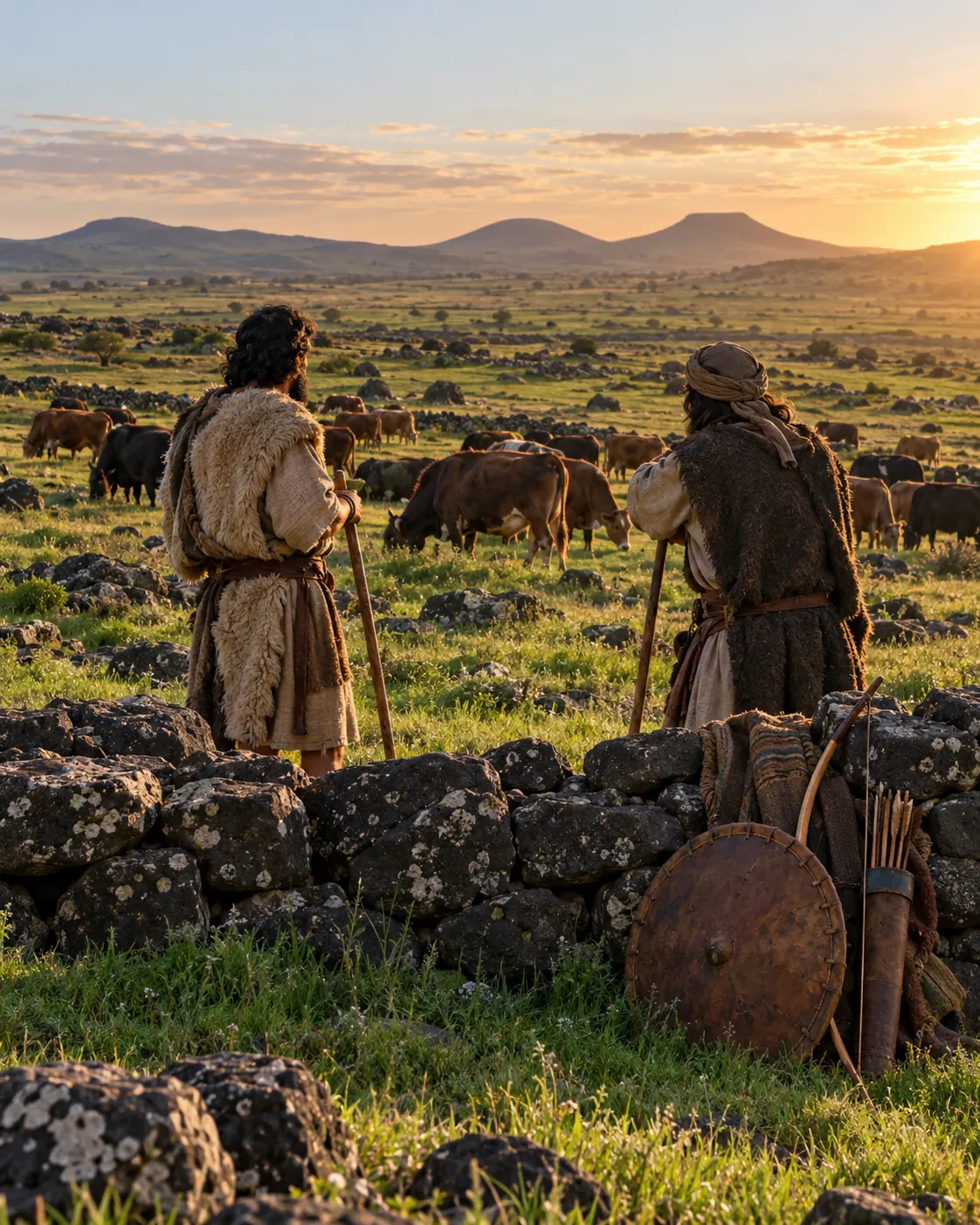
The descendants of Gad lived next to the Reubenites in the land of Bashan, as far as Salecah:
Leaders in Bashan
Joel was the chief, Shapham the second, then Jaanai and Shaphat, who lived in Bashan.
Seven kinsmen
Their kinsmen by families were Michael, Meshullam, Sheba, Jorai, Jacan, Zia, and Eber—seven in all.
Traced back to Buz
These were the sons of Abihail son of Huri, the son of Jaroah, the son of Gilead, the son of Michael, the son of Jeshishai, the son of Jahdo, the son of Buz.
Head of their family
Ahi son of Abdiel, the son of Guni, was head of their family.
They lived in Gilead, in Bashan and its towns, and throughout the pasturelands of Sharon.
All of them were recorded in the genealogies during the reigns of Jotham king of Judah and Jeroboam king of Israel.
Stylised map · locations approximate
On the map
Reuben held the plateau north of the Arnon, from Aroer to Nebo and Baal-meon. Gad lived in Gilead and on into Bashan, as far as Salecah on its far eastern edge, off this map. The half-tribe of Manasseh stretched north to Mount Hermon. Open to the desert on the east, they grazed their herds out toward the Euphrates and fought the Hagrites who lived there.
The Reubenites, the Gadites, and the half-tribe of Manasseh had 44,760 warriors—valiant men who carried the shield and sword, drew the bow, and were trained for battle.
They waged war against the Hagrites, as well as Jetur, Naphish, and Nodab.
And because they cried out to God in battle, they were helped against their enemies, and the Hagrites and all their allies were delivered into their hands. Because they put their trust in God, He answered their prayers.
1 Chronicles 5:20
They seized the livestock of the Hagrites—50,000 camels, 250,000 sheep, and 2,000 donkeys. They also took 100,000 captives,
and many others fell slain, because the battle belonged to God. And they occupied the land until the exile.
Reflect
Strong men, trained for war, still cried out to God in the battle, and “Because they put their trust in God, He answered their prayers.” Where are you leaning on your own strength? Write down the battle you are in, and what it would look like to trust God in it.
Now the people of the half-tribe of Manasseh were numerous. They settled in the land from Bashan to Baal-hermon (that is, Senir, also known as Mount Hermon).
Family line
Heads of their families
These were the heads of their families: Epher, Ishi, Eliel, Azriel, Jeremiah, Hodaviah, and Jahdiel.
Mighty men of valor
They were mighty men of valor, famous men, and heads of their families.
But they were unfaithful to the God of their fathers, and they prostituted themselves with the gods of the peoples of the land, whom God had destroyed before them.
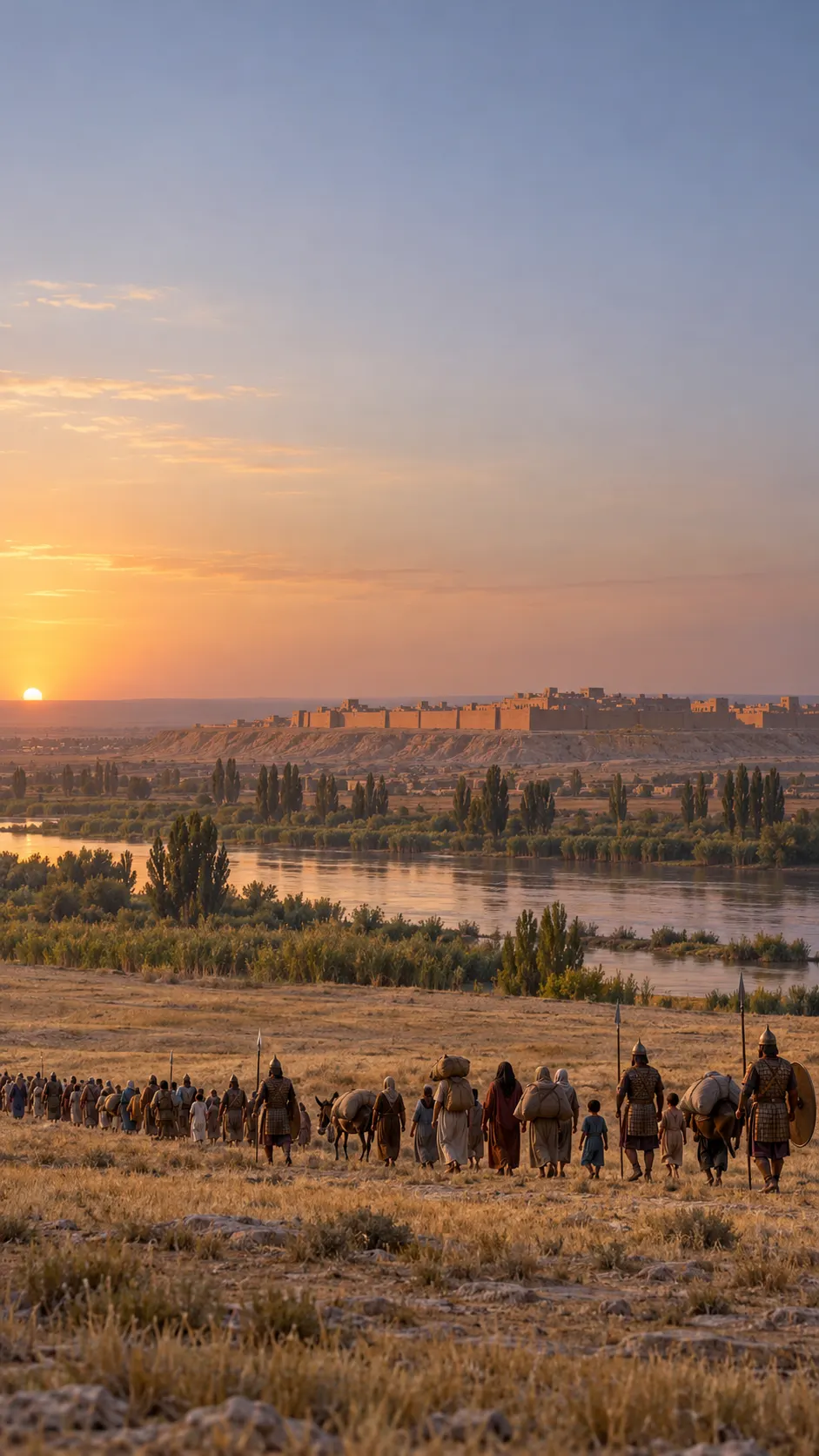
So the God of Israel stirred up the spirit of Pul king of Assyria (that is, Tiglath-pileser king of Assyria) to take the Reubenites, the Gadites, and the half-tribe of Manasseh into exile. And he brought them to Halah, Habor, Hara, and the river of Gozan, where they remain to this day.
Narrated by Bob Souer · BSB audio, public domain
Pray
Thank God that He hears those who cry out to Him and answers those who trust Him. Confess the ways you lean on your own strength, and anything that has taken His place in your heart. Ask Him to keep you faithful to Him in the good, settled days as well as in the battle.
Whiteboard
The same tribes, two ways. When they cried out to God and trusted Him, He answered. When they turned to the gods of the land, the God of Israel stirred up Assyria against them. Chronicles will say it again of Saul (10:13–14), and David will say it to Solomon: seek Him, and He will be found (28:9).
You’ve experienced
1 Chronicles 5
0 of 29 chapters read
A verse to carry with you
Because they put their trust in God, He answered their prayers.
1 Chronicles 5:20
or swipe left